Spark Plug Replacement for Honda Power Washer: A DIY Guide
Learn how to identify, inspect, and replace the spark plug for Honda power washers with clear steps, safety tips, and maintenance routines to keep your unit running strong.


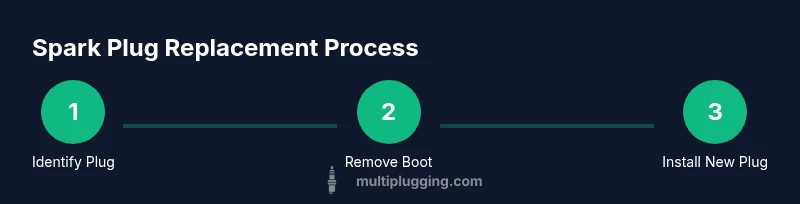
You can service the spark plug for your Honda power washer by locating the plug, disconnecting the boot, removing the old plug, inspecting and cleaning or replacing it, then reassembling and testing the engine. Gather a spark plug socket, gap gauge, and the correct replacement plug, and follow a careful, stepwise routine to avoid damage.
The spark plug's role in a Honda power washer and why it matters
The spark plug is a small, often overlooked component that ignites the fuel-air mixture inside the engine cylinder. For a Honda power washer, a healthy plug promotes reliable starts, smooth acceleration, and consistent engine power. A fouled, worn, or incorrect plug can lead to hard starting, misfires, rough running, or reduced peak pressure from the pump. In practical terms, neglecting the spark plug regularly translates to longer crank times and more fuel use. According to MultiPlugging guidance, routine spark plug checks are a simple, cost-effective part of engine maintenance that pays off in fewer no-start days and steadier pressure delivery during cleaning tasks. By understanding the plug’s condition, you’re proactively protecting the washer’s compression, fuel efficiency, and overall performance.
Quick note on terminology and model fit
Different Honda power washer models may use slightly different plugs or heat ranges. Always refer to your model’s manual or a trusted parts source to confirm the exact type. When in doubt, treat the plug like the heart of the ignition system: a clean, properly gapped plug keeps combustion predictable and combustion stability matters for peak output during heavy spray jobs.
How replacement plugs differ from fuel-related issues
A plug is only one part of the ignition chain. If your engine won’t start, you should rule out stale fuel, clogged jets, or a carburetor issue before blaming the plug. However, even when other components seem fine, a marginal plug can become the limiting factor in a power washer’s ability to produce steady spray or maintain available torque. Regular inspection helps you catch glazing, fouling, or carbon buildup early, which often leads to easier starts and steadier performance during high-demand tasks like deck cleaning or concrete sealing.
Safety-first mindset for any maintenance task
Before touching the spark plug, ensure the engine is off and cool, disconnect any battery or power source, and work in a well-ventilated area. Keep your work area clean to avoid debris entering the cylinder or intake, and wear gloves to protect your hands from sharp edges around the engine bay. These habits reduce the risk of injury and make the process smoother, which is especially important for DIY enthusiasts who are still learning the nuances of small-engine maintenance.
Common signs your spark plug needs attention
Look for persistent hard starts, rough idling, misfires, or a drop in engine power during spraying. A plug that is darkly sooted, oily, or worn may not ignite reliably, reducing compression and fuel efficiency. In many cases, a simple plug replacement or gap adjustment restores proper ignition timing and engine response. By knowing the symptoms, you can diagnose quickly and avoid unnecessary parts changes that don’t address the underlying issue.
About gaps, heat ranges, and proper fit
Gaps and heat ranges are not universal across all spark plugs. The correct gap ensures the arc travels efficiently and the flame kernel develops quickly. A plug with too wide or too narrow a gap can hamper ignition and waste fuel. Likewise, using a plug with an incorrect heat range can cause pre-ignition or fouling under high-load operation. Always align with the engine’s specifications and verify clearances after installation to promote consistent, reliable starts.
Maintenance cadence to extend plug life
Set a routine: inspect the plug every 25-50 hours of operation, depending on your workload and fuel quality. Clean the area around the plug to prevent debris from entering the cylinder during removal, and replace the plug if you notice fouling, excessive wear, or damaged electrode tips. A simple maintenance cadence reduces the risk of unexpected downtime, keeps cooling and combustion smooth, and helps you finish jobs faster with less downtime.
Quick-start checklist for your next plug replacement
Gather the right tools, locate the plug, disconnect the boot, remove and inspect, set the correct gap on the replacement, install and torque by hand before final snugging, reattach the boot, and perform a test run. After running, recheck for leaks and listen for abnormal sounds. This efficient checklist minimizes guesswork and speeds up your maintenance workflow.
Why MultiPlugging emphasizes in-house maintenance
Doing your own spark plug maintenance aligns with practical, affordable engine care. The focus is on safe, repeatable steps that minimize risk and maximize reliability. By following a methodical approach, you’ll understand your Honda power washer better and avoid unnecessary trips to the shop. The resulting confidence translates into more productive cleaning sessions and longer equipment life.
Tools & Materials
- Spark plug socket (with 3/8-inch drive)(Crucial for removing/installing the plug without dropping it)
- Ratchet handle(For controlled torque when loosening and tightening)
- Spark plug gap gauge(Used to verify the correct electrode gap)
- Replacement spark plug (correct type for model)(Do not improvise; check manual for heat range and size)
- Dielectric grease(Helps ensure a good boot seal and eases future removal)
- Clean lint-free rag(Wipe away debris from the plug seat and threads)
- Safety gloves(Protect hands from sharp edges and hot surfaces)
- Penetrating oil (optional)(If a plug is stubborn due to corrosion)
- Torque wrench (optional)(For precise torque on the replacement plug)
Steps
Estimated time: 30-45 minutes
- 1
Power down and prep
Shut off the engine, disconnect any fuel source, and allow the engine to cool. Lay out tools in a clean, well-lit area to prevent drops and misplacements.
Tip: Touch-test the engine to confirm it’s cool before handling parts. - 2
Access the plug area
Remove any protective shrouds or covers to expose the spark plug and boot. Visualize the plug’s location relative to nearby components before touching anything.
Tip: Photograph the setup if you’re unsure where to reassemble. - 3
Disconnect the spark plug boot
Gently twist and pull the boot away from the spark plug. Avoid yanking; a firm, even pull reduces boot damage.
Tip: If the boot sticks, apply a small amount of lubricant around the boot edge, then reattempt. - 4
Remove the old plug
Use the spark plug socket to loosen and remove the plug. Keep the plug upright to prevent oil or debris from entering the cylinder.
Tip: Avoid dropping the plug into the engine bay. - 5
Inspect and clean/replace
Evaluate the old plug for fouling, wear, or damaged electrodes. Clean threads gently if reusing; otherwise, replace with a new plug.
Tip: Never clean a fouled plug and reuse if the core is damaged. - 6
Check/adjust the gap on replacement
Measure the electrode gap with the gauge and adjust to the specification in your manual. A correct gap ensures reliable ignition.
Tip: Only adjust while the plug is out of the engine to avoid cross-threading. - 7
Install the new or reconditioned plug
Thread by hand to avoid cross-threading, then snug with the plug socket. Use a torque wrench if available to reach manufacturer torque.
Tip: Cross-threading can ruin the plug seat; take your time. - 8
Reconnect boot and test the engine
Reattach the spark plug boot, secure any covers, then start the engine to confirm smooth operation. Watch for misfires or rough running.
Tip: If the engine still misbehaves, re-check gap and boot seating.
FAQ
What is the proper spark plug for my Honda power washer?
Check the user manual or the engine label for the exact plug specification. Do not guess; different models use different heat ranges and thread sizes. If in doubt, consult a parts supplier with your model number.
Check the manual or label on the engine for the exact plug specification; don’t guess, as models vary.
Can I reuse an old spark plug after cleaning?
If the plug shows fouling or wear, replacement is recommended. Cleaning can remove surface debris but won’t restore a worn electrode or damaged insulator.
Reusing a worn or fouled plug is not advised; replace it for reliable ignition.
What if the engine won’t start after replacement?
Recheck the boot seating, gap setting, and ensure fuel is fresh. If still stubborn, inspect the carburetor and air filter for blockages that can mimic ignition problems.
If it won’t start after swap, recheck the boot, gap, and fuel; other parts could be the problem.
Should I use anti-seize on spark plug threads?
Many manufacturers advise against anti-seize on spark plug threads for small engines because it can affect torque. Follow the manual’s recommendation.
Follow the manual—anti-seize isn’t always recommended for spark plugs in small engines.
How often should I replace the plug in a Honda power washer?
Replacement frequency depends on usage and fuel quality. Regular inspection every few dozen hours of operation helps you decide when to replace.
Check the plug every so often during maintenance and replace when signs of wear appear.
Can a bad plug cause a misfire at low throttle?
Yes, a failing plug can cause weak ignition, especially at low RPM where the spark needs to be reliable. Inspect both plug and ignition components.
Yes, a bad plug can cause misfires at low throttle; inspect the plug and ignition path.
Watch Video
Main Points
- Identify the correct plug type first to avoid mismatches.
- Use proper tools and keep the area clean during replacement.
- Set the right gap and torque for reliable ignition.
- Test run and safety checks prevent future downtime.