Honda Mower Spark Plug: Replacement Guide & Pro Tips
Learn to diagnose, replace, and maintain the Honda mower spark plug. This guide covers plug types, gap sizing, torque, and troubleshooting for reliable lawn care and easier starting.


By the end you’ll identify the right spark plug for most Honda lawn mower models, confirm when it’s worn, and complete a safe, step-by-step replacement. You’ll also learn how to gap a new plug, torque specs, and basic maintenance to prevent misfires and hard starts. This guide uses practical, hands-on instructions suitable for DIY homeowners.
Understanding the Honda mower spark plug: role and types
A spark plug is a small, high-reliability component that delivers the ignition spark needed to combust the air-fuel mix in your Honda mower’s engine. For most small 4-stroke lawn mowers, plugs come in several common families such as copper-core, platinum, and iridium. Each has advantages in durability and heat handling. The right choice for a given Honda mower depends on model design, operating temperature, and user expectations for starting ease and longevity. Always consult your model manual to confirm the recommended plug type for your specific engine family, and remember that a clean, properly gapped plug makes a noticeable difference in starting and performance. According to MultiPlugging, regular spark plug maintenance is essential for lawn mower reliability, and using the correct plug improves fuel economy and reduces emissions over time.
How to identify the correct plug for your Honda mower model
Start by locating the engine model number and cross-checking it with the user manual or Honda’s official support site. The plug’s thread size and reach must match the cylinder head threads, and the electrode gap should align with the manufacturer’s spec. Many Honda mowers use pre-gapped plugs or plugs that come with a standard 0.030-0.040 inch gap; however, variations exist by model. If you can’t find a spec in the manual, remove the old plug carefully and compare its type to a plug with the same thread size, then gap a replacement accordingly. Always choose a plug verified to fit your exact model to ensure reliable ignition and safe operation.
Spark plug gap and heat range basics you should know
The gap determines how far the spark must jump to ignite the mixture; too small, and misfires can occur; too large, and starting becomes difficult. For most small engines, the gap typically lies between 0.028 and 0.040 inches, but the exact value should come from the model’s specification. Heat range affects how quickly the plug will heat up and cool down during operation; using a plug with the wrong heat range can cause fouling or pre-ignition. When in doubt, use the exact gap and heat-range spec printed on the replacement part or your mower’s manual. These details help ensure reliable starts and consistent performance under varying weather and fuel conditions.
Inspecting the old plug: signs you should replace it
A quick visual check can tell you a lot: a black, sooty electrode suggests oil or rich fuel conditions; a white, blistered ceramic can indicate detonation or cooling issues; corroded terminals and worn electrodes indicate the plug is near the end of life. If you notice repeated hard starts, rough idling, or misfires that disappear after a fresh plug installation, replacement is often the simplest fix. Proper inspection also helps you diagnose related issues like air leaks, fuel quality, or ignition coil problems that could masquerade as a bad plug.
Tools, safety, and the pre-job checklist
Before any work begins, ensure the mower is off, the spark is protected, and the blade cannot start accidentally. Handling tools in a dry, well-lit space minimizes slips. Cleanliness matters here: dirt in the cylinder head can cause cross-contamination when you remove and reinstall the plug. Have your replacement plug ready, a clean rag, and a bag for the old plug. If you use anti-seize, apply a light coat only to the threads if your owner’s manual allows it; otherwise, skip to avoid over-torquing. Always follow safety guidelines to prevent injury and damage to the engine.
note
Tools & Materials
- spark plug socket with rubber insert(A standard 3/4 in or 5/8 in drive socket that fits your plug model.)
- ratchet wrench(Used to turn the plug in/out with controlled force.)
- new spark plug (same thread size/heat range)(Pre-gapped or ready to gap per manual.)
- gap gauge / feeler gauge(Helpful to confirm exact gap on new plug if not pre-gapped.)
- anti-seize compound (optional)(Only use if recommended by Honda manual.)
- clean rag(Wipe threads and contact surfaces to remove debris.)
- gloves(Protect hands from sharp parts and hot surfaces.)
- compressed air (optional)(Blow out debris from around spark plug well.)
Steps
Estimated time: 15-25 minutes
- 1
Power down and access the spark plug
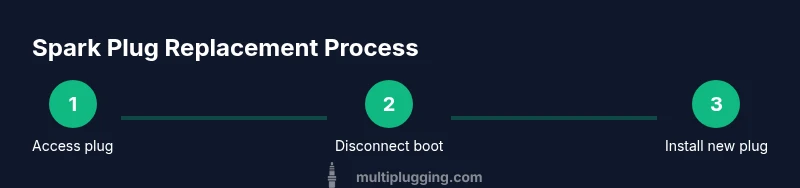
Park the mower on a flat surface, turn off the engine, and let it cool. Remove the air intake cover or shroud if necessary to expose the spark plug area. This step gives you clear access while reducing the risk of accidental starts.
Tip: Cooling improves safety and makes thread handling easier. - 2
Disconnect the spark plug wire
Gently twist and pull the boot off the spark plug connector. Do not yank on the wire; you’re aiming to release the boot from the plug terminal without pulling the wire insulation.
Tip: If the boot sticks, use a small flat screwdriver to gently pry at the boot base. - 3
Remove the old spark plug
Fit the spark plug socket onto the plug and turn counterclockwise to loosen. Once loose, lift the plug straight out to avoid dropping debris into the cylinder.
Tip: Inspect the old plug for wear or fouling to aid diagnosis. - 4
Inspect and decide whether to replace
Examine the electrode and ceramic insulator. If the tip is worn, fouled, or the ceramic is cracked, replace with a new plug rather than cleaning. This protects ignition performance and engine health.
Tip: If in doubt, replace rather than reuse a compromised plug. - 5
Gap and prep the replacement plug
Check the new plug’s gap with a gauge. If needed, adjust to the mower’s specified gap using careful bending of the ground electrode only. Avoid touching the center electrode, which can deposit oils that alter the gap.
Tip: Handle plugs by the threads and avoid touching the electrode. - 6
Install the new plug
Thread the new plug by hand to avoid cross-threading, then tighten with the socket using a snug, not over-tight, finish per manual. Recheck that the plug is seated firmly but not overtightened.
Tip: Use a torque wrench if your manual specifies a torque value. - 7
Reconnect the spark plug boot
Push the boot straight onto the spark plug terminal until it seats with a click. Ensure the boot is fully attached and won’t disconnect during operation.
Tip: If the boot feels loose, double-check the plug seat and boot alignment. - 8
Test start and verify operation
Reassemble any covers and start the mower. Listen for a smooth startup and steady idle. If there are misfires or rough running, recheck gap, boot seating, and air/fuel conditions.
Tip: If problems persist, inspect the air filter and fuel quality as well.
FAQ
How do I know if my Honda mower spark plug needs replacement?
Look for signs like persistent hard starts, misfires, reduced power, black or oily deposits, or a visibly worn electrode. If you notice any of these signs, replace the plug and inspect related components.
If you notice hard starting, rough idle, or misfires, inspect the spark plug for wear or fouling and replace if needed.
Can I use an aftermarket spark plug in a Honda mower?
Aftermarket plugs can work if they match the exact thread size, heat range, and gap specified by Honda for your model. Always verify compatibility before purchasing.
Use only a plug that matches your model’s specs to avoid ignition problems.
What is the typical replacement interval for a Honda mower spark plug?
Interval guidance varies by model and usage. Check your manual or the spark plug packaging for the recommended life span or operating hours.
The exact interval depends on your mower model; follow the manual for guidance.
Should I gap the new plug before installation?
If the plug isn’t pre-gapped, use a gap tool to set the specified distance before installation. Mis-gapping can cause hard starts or misfires.
If the plug isn’t pre-gapped, set the gap with a tool before installing.
Is anti-seize necessary on Honda mower spark plugs?
Many modern engines do not require anti-seize; applying it can make removing the plug difficult later. Follow the manufacturer’s guidance.
Usually not required; check your manual before applying anti-seize.
Watch Video
Main Points
- Identify the correct plug type before replacement
- Maintain proper gap and torque for reliable ignition
- Inspect for fouling signs to diagnose related issues
- Follow safety steps to avoid injury and engine damage