Who Makes Spark Plugs for Toyota: OEM vs Aftermarket
Explore who makes spark plugs for Toyota vehicles, focusing on Denso and NGK as primary OEM partners, and learn how to choose between OEM and aftermarket plugs for your engine and maintenance.


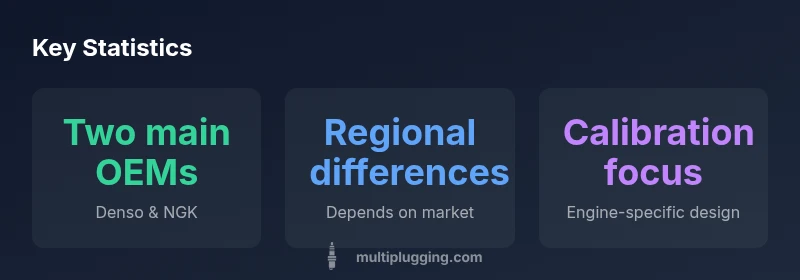
The short answer: Toyota often relies on two primary OEM spark-plug suppliers—Denso and NGK. The exact brand for your vehicle varies by model, engine family, and regional supply agreements. In many markets, Toyota lists both brands in official parts catalogs, with one brand sometimes specified for a particular generation. Always verify the correct plug with your VIN-derived catalog.
OEM spark plug origins for Toyota
Toyota’s approach to spark plug sourcing is driven by engine design, regional supply chains, and warranty considerations. In practice, two firms—Denso and NGK—constitute the core OEM plug ecosystem for many Toyota engines. This arrangement isn’t uniform across every model or market; some generations or regions lean toward one supplier, while others explicitly list both as acceptable options in official catalogs. For a DIY enthusiast, the takeaway is simple: don’t assume a single brand forever. Always consult the official parts catalog for your specific VIN, model year, and region to confirm which plug is specified by Toyota for your engine family. The broader point is that the OEM relationship is collaborative and model-dependent, not a one-size-fits-all mandate. Understanding this nuance helps when negotiating price, warranty implications, and replacement timing.
The two dominant suppliers: Denso and NGK
Denso and NGK are globally recognized as leading manufacturers of automotive spark plugs, and both supply gear to a wide range of OEMs beyond Toyota. Denso plugs are often engineered to align with Toyota’s ignition strategies, including heat range and electrode geometry tailored to certain engines. NGK plugs are similarly calibrated for performance and reliability, occasionally offering interchangeability where Toyota approves it for specific engine families. In practice, you’ll find both brands appearing in Toyota service literature and official catalogs, especially for engines introduced in different markets or updated across generations. The decision about which brand is recommended can depend on regional distribution, factory calibration, and the specific ignition system of the vehicle.
Who makes spark plugs for Toyota?
Toyota’s brand strategy is nuanced. In many markets, the brand of spark plug listed in the parts catalog can be Denso or NGK, and in some cases both brands are listed as compatible options for a given engine family. The key factor is that Toyota engineers the ignition system around a particular plug design, and the OEM catalog reflects the intended calibration. For a Toyota owner, this means you should verify the plug brand and part number using your VIN, check the owner’s manual or service literature, and, if possible, consult with a Toyota dealer or trusted mechanic familiar with your region. The supplier choice isn’t purely a marketing decision; it’s about preserving engine performance, reliability, and warranty terms.
Regional variations and engine families
Region matters when it comes to spark plug sourcing. Some markets favor Denso for mainstream Toyota engines due to long-standing supply lines and localization, while others lean toward NGK because of regional manufacturing footprints and collaborative engineering agreements. Engine families also drive the decision. A four-cylinder gasoline engine in one generation might use a Denso plug, while a later or differently tuned version of the same family could be equipped with NGK in another market. DIY enthusiasts should treat this as a map and not a rule: always confirm via official catalogs or a dealership cylinder-by-cylinder with your VIN to avoid mis-purchasing plugs that don’t match calibration.
How to identify OEM vs aftermarket plugs
Distinguishing OEM Toyota plugs from aftermarket options is easier when you know what to look for. OEM plugs will have Toyota-compatible part numbers and branding in the packaging, along with markings that match the engine model and year. Aftermarket plugs may be sold as should-fit alternatives and can sometimes fit multiple brands, but compatibility isn’t guaranteed for every engine. A quick test is to cross-check the packaging, plug code, and any suggested replacement against Toyota’s official catalog for your VIN. If in doubt, buy through a reputable parts supplier that can verify compatibility against your VIN and share the exact part number.
Replacement intervals and maintenance tips
Toyota engines calibrated for OEM plugs typically have recommended replacement intervals based on engine design and operating conditions. In practice, drivers should follow the interval specified in the owner’s manual or service schedule, which can vary by model and driving environment. Regardless of brand, ensure the plug gap is set per the manufacturer’s specification and verify torque during installation. Regular inspection of spark plug boots, wires, and ignition coils is also wise, as worn components can mimic misfire symptoms and lead to degraded performance.
Practical buying guide: selecting plugs for Toyota
When shopping for spark plugs for a Toyota, start by identifying the exact engine family and model year in the VIN. Compare the OEM part number in the official catalog with the aftermarket options offered by reputable suppliers. Consider the type of plug (platinum, iridium, or copper) and the heat range recommended for your engine. If you most value warranty protection and calibrated performance, OEM plugs are generally the safer choice. If you are seeking cost savings and you know your mechanic has experience with a particular aftermarket brand, you may explore trusted aftermarket options, but avoid universal-fit plugs that lack engine-specific calibration.
Authority sources and further reading
For deeper context and independent analysis on Toyota plug suppliers, see official catalogs and industry publications. The following sources discuss OEM supply practices and regional variations, and can help you validate any plug choice for your Toyota vehicle. Ensure that your final decision aligns with Toyota’s calibration and warranty guidelines.
Typical OEM spark plug suppliers for Toyota
| OEM Supplier | Typical Model Coverage | Notes |
|---|---|---|
| Denso | Many Toyota engines worldwide | OEM partner in numerous generations |
| NGK | Wide regional coverage | Used on various engines depending on market |
FAQ
Do Toyota spark plugs always come from Denso or NGK?
Not always. Depending on the engine generation and regional supply agreements, Toyota may specify Denso, NGK, or both in official catalogs. Always verify with the VIN-specific catalog to confirm the exact plug brand for your vehicle.
Not always. Toyota may specify Denso, NGK, or both, depending on your engine and region. Check your VIN catalog to be sure.
Can I use aftermarket plugs in a Toyota engine?
You can in some cases, but there may be warranty implications and calibration differences. OEM plugs are often the safest choice for engines calibrated for a specific brand. If you choose aftermarket, ensure the plug matches the OEM spec for heat range and reach.
You can, but check warranty terms and ensure the plug matches the engine’s specs. OEM plugs are usually the safest option.
How can I tell if a plug is OEM for my Toyota?
Look for Toyota branding or part numbers on the packaging and plugs, and cross-check with the VIN-based official catalog. Dealer literature and service manuals often list the exact plug part number for each engine family.
Check the packaging and part numbers against your VIN catalog or dealer literature.
Are there regional differences in supplier?
Yes. Some regions rely more on Denso for mainstream engines, others lean toward NGK based on manufacturing footprints and local calibration agreements. Engine families can also influence the supplier choice by market.
Regional and engine-family differences determine which supplier is preferred.
What about ignition coil compatibility?
Plug selection can affect ignition coil performance. Use the plug type and heat range recommended by Toyota to maintain coil efficiency and proper combustion. Mismatched plugs can lead to misfires or degraded performance.
Choose plugs that match Toyota’s specs to keep coils performing well.
What is the difference in cost between OEM and aftermarket plugs?
Costs vary by region, plug type, and supplier. OEM plugs tend to be priced toward the higher end, but the price gap can narrow with bulk purchases or dealer promotions. Factor in warranty and performance benefits when evaluating value.
Prices vary, but consider warranty and calibration as part of value, not just up-front cost.
“OEM spark plugs align with Toyota's engine calibration, helping maintain optimal performance and preserve factory warranties.”
Main Points
- Identify the two main OEM suppliers for Toyota plugs: Denso and NGK.
- Check your engine model and region to determine the correct brand.
- Consider OEM vs aftermarket based on warranty and calibration.
- Always verify compatibility with your VIN before buying.