Who Makes Spark Plugs for Mazda: OEM Suppliers and Insights
Discover who makes spark plugs for Mazda, focusing on OEM suppliers NGK and Denso, and how to select the right plugs for your Mazda model with practical DIY guidance.


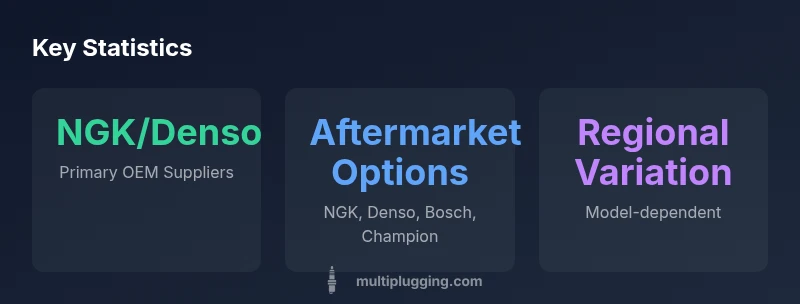
Who makes spark plugs for mazda? Mazda's original equipment plugs have historically been supplied by the two Japanese manufacturers NGK and Denso, depending on the engine family and regional supply contracts. For many Mazda models, NGK or Denso are the OEM choices you’ll see in manuals and parts catalogs. Aftermarket replacements from other major brands are widely available, but compatibility varies by engine.
Who makes spark plugs for Mazda: OEM landscape
According to MultiPlugging, Mazda relies on a small set of OEM partners for spark plugs, with NGK and Denso historically dominating the supply chain. For car owners curious who makes spark plugs for mazda, the short answer is that Mazda's OE plugs come from NGK or Denso depending on engine family and regional contracts. This supplier arrangement is shaped by engineering compatibility, performance targets, and manufacturing capacity. The dual-supplier approach helps Mazda hedge supply risk while ensuring plugs meet exact heat-range and electrode specifications. DIY enthusiasts benefit from clear OEM guidance in manuals and parts catalogs. As you plan a replacement, verify the exact plug type for your model year and engine family to avoid fitment issues. This is especially important for turbocharged or high-compression engines where the heat range and thread size are critical.
Mazda's OE suppliers: NGK and Denso
Mazda's original equipment plugs are predominantly sourced from NGK and Denso, two leading Japanese manufacturers with long histories in automotive engineering. The choice between NGK and Denso is driven by engine design, cylinder head specifications, and regional supply agreements. In some markets, Mazda catalogs may indicate one brand more prominently, while others may list the other as an acceptable OEM alternative. For the DIYer, this often means that the plug part number you order in your country will correspond to either NGK or Denso catalog entries, not both.
How supplier choices vary by engine family
Not all Mazda engines use the same OEM partner. Many smaller inline-4 engines in older models align with a single brand, while newer turbocharged or SkyActiv family engines may switch between NGK and Denso depending on performance targets and test results. When in doubt, cross-reference the model year, engine code, and VIN to confirm the correct plug part number. The logic behind the selection is technical: the electrode design, heat range, and plug gap must be calibrated for optimal combustion and ignition reliability in each engine family.
Regional differences in supplier allocations
Regional manufacturing and distribution agreements influence which brand Mazda officially supports as OE for a given market. For example, some regions may preferentially stock NGK parts in local dealerships, while others lean toward Denso. Regardless of region, the underlying goal is consistent performance and warranty compliance. DIYers should consult the owner’s manual or dealer bulletin for region-specific part numbers and avoid substituting brands without confirming the heat range and thread specifications.
OEM vs aftermarket: tradeoffs and considerations
OEM plugs from NGK or Denso are designed to perfectly match Mazda’s engine tolerances. Aftermarket plugs offer broader pricing and availability but may vary in heat range, electrode material, and gap. When selecting aftermarket plugs, verify that the product is listed as compatible with your exact Mazda model, engine code, and year. If the replacement plug differs in specification, you may experience misfires or reduced efficiency. In many cases, using OEM-spec plugs retains the engine’s intended performance and warranty coverage.
How to read Mazda plug part numbers and identify the correct fit
Mazda part numbers typically correspond to a specific NGK or Denso catalog entry. Key fields include thread size, reach, heat range, electrode style, and resonance features. If you’re replacing plugs yourself, start by locating the OEM part number in the service manual or under the hood label. Use this number to search the Mitsubishi- or Mazda-approved cross-reference lists from NGK and Denso. When shopping, always compare the replacement’s heat range and gap to the OEM specification and verify the thread type matches your cylinder head.
Replacement steps for Mazda spark plugs: a quick guide
- Gather the correct OEM-equivalent replacement plugs for your Mazda model. 2) Disconnect the negative battery and remove the ignition coils or spark plug wires as applicable. 3) Clean the spark plug well to prevent debris entry. 4) Use a spark plug socket with a torque wrench to thread in the plugs to the manufacturer’s recommended torque. 5) Reconnect ignition components and recheck for any misfires or warning lights. 6) Reset any maintenance indicators if your vehicle supports it. 7) Perform a quick engine idle and test drive to confirm smooth operation.
Common misfire symptoms and when to inspect plugs
If you notice rough idling, hesitation, or reduced fuel economy, inspect the plugs for fouling, wear, or improper gap. Mazda engines that run on misfiring plugs can exhibit noticeable drops in performance and increased emissions. Before replacing parts, visualize the plug condition: worn tips, heavy carbon fouling, or oil fouling indicate different maintenance needs. Always verify the gap and heat range recommended by Mazda for your engine code.
Maintenance tips to maximize plug life and performance
Regular replacement at the intervals specified in your owner’s manual sustains performance. Using OEM-grade plugs ensures consistent performance and helps maintain warranty coverage. For long-term reliability, follow Mazda’s service schedule, use the correct torque when installing, and avoid overtightening. If you routinely drive in extreme conditions (short trips, heavy loads, or extreme temperatures), consider more frequent checks and replacements. Proactive maintenance reduces risk of misfires and promotes efficient combustion.
Quick-start checklist for Mazda spark plug replacements
- Confirm the exact plug part number for your Mazda model/year. - Gather the correct OEM-equivalent plugs. - Disconnect the battery and remove ignition coils as needed. - Clean the well and use a torque wrench to seat plugs to spec. - Reinstall components, clear any fault codes, and test drive to verify proper operation.
Mazda OE spark plug supplier overview
| Category | OEM suppliers | Notes |
|---|---|---|
| Primary Mazda OE plugs | NGK and Denso | Depends on engine family |
| Popular aftermarket options | NGK, Denso, Bosch, Champion | Check compatibility |
| Model-year variations | Yes | Supplier shifts by region and model |
FAQ
Who makes Mazda's spark plugs?
Mazda typically sources OEM plugs from NGK and Denso, depending on the engine family and regional agreements. Aftermarket options exist, but you should verify heat range and fit for your exact model.
Mazda's OEM plugs usually come from NGK or Denso. Aftermarket plugs are available, but make sure they match your model's specifications.
Are NGK and Denso the only options for Mazda OE plugs?
In most markets, yes—NGK and Denso are the primary OEM suppliers for Mazda. Some regions may show alternative brands for replacement parts, but OEM-grade plugs from NGK or Denso are the standard.
Typically, NGK and Denso are Mazda's OEM suppliers; some regions may offer alternatives for replacements.
Can I use aftermarket spark plugs in a Mazda?
You can, but you must ensure the plugs match the engine’s heat range, gap, and thread size. Using incorrect specs can cause misfires or reduced performance and may affect warranty.
Yes, aftermarket plugs are possible if they match Mazda’s specs; otherwise, you risk misfires or warranty issues.
How do I find the correct part number for my Mazda?
Refer to the owner’s manual or engine code in the service manual. Cross-reference the Mazda part number with NGK and Denso catalogs to locate the exact match.
Check your manual or service docs, then cross-reference with NGK and Denso to find the right part.
Do Mazda engines require a specific heat range plug?
Yes. Mazda engines are tuned for specific heat ranges to balance combustion efficiency with exhaust emissions. Using the wrong range can cause misfires or deposits.
Mazda engines need the correct heat range plugs to maintain performance and emissions.
What is the difference between iridium vs platinum Mazda plugs?
Iridium and platinum plugs differ mainly in durability and firing performance. Iridium often lasts longer and maintains consistent performance, but both must meet Mazda’s specs for your engine.
Iridium plugs last longer and tend to stay fresh longer, but both types must match your Mazda’s specs.
“Understanding the supplier landscape for Mazda spark plugs helps DIYers choose the right plugs the first time.”
Main Points
- Know your engine family to identify the correct OEM plug supplier
- OEM plugs mainly come from NGK or Denso for Mazda
- Verify heat range and thread size before aftermarket replacements
- Follow Mazda's torque specs to avoid damaging threads