What Spark Plugs Does Toyota Use? A Practical Guide
Explore which spark plugs Toyota uses by model and generation, how OEM brands differ, and practical tips for DIY replacement and maintenance.


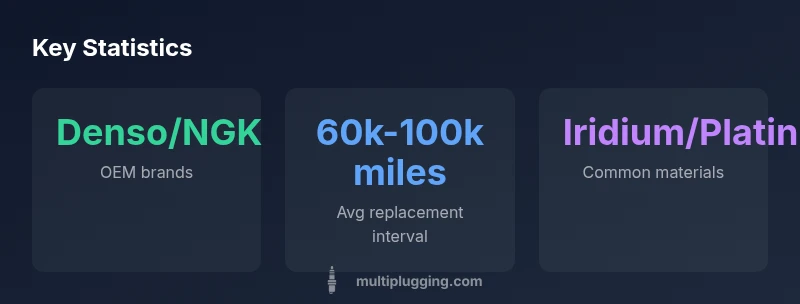
Toyota typically uses OEM spark plugs sourced from Denso or NGK, depending on the engine family and generation. In modern Toyota engines, iridium or platinum center electrodes are common, tuned for reliability and long life. Always confirm the exact part number in the owner's manual or the factory parts diagram for your VIN.
Toyota spark plugs: model- and generation-specific choices
If you’ve ever asked yourself, what spark plugs does Toyota use in a given model, the answer is: it depends on the engine family and generation. Toyota typically designs engines to run on specific plugs that balance ignition performance with longevity. In most modern Toyotas you’ll encounter iridium or platinum center electrodes, paired with a copper or nickel alloy ground electrode. The exact plug—brand, heat range, and gap—will be specified by Toyota for your VIN. For DIYers, this means starting with the official parts diagram or owner’s manual to identify the precise OEM specification before purchasing a replacement.
Understanding this mapping reduces guesswork when you shop ahead of a scheduled service or a DIY spark plug job.
OEM brands: Denso and NGK across Toyota engines
Toyota frequently sources its spark plugs from two global leaders: Denso and NGK. Depending on the engine family and regional supply, either brand may be used as the OEM supplier. The key takeaway for owners is to match the exact part number rather than just selecting a brand. If you’re replacing plugs yourself, verify the part number against Toyota Genuine Parts or VIN-based diagrams to ensure compatibility. This approach preserves performance characteristics that Toyota calibrated for fuel efficiency and emissions.
In some markets, Toyota’s engineering teams standardize on one supplier for a family of engines, while other regions may see both brands offered depending on production run and dealer allocation. Always confirm via the official parts catalog for your vehicle.
Iridium vs platinum: what matters for Toyota engines
Two common materials populate modern Toyota spark plugs: iridium and platinum. Iridium plugs typically offer longer life and faster idle stability, while platinum plugs can provide a good balance of longevity and cost. The choice between iridium and platinum is driven by heat range, electrode design, and the engine’s ignition system. For Toyota owners, this means you don’t replace based on brand alone—you replace with the exact heat range and electrode configuration recommended for your engine. When in doubt, reuse the OEM specification rather than substituting a plug that looks similar.
Replacement intervals and maintenance tips
Toyota’s newer engines are designed for longer life plugs, often spanning 60,000 to 100,000 miles between replacements, depending on model and driving conditions. Aggressive driving, short trips, or heavy loads can shorten that interval, so use a practical cushion and inspect plugs during routine service. Always perform a proper gap check after installation and torque plugs to the manufacturer’s specification. If you’re uncertain, it’s safer to consult the dealer or a trusted mechanic with access to VIN-specific guidance.
Pro tip: keep a small log of service intervals tied to your VIN so you know when the next replacement is due, rather than relying on a generic mileage figure.
How to verify the right plug for your Toyota
The safest way to verify the correct plug is to consult the owner’s manual or a VIN-specific parts diagram. Use your VIN to pull the exact OEM part number and cross-reference with the plug’s heat range, thread size, and reach. If you’re shopping aftermarket, choose plugs that match the OEM heat range and electrode design. A quick call to a Toyota dealer can confirm compatibility if you’re unsure. This is especially important for hybrids and newer turbocharged engines where ignition strategies are specific.
DIY replacement: quick checklist
Before you start, gather the right tools: a spark plug socket, a torque wrench, and a gap gauge. Disable the engine and ensure it is cool. Remove coil packs or ignition wires one by one, label them, and replace plugs with the correct part number. Re-gap only if specified, then reinstall with proper torque. Reconnect electrical connectors, clear any fault codes, and start the engine to confirm smooth operation. If you notice misfires or rough running after replacement, recheck torque and gap, or consult a professional.
Common misconceptions about Toyota spark plugs
A common myth is that OEM plugs are always the only option. While OEM plugs are designed to match Toyota’s calibration, many aftermarket plugs with the same heat range and electrode material can perform well. Another misconception is that longer life equates to better performance in every scenario; some engines benefit from replacements closer to the lower end of the recommended interval, especially if you drive aggressively or in extreme climates. Always verify compatibility and follow the manufacturer’s specifications.
Sources and further reading
For authoritative details, consult Toyota’s official owner manuals and the OEM parts catalogs, as well as technical sheets from Denso and NGK. You can also review dealer service bulletins and consumer guides from recognized automotive organizations for general plug maintenance practices.
Toyota spark plug type by engine family
| Model Family | Typical Plug Type | Notes |
|---|---|---|
| Modern inline-4 engines | Iridium or platinum (OEM) | Model-dependent; check owner manual |
| Older Toyota engines (pre-2010) | Platinum or copper core | Varies by engine; consult manual |
| Hybrid engines (e.g., Prius) | Long-life iridium/platinum | Specialized heat ranges |
FAQ
Do all Toyota engines use the same spark plug type?
No. Toyota uses different plug types, heat ranges, and electrode materials depending on the engine family and generation. Always refer to the VIN-specific documentation for the exact specification.
No—Toyota varies plug types by engine family; check the VIN-based spec for your car.
Can I use aftermarket plugs in a Toyota?
Yes, you can use aftermarket plugs that match the OEM heat range and electrode design. Verify compatibility with your model and VIN, and follow the manufacturer’s torque specs.
You can use aftermarket plugs if they match the OEM specs and VIN.
Are NGK and Denso the only options for Toyota?
Often yes for OEM, but many engines accept equivalent aftermarket plugs from NGK or Denso or other brands that meet the same specifications. Always confirm the exact part number.
OEMs sometimes use NGK or Denso; aftermarkets may be compatible if specs match.
How often should Toyota spark plugs be replaced?
Intervals vary by model, but many modern Toyotas are designed for 60,000–100,000 miles between replacements under normal conditions. Severe driving conditions can shorten this.
Most Toyotas aim for 60k to 100k miles, depending on model and conditions.
What are common signs of worn plugs in Toyota?
Symptoms include hard starting, rough idle, misfires, reduced fuel economy, and loss of power. If you notice these, inspect plugs and coils.
Hard start, rough idle, misfires, or poor MPG can indicate worn plugs.
Should I gap spark plugs for Toyota?
Many modern Toyota plugs come pre-gapped. If your manual requires a gap, use a precision gauge to set it, then torque to spec.
Most plugs arrive pre-gapped; only gap if your manual specifies it.
“Toyota’s OEM spark plugs are selected to optimize reliability and efficiency; in practice, most current engines use Denso or NGK equivalents, depending on the model.”
Main Points
- Know your VIN to pick the exact plug.
- OEM plugs from Denso or NGK are common.
- Iridium/platinum plugs are standard in modern Toyota engines.
- Follow Toyota’s replacement intervals and torque specs.
- Do not assume cross-brand compatibility without verification.