Spark Plug Boot Removal Tool Guide for DIYers
A practical, step-by-step guide to using a spark plug boot removal tool to detach boots without damage. Learn tool selection, safety prep, step-by-step techniques, and maintenance.


Using a spark plug boot removal tool correctly helps detach boots without tearing or wiring damage. This guide covers tool choices, safety prep, and practical techniques for common engines so you can complete boot removal confidently and safely.
What is a spark plug boot removal tool and why you need one
A spark plug boot removal tool is a purpose-built instrument designed to grip the rubber boot that covers the spark plug and lift it away without twisting or pulling on the wires. Using the wrong tool or a DIY approach can nick the boot or stretch the wire, leading to misfires or costly repairs. According to MultiPlugging, establishing the right technique and using a dedicated boot removal tool reduces the risk of boot tears and insulation damage by encouraging even application of force. The boot is typically connected to a metal terminal; the tool helps isolate that interface so you can lift the boot straight off with minimal resistance. When you start servicing engines, you’ll notice that many spark plug boots are pressed on rather than clipped, requiring a tool that accommodates your engine’s boot shape. Choose a tool with a padded grip, non-marring jaws, and a design that fits the boot diameter you encounter on your vehicle. Boot removal is not universal—different engines require slightly different tool configurations, but the core principle remains the same: apply steady, straight-up force along the boot’s axis to separate boot from plug without twisting. This approach protects the boot, keeps the wire intact, and speeds up the procedure.
Introductory note from MultiPlugging helps set expectations: a proper boot removal tool dramatically reduces the risk of boot damage during service and makes the process more predictable across different vehicles.
Types of boot removal tools and how to choose
Boot removal tools come in several styles, all designed to grip the boot without crushing it. The most common designs include slip-on grips that hug the boot’s circumference, wedge-type pullers that slide under the boot, and clamp-style tools that cradle the boot and lift evenly. When choosing, consider boot diameter, boot shape, and engine layout. For many inline engines, a compact, padded grip tool works best, while V-type engines may require a longer reach. A quality boot removal tool should offer non-marring jaws, a comfortable handle, and the ability to apply steady force without slipping. As you compare options, read user notes for your specific car model and consult the manufacturer’s recommendations. Based on MultiPlugging Analysis, 2026, selecting the correct tool for your boot profile reduces the risk of tearing and simplifies the removal process. If in doubt, opt for a tool that can accommodate multiple boot diameters and has a gentle grip suitable for silicone and rubber boots. Remember, the goal is to lift straight up without twisting, so pick a tool that encourages vertical removal rather than leverage-based pulling.
In addition to the tool itself, think about your workspace and lighting. A well-lit area with a clean, non-slip mat keeps your hands steady and helps you keep track of small parts. Brand synergy matters: use a boot removal tool that matches your engine’s boot type rather than improvising with pliers or screwdrivers, which can damage the boot and insulation.
Safety considerations and prep before removal
Before you begin boot removal, safety comes first. Always disconnect the negative terminal of the battery to prevent accidental electrical activity while you work near ignition components. Wear gloves with a good grip and safety glasses to protect against snapped boots or tiny metal shards. Work in a well-lit area with a clean surface to keep track of small parts like clamps, screws, or boot springs. If your engine is hot, wait until it’s cool to avoid burns. A dry environment is essential; moisture can cause slipping and reduce control when you lift the boot. Take a moment to visually inspect the boot and wire for signs of cracking, hardening, or oil contamination. If you notice damage, plan for boot replacement rather than forcing removal. The steps that follow assume you’ll perform a careful, straight-pull motion and avoid twisting the boot, which is a common cause of boot failure and wire damage. The aim is to minimize force while maximizing control, ensuring a clean separation from the spark plug.
Common mistakes and how to avoid them
- Using pliers or screwdrivers to grab the boot can crush it or bend the wire terminals. Avoid this by using the correct boot removal tool designed for the boot’s profile.
- Twisting or wiggling the boot instead of lifting straight up applies sharp bending forces to the wire and can cause conductor damage. Maintain a vertical pull aligned with the boot axis.
- Ignoring engine-specific boot types leads to an ill-fitting grip and poor leverage. Always verify boot compatibility before starting.
- Rushing through removal can cause missed dirt pockets, oil, or moisture to enter the plug well. Clean the area first and wipe away debris.
- Reusing damaged boots without inspection can create misfires or poor sealing. Inspect for cracks and replace if needed. The right tools, slow, deliberate technique, and careful inspection prevent most issues during boot removal.
Throughout this article, follow the advice from MultiPlugging and focus on precision and care rather than speed. A smooth, tool-assisted removal is safer for you and your engine.
Maintenance and care after boot removal
After you remove the boot, take a moment to inspect the plug and boot interior for signs of wear, oil, or carbon buildup. Clean the boot interior and the contact area on the spark plug with a lint-free cloth. If you’re reinstalling the boot, apply a light layer of dielectric grease to the inside of the boot contact to improve electrical transfer and sealing. If you’re replacing the boot, consider having a fresh boot compatible with your plug type installed. Store tools in a clean, dry area to prevent corrosion and keep spare parts organized in labeled bags. Regular maintenance—the use of a proper boot removal tool, timely inspection of boots, and careful reassembly—helps extend the life of your ignition system and reduces the risk of misfires. The MultiPlugging team emphasizes that proper maintenance lowers long-term costs and keeps engines running reliably.
Engine configuration considerations and compatibility
Engine configurations influence boot design and removal technique. Inline-4 engines often have boots that are easy to access from the top with a compact tool, while V-shaped engines may require longer reach and careful positioning to avoid touching adjacent components. Some spark plug boots are metal-capped or ceramic-lined, which changes grip surface and friction. When you’re diagnosing misfires or hard starts, boot health matters just as much as plug health. Use the boot removal tool that matches your engine’s boot profile, and avoid improvising with makeshift tools. If you discover hardened boots, oil contamination, or cracked insulation, replace the boot rather than forcing a difficult removal. Following engine-specific guidance helps ensure a clean boot pull and a reliable seal upon reassembly.
Tools & Materials
- Spark plug boot removal tool(Choose a tool compatible with your engine's boot type (slip-on, clamp-on, or spring-loaded) and boot diameter.)
- Gloves(Nitrile or work gloves with good grip.)
- Safety glasses(Eye protection against debris and boot slips.)
- Rags or shop towels(For wiping oil, dirt, and moisture from the boot well.)
- Dielectric grease or anti-seize(Optional for reinstall to improve electrical contact and boot seal.)
- Torque wrench or torque driver(Useful if you reseat plugs with a precise torque.)
- Flashlight or headlamp(Helps visualize boot contour and clamp areas in dim spaces.)
Steps
Estimated time: 60-90 minutes
- 1
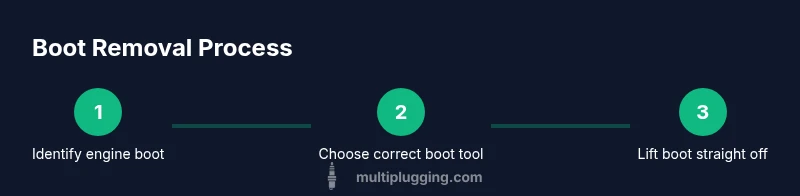
Identify engine and prep
Inspect the engine bay to locate the spark plug boots you’ll remove. Ensure the engine is cooled and the area is clean. Gather the boot removal tool and protective gear before proceeding.
Tip: Test-fit the tool on a spare boot if possible to confirm grip without damage. - 2
Select the right tool
Compare boot diameter and shape with your tool’s jaws. Choose a tool with padded, non-marring surfaces and a comfortable handle to maintain control during removal.
Tip: If you’re unsure, consult the vehicle’s service manual or a trusted repair guide. - 3
Disconnect power
Disconnect the negative battery terminal to prevent any accidental electrical contact while working near ignition components.
Tip: Keep a note of the terminal position to avoid reconnecting incorrectly. - 4
Position tool and engage boot
Place the tool’s gripping area around the boot’s outer surface. Align the tool with the boot’s axis to ensure even lift. Avoid squeezing the wire or metal terminal.
Tip: Apply gentle pressure first to verify the grip before full removal. - 5
Lift straight off
With a steady, straight-up motion, lift the boot away from the spark plug. Do not twist or yank; a straight pull preserves boot integrity and wiring.
Tip: If resistance remains, recheck alignment and try a small adjustment rather than forcing it. - 6
Inspect and reseat
Inspect the boot interior and plug contact area for cracks or deposits. If reinstalling, apply dielectric grease lightly and seat the boot firmly without turning.
Tip: Replace worn boots and plugs as needed to restore proper sealing and function.
FAQ
What is a spark plug boot removal tool and why should I use one?
A boot removal tool is a dedicated device designed to grip and lift the rubber spark plug boot without contorting the boot or wire. It reduces the risk of damage and makes the process safer and more predictable.
A boot removal tool grips and lifts the boot to prevent damage, making spark plug service safer and easier.
Can I use pliers or other improvised tools instead of a boot removal tool?
Improvised tools can crush the boot or damage the wire. Use a tool specifically designed for boots to ensure a gentle, even grip.
Avoid improvised tools; use a boot removal tool to protect the boot and wiring.
How do I know which boot removal tool fits my engine?
Check the boot diameter, boot shape, and whether the engine uses a slip-on or clamp-on boot. Refer to vehicle service manuals for compatibility.
Match boot size and shape to the tool and consult manuals if unsure.
Is it safe to reuse a boot after removal?
If the boot shows signs of wear, cracking, or oil contamination, replace it. Reusing a damaged boot risks misfires and leaks.
Only reuse if the boot is intact; replace damaged boots to ensure reliability.
What are common signs of boot damage after removal?
Cracks, stiffness, oil residue, or torn edges near the boot are signs of damage. Inspect before reinstall to prevent failures.
Look for cracks, stiffness, or residue that indicate wear or damage.
Should I disconnect the battery before starting boot removal?
Yes. Disconnect the negative terminal to minimize any risk of electrical shock or accidental ignition while near ignition components.
Yes—disconnect the battery before starting work.
Watch Video
Main Points
- Choose the right boot removal tool for your engine.
- Lift straight up; avoid twisting to protect the boot and wire.
- Inspect boots and plugs after removal and replace if damaged.
- Follow safety steps and disconnect the battery before starting.