Spark Plug Removal Tools: A DIY Guide
Learn how to choose and use spark plug removal tools for safe, effective plug removal and replacement. Step-by-step guidance, safety tips, and tool-care tips for DIY enthusiasts.


You will learn to choose and use the right spark plug removal tools for your engine, safely remove old plugs, and install new ones. The guide covers socket types, extensions, grip techniques, and torque considerations to protect threads and prevent dropped plugs. Expect practical, field-tested steps and clear safety guidance to complete a professional-quality plug change.
What are spark plug removal tools and why you need them
Spark plug removal tools are purpose-built implements that help you access, loosen, and extract spark plugs from engine cylinders without damaging surrounding components. The core tool is a spark plug socket, a deep-well hex socket designed to fit the plug’s hex with enough depth to clear the induction pipe and coil hardware. Many sockets include a rubber insert or magnetic tip to hold the plug securely during removal and installation, reducing the chance of dropping a hot plug. Extensions, adapters, and a flexible head ratchet increase reach and angle in cramped engine bays on cars, motorcycles, boats, or small engines. For precise reinstallations, a torque wrench ensures plugs are tightened to spec, while anti-seize compounds and dielectric grease protect threads and sealing surfaces. The right spark plug removal tools prevent cross-threading, minimize debris in the cylinder, and help you avoid costly engine repairs. In this guide, you’ll learn how to identify plug sizes, pair tools with engine layouts, and perform a clean plug swap with confidence using specialized spark plug removal tools.
Choosing the right tool for your engine
Choosing the right spark plug removal tools starts with matching the tool to the plug size and the engine layout. Most cars use a standard deep spark plug socket with a 3/8-inch drive, but some engines require larger sizes such as 13/16-inch or 5/8-inch sockets. Check your service manual for the exact plug size before buying. Look for a socket with a rubber insert or a magnetic center to hold the plug securely during removal and installation; this reduces the risk of dropping a hot plug. A long extension can help reach plugs located deep in the head, while a flex-head ratchet or swivel head provides angle flexibility in cramped bays. For stubborn plugs, a breaker bar or a torque wrench can help break free threads without slipping. If you service small engines (mowers, snow blowers, generators), you may also encounter 12 mm or 7/8-inch sockets. Always use a properly rated torque wrench when reinstalling plugs to the manufacturer’s specification. In practice, pairing a high-quality spark plug removal tool set with the right extensions will dramatically reduce frustration and the chance of cross-threading. Always store tools in a dedicated case so you have the right socket size and backup options when you need them.
Safety and preparation before you start
Preparing for spark plug removal is just as important as choosing the right tools. Start by turning off the engine and removing the key, then disconnecting the negative battery terminal to prevent accidental short circuits. Allow the engine to cool completely; hot cylinders can cause burns and damage the ceramic insulator when touched. Clean the area around each plug to prevent dirt and grit from falling into the well during removal. Wear eye protection and gloves to guard against sharp edges and hot components. Gather your spark plug removal tools, including your socket, extension, and ratchet, within easy reach. If your vehicle has coil-on-plug ignition, identify and label each coil before disconnecting them so you can reattach them in the same position. A clean work surface, proper lighting, and a small towel or mat to lay removed plugs on will help prevent dropped parts from rolling away. Finally, have replacement plugs ready and the correct torque specification for your engine. By taking these safety and preparation steps, you minimize risk and set yourself up for a smooth removal using the spark plug removal tools you’ve chosen.
How to use spark plug removal tools in practice
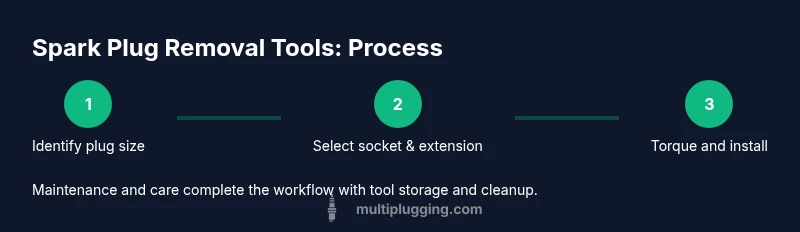
In practice, the process starts with confirming the plug’s size and the engine’s layout, then selecting the correct socket and extensions. Clean around the plug to minimize debris entering the cylinder. If the plug is stubborn, use a small amount of penetrating oil and allow it to work for a few minutes before attempting removal again. Slowly loosen the plug while keeping steady pressure to avoid cross-threading. Once the plug begins to back out, switch to a lighter touch and finish by hand to prevent sudden drops or breaking the ceramic. Before reinstalling, inspect the plug and the well for deposits, carbon buildup, or oil seepage that could indicate seals or rings needing attention. Apply a light coating of anti-seize to the threads if recommended by the manufacturer, then thread the new plug in by hand to avoid cross-threading before torquing to spec with a torque wrench. Reconnect ignition components and check engine function with a careful test run.
Notes: Always use the tool that matches the plug size—forceful attempts with the wrong socket can strip the plug or the head. Store tools immediately after use and wipe down your work area.
Common mistakes and how to avoid them
Common pitfalls include using the wrong socket size, which can round the plug hex, or relying on a metal magnet without securing the plug, which may drop it into the engine bay. Another frequent error is over-tightening the plug during reinstallation, which can strip threads or crack the head. Failing to disconnect the battery or to allow the engine to cool can cause shorts or burns. Debris falling into the plug well during removal is a frequent issue when the surrounding area isn’t clean. A poor grip on the tool can slip and damage the plug or nearby components. To prevent these mistakes, always verify socket sizes with the manual, use a rubber-inserted socket or magnetic retention, and torque to spec with a calibrated wrench. Keep the workspace organized and double-check that ignition coils are reattached to their original positions. Finally, replace any damaged plugs rather than forcing a damaged unit back into service.
Maintenance and care for your tools
After completing a plug removal and replacement, clean the tools and wipe away any oil or residue. Store sockets, extensions, and wrenches in a dedicated case to prevent loss and ensure quick access for future jobs. Inspect rubber inserts for wear and replace worn pieces to maintain grip. Keep a small brush handy to clear dust and debris from sockets and the well area. Periodically lubricate moving parts on flexible extensions and swivel joints with a light machine oil, ensuring not to contaminate the plug wells. Always hobble tools' edges or surfaces away from corrosion-prone areas and replace any damaged tools to avoid tool failure during future jobs.
In short, regular upkeep of spark plug removal tools ensures they stay precise, safe, and ready for future maintenance tasks.
Tools & Materials
- spark plug socket (deep well) with rubber insert(Size must match plug (e.g., 5/8", 13/16", 16 mm). Rubber insert preferred for grip.)
- ratchet with 3/8" drive(Solid construction; ensure smooth action to avoid slippage.)
- long extension bar(Allows reach to deep or obstructed plugs.)
- flex-head or swivel-head adapter(Helpful for tight engine bays; not always essential.)
- torque wrench(Important for reinstalling plugs to spec; use the manufacturer torque value.)
- anti-seize compound(Apply lightly to threads if recommended by plug manufacturer.)
- dielectric grease(Used on coil boots to prevent sticking and improve sealing.)
- gloves, eye protection(Safety gear to protect from sharp edges and debris.)
- clean rags or shop towels(To wipe surfaces and keep the work area clean.)
Steps
Estimated time: 60-90 minutes
- 1
Gather your tools and parts
Collect your spark plug socket, extension, ratchet, any adapters, the replacement plugs, torque wrench if available, and safety gear. Confirm plug size matches the socket and check that you have fresh plugs ready for installation.
Tip: Lay tools out in order of use to speed the job and reduce searching halfway through. - 2
Locate the spark plugs and access points
Open the hood, identify the plug wells, and confirm which plugs require service. For coil-on-plug setups, locate each ignition coil; remove the coil cover if needed.
Tip: Label coils or take a quick photo to ensure correct reassembly. - 3
Prepare the engine and safety measures
Turn off the engine, remove the key, and disconnect the negative battery terminal to prevent shorts. Allow the engine to cool and clean the plug area to minimize debris falling into the well.
Tip: Wear eye protection and gloves to protect from sharp edges. - 4
Disconnect ignition components
Carefully unplug coils or wires attached to the plugs. Avoid pulling on the wires themselves; use the connector or boot to detach.
Tip: Take your time to avoid damaging connectors or wires. - 5
Loosen and remove the old plug
Attach the proper spark plug socket with the extension to the ratchet. Gently break the torque by turning counterclockwise, then remove by hand to prevent dropping debris.
Tip: If the plug is stubborn, apply a brief amount of penetrating oil and retry after a few minutes. - 6
Inspect and prepare the new plug
Check the new plug for proper gap and condition. If needed, adjust the gap per manufacturer spec. Lightly coat the threads with anti-seize and ensure the seating surface is clean.
Tip: Do not overtighten or over-gap; follow the engine’s specification. - 7
Install the new plug and torque to spec
Insert the new plug by hand to avoid cross-threading, then tighten with the torque wrench to the recommended specification. Reconnect ignition components in their original positions and ensure a snug fit without over-tightening.
Tip: Always torque to spec; overtightening can strip threads and require costly repairs. - 8
Reassemble, test, and clean up
Reinstall any covers, reconnect the battery, and perform a test run. Check for leaks or misfires, then clean the work area and store tools properly.
Tip: Run the engine briefly to confirm proper operation before driving.
FAQ
What are spark plug removal tools and why do I need them?
Spark plug removal tools are specialized sockets, extensions, and accessories designed to access and remove spark plugs without damaging the engine. They help you grip, reach, and torque plugs correctly, reducing the risk of cross-threading or dropping the plug.
Spark plug removal tools are sockets and extensions that make it easier and safer to remove and replace spark plugs without harming your engine.
Do I need a torque wrench for reinstalling plugs?
Yes. A torque wrench helps you tighten plugs to the manufacturer’s specification, preventing under- or over-tightening which can cause leaks or thread damage.
A torque wrench is recommended to ensure you reach the right tightness when reinstalling plugs.
How do I know which socket size to use?
Check your vehicle's service manual for the exact plug size. Common sizes include 5/8" and 13/16", but some engines use metric equivalents. Use a deep-well socket with a rubber insert or magnetic tip for secure grip.
Look up the plug size in the manual, then pick a deep socket with a rubber insert or magnet.
Can I reuse old spark plugs after cleaning?
Reusing old plugs is generally not recommended after removal. Inspect for wear and deposits; if signs of wear exist, replace with new plugs following the appropriate heat range and gap specifications.
Usually you should replace old plugs rather than reuse them after removal.
What safety steps should I follow before starting?
Always disconnect the battery, allow the engine to cool, and wear eye protection. Clean around plug wells to keep debris out and label ignition components when dealing with coil-on-plug configurations.
Disconnect the battery, let the engine cool, and clean the area before starting.
What should I do if a plug refuses to come out?
Stop applying force to avoid breaking the plug or head. Apply light penetrating oil and wait a few minutes, then reattempt with a correct socket and extension. If stubborn, seek professional help.
If it’s stubborn, don’t force it—wait, then retry with proper tools, or ask a pro.
How do I know when the plug is properly torqued?
Torque specs vary by plug and engine. Use the manufacturer’s specification and a calibrated torque wrench to reach the recommended torque value, then verify with a final light turn if required by the spec.
Use the exact torque spec and a torque wrench to reach it.
Watch Video
Main Points
- Choose the right spark plug removal tools for your plug size.
- Prepare safely and work in a clean, well-lit area.
- Torque plugs to spec to prevent thread damage.
- Inspect plugs and well for damage and deposits after removal.