How to Remove Spark Plugs: A Practical DIY Guide
Learn how to remove spark plugs safely and confidently. This step-by-step guide covers tooling, safety, access, removal, inspection, and reassembly to keep your engine running smoothly.


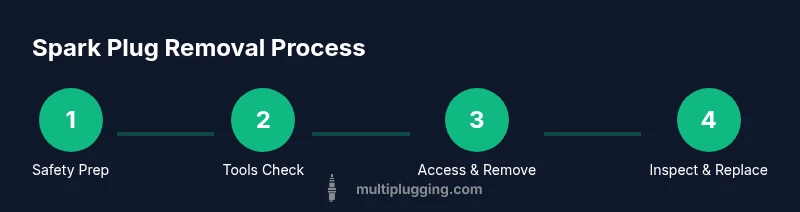
To remove spark plugs safely, begin with the right tools, a cooled engine, and a clear work area. Disconnect the ignition coil or spark plug wire, then loosen the plug with a spark plug socket and ratchet. Gently lift the plug from the cylinder head, inspect its condition, and prepare it for replacement or cleaning. Proper technique minimizes damage and ensures reliable reassembly.
Safety-first foundation for how to remove spark plugs
Learning how to remove spark plugs starts with safety and a plan. A careful approach reduces the risk of breaking a plug off in a cylinder or damaging nearby components. According to MultiPlugging, preparing your workspace, confirming engine type, and gathering the right tools sets the stage for a successful job. Start by letting the engine cool completely and removing the negative battery terminal to prevent accidental sparks. Clear the area of clutter, lay down rags, and be mindful of hot exhaust manifolds. The goal is to create a stable, clean environment so that every action—whether loosening a stubborn plug or inspecting threads—proceeds smoothly and safely.
Safety note: never work on a hot engine. Wear eye protection and gloves, and keep flammable materials away from the work area. These precautions reduce burn risk and injury if a spark or tool slips.
In addition to safety, have a clear plan for reassembly. Label wires or coils as you remove them and take a few photos to confirm the correct routing when you put everything back together. Doing this makes the process faster and minimizes the chance of miswiring or cross-threading.
-1 placeholder?
Tools & Materials
- spark plug socket with drive handle(Usually 3/8 in or 1/2 in drive; common plug sizes are 5/8 in or 13/16 in)
- ratchet or breaker bar(For loosening plugs safely and steadily)
- extension bar(Helpful for recessed plugs behind other components)
- feeler gauge or plug gap tool(Used if you check or adjust gap after removal)
- coil boot puller or needle-nose pliers(Safely disconnect ignition coil/boot without damaging the wire)
- anti-seize compound (optional)(Light coat on threads if recommended by manufacturer)
- shop towel or rag(Clean surface and wipe residue from threads)
- penetrating oil (optional)(Helps free a stuck plug—apply and wait a few minutes)
- gloves and safety glasses(Personal protection to avoid injuries)
- new spark plugs (for replacement session only)(Replace only if you’re performing a full plug change)
Steps
Estimated time: 40-60 minutes
- 1
Cool engine and prepare workspace
Begin with the engine off and cool to the touch. Remove the keys, set parking brake if applicable, and clear a clean area around the engine bay. This reduces the risk of burns and keeps your tools from slipping on hot surfaces.
Tip: Wait at least 15 minutes after shutdown if the engine is hot before starting work. - 2
Gather the right tools
Assemble the spark plug socket, ratchet, extension if needed, coil puller, gloves, and rags. Having everything at hand reduces interruptions and helps you work methodically.
Tip: Lay tools out in order of use to speed up the job. - 3
Disconnect power (battery)
For safety, disconnect the negative terminal of the battery to prevent shorts or accidental starts while you work on the ignition system.
Tip: Always disconnect the battery before touching any ignition components. - 4
Locate the plugs
Identify the correct plug locations for your engine layout (inline, V, or boxer). Refer to the owner’s manual or a service guide to confirm which cylinders you’ll service first.
Tip: Label each coil or boot with tape or take photos to ensure proper reassembly. - 5
Remove ignition coil/boot
Carefully disconnect the coil boot or ignition wire from the plug using a puller or gentle leverage. Avoid pulling on the wire itself to prevent damage.
Tip: Keep the boot paired with its plug to avoid mix-ups during reassembly. - 6
Loosen the spark plug
Fit the spark plug socket over the plug, keep the socket square, and turn counterclockwise to loosen. Apply steady, even pressure to avoid cross-threading or snapping the electrode.
Tip: If the plug resists, apply a few drops of penetrating oil and wait a few minutes before retrying. - 7
Extract the plug
Gently lift the plug straight out once it’s loose. Use a plug wrench to avoid twisting the threads. Inspect the plug for wear, fouling, or damage before deciding to replace or reuse.
Tip: Note the plug condition and take a photo for reference. - 8
Inspect and decide
Examine electrode wear, gap, and insulation. If the plug shows heavy fouling or glazing, replacement is usually the best option rather than cleaning.
Tip: Record the observed condition to guide replacement quantity or timing. - 9
Prepare threads and gap (if replacing)
Clean the thread hole and the plug threads. If you’re replacing, check or set the gap using a feeler gauge according to your engine’s specifications.
Tip: Apply a light coat of anti-seize if recommended by the manufacturer, but follow their guidance. - 10
Install the new plug by hand
Thread a new plug by hand to avoid cross-threading, then snug it with the socket. Do not force it; finger-tighten first, then a light additional turn as advised by the manual.
Tip: Hand-starting prevents cross-threading and ensures a proper seal. - 11
Reconnect coil/wires and tighten
Reconnect the ignition coil or boot and snug the connection. If your manual specifies a torque, use a torque wrench to reach the recommended value.
Tip: Never over-tighten, which can strip threads or damage the cylinder head. - 12
Test the engine and wrap up
Reconnect the battery, start the engine, and listen for smooth operation with no misfires. If you hear rough running, recheck the plug seat and connections.
Tip: Take a short drive to ensure there are no hesitation or misfires under load.
FAQ
Do I need to disconnect the battery before starting?
Yes. Disconnect the negative battery terminal before removing spark plugs to minimize the risk of sparks and electrical shorts.
Yes, disconnect the negative battery terminal before starting to remove spark plugs to stay safe.
What tools do I need to remove spark plugs?
You’ll need a spark plug socket with drive, a ratchet, possibly an extension, coil boot puller, gloves, and rags. Optional items include penetrating oil and a feeler gauge.
You’ll want a spark plug socket, a ratchet, extensions if needed, and coil boot pullers, plus gloves and rags.
Can old spark plugs be reused?
Old plugs can sometimes be reused if they are clean and within spec, but most drivers replace worn plugs to maintain performance and fuel efficiency.
Old plugs may be reused if still within spec, but replacements are usually recommended for best performance.
What if a spark plug is stuck?
Apply penetrating oil to the threads and wait a few minutes. Avoid forcing the plug, which can strip threads or break the plug. Try again slowly.
If a plug is stuck, apply penetrating oil and wait a bit, then try again gently.
Should I use anti-seize on spark plug threads?
Some manufacturers recommend anti-seize on the threads; if advised, apply a light coat. Follow the vehicle’s service manual for the best guidance.
Some vehicles need anti-seize on the threads; check the manual and use a light coat if recommended.
How do I know when to replace spark plugs?
Replace when the plugs show wear, heavy fouling, or poor engine performance. If you’re unsure, consult a service manual or a trusted guide.
Replace plugs if they’re worn or fouled; if in doubt, follow the manual or a professional’s advice.
Watch Video
Main Points
- Safety and planning first: a cooled engine and organized tools.
- Use the correct plug socket and gentle technique to avoid cross-threading.
- Inspect plug condition to decide on replacement versus cleaning.
- Follow manufacturer torque guidance and avoid over-tightening.
- Test-run the engine to confirm proper operation.