Spark Plug 5hp Briggs Stratton: DIY Guide to Service
Learn how to diagnose, gap, clean, and replace a spark plug on a 5hp Briggs Stratton engine. This step-by-step guide covers safety, tools, and maintenance tips.


You will learn how to inspect, gap, replace, and test a spark plug on a 5hp Briggs Stratton engine. Start with the correct plug type and the right gap, ensure the engine is cool, and disconnect the spark plug wire before any work. This guide covers safety, tools, step-by-step actions, and testing results for reliable starting.
Why the spark plug matters in a 5hp Briggs Stratton engine
The spark plug is the tiny, mission-critical component that creates the ignition spark at the exact moment the fuel-air mix is ready to burn. In a Briggs Stratton horizontal air-cooled engine rated around 5hp, a healthy plug helps ensure crisp starts, clean idle, and steady power delivery. When the plug fouls or wears, you may see hard starting, misfires, or rough running. For the spark plug 5hp briggs stratton, using the correct heat range and gap is essential for reliable operation, especially under load.
When you service a spark plug on this class of engine, you’re not just replacing a worn electrode—you’re restoring predictable combustion, fuel efficiency, and lower emissions. The right plug works with your air filter, carburetor settings, and fuel quality to keep the engine in the efficiency zone. MultiPlugging’s analysis, 2026, shows that improper plug selection or gap can compound ignition timing and misfire symptoms, especially in older or poorly tuned small engines.
In practice, a correctly configured spark plug for a 5hp Briggs Stratton reduces cold-start effort and improves throttle response. If you’ve recently changed the air filter or did a carb clean, re-checking the spark plug is a good diagnostic step. Remember: a faulty plug often mimics fuel or compression problems, so testing the plug first can save you time.
How to identify the correct spark plug for spark plug 5hp briggs stratton
Briggs Stratton engines use specific spark plug geometries, including thread size, reach, and heat range. The exact fit can vary by model, but you’ll commonly encounter 14mm thread plugs with standard reach. The critical variables are thread size, electrode gap, and heat range. Always consult your engine’s manual or Briggs Stratton service literature to confirm the correct plug part number for your model. The spark plug 5hp briggs stratton you choose should match the heat range and thread; a plug that runs too hot can cause pre-ignition, while a plug that runs too cold can cause fouling.
For many 5hp Briggs Stratton engines, a plug in the single-digit heat range is typical, and the gap is set to a value that allows efficient ignition without pre-ignition in various climates. Keep a small set of spare plugs, and tag the one currently installed so you can compare wear over time. You’ll often find guidance on gap values in the product literature rather than general sites; when in doubt, start with a standard gap like 0.030 inches and adjust after testing.
Safety first: precautions before you begin
Always start with safety. Set the engine on a stable surface, engage the parking brake if applicable, and disconnect the spark plug boot before touching any ignition components. Let the engine cool completely to avoid burns from hot exhaust or cylinder fins. Work in a well-ventilated area, away from flames, fuel leaks, and children or pets. Wear eye protection and gloves to keep from contact with fuel residue or sharp edges on the spark plug opening.
When you’re ready to handle the spark plug, keep a clean workspace and avoid letting metal tools touch the spark plug terminal or ignition coil. This can prevent accidental shocks or short circuits. If you’re unsure about any step, pause and consult the engine’s manual or a trusted service guide, such as MultiPlugging resources, for safe best practices.
Symptoms that point to spark plug issues
If you’re seeing hard starts, frequent misfires, rough idle, or a noticeable drop in power under load, the spark plug is a likely culprit. Fouling from oil or fuel deposits can insulate the electrode and weaken the spark, while electrode wear reduces intensity. For spark plug 5hp briggs stratton engines, symptoms can mimic carb or ignition coil problems, so isolating the plug with a quick test helps you avoid replacing the wrong part.
Carry out a quick visual inspection: check for cracks, heavy deposits, or damaged porcelain. A gap that has widened beyond specification will also cause misfires. If deposits cover the electrodes, you can try a gentle cleaning, then re-gap and re-test. If you see worn electrodes or a burnt central electrode, replacement is recommended.
Cleaning, inspecting, and deciding when to replace
Cleaning a fouled plug is sometimes a temporary fix, but it’s not a substitute for replacement when wear is evident. If you see heavy oil, fuel, or ash deposits, cleaning with a non-abrasive method and ensuring the gap is set correctly can restore function in some cases. Use a wire brush only gently to avoid damaging the porcelain or electrode. If the plug shows worn electrodes, a gap drift, or a damaged insulator, replace it with a plug of the same type recommended for your engine.
After cleaning or replacing, verify the plug’s thread engages smoothly and seats firmly. Do not over-tighten; follow the manufacturer’s torque guidance to avoid stripping threads. Re-inspect after a start and confirm the engine runs smoothly and starts reliably.
Gap measurement and installation basics
The gap specification for your spark plug 5hp briggs stratton depends on the model. In many typical small engines, you’ll start with a gap around 0.030 inches, but always verify with the user manual or Briggs Stratton service sheets. Use a proper gap tool and measure the center electrode distance from the ground electrode. If the gap is off, adjust carefully by bending the ground electrode only; avoid bending the center electrode. After setting the gap, apply a small dab of dielectric grease to the inside of the boot to improve weather sealing and make future removal easier.
When reinstalling, thread the plug by hand to avoid cross-threading, then snug with a ratchet. If torque specs exist, use a torque wrench to reach the proper tightness. Start the engine to confirm ignition and adjust if needed.
Maintenance habits to prolong spark plug life
Regular maintenance helps prevent premature plug wear and fouling. Use fresh, clean fuel and a properly adjusted air filter to minimize carbon buildup on the plug. A clean carburetor and good fuel quality support consistent combustion, reducing abnormal deposits on electrodes. Schedule periodic checks of the plug condition as part of your seasonal service: inspect, gap, clean, and replace as needed depending on engine model, usage, and environment. A simple habit is to note the plug’s wear cycle and replace it at the start of each season to maintain reliable performance.
Authority sources and learning resources
For authoritative guidance, consult the Briggs Stratton service literature and trusted extension resources. The official Briggs Stratton manuals specify the exact spark plug type, heat range, reach, and torque for each model. You can also review university extension publications on small-engine maintenance for best practices and troubleshooting. This ensures you follow model-specific recommendations rather than generic guesses.
Quick troubleshooting tips for the 5hp Briggs Stratton
If the engine won’t start after a plug replacement: check that the spark plug boot is fully seated and the coil wiring is intact. Confirm the carburetor is clean and fuel is fresh. If ignition and fuel are good but starting remains difficult, re-check the plug gap and re-test. Use a spare plug to verify consistent ignition in different cylinders or models.
Tools & Materials
- Spark plug (compatible with Briggs Stratton 5hp engines)(Check engine model to confirm heat range and thread size)
- Spark plug gap gauge(Common gap around 0.030 inches; verify with manual)
- Spark plug socket with rubber insert(3/8-inch drive; snug grip to avoid dropping plug)
- Ratchet and extension(To reach plug well)
- Dielectric grease (optional)(Coat the inside of the boot for sealing)
- Anti-seize compound (optional)(Use only if recommended by manual; small amount on threads)
- Rag or solvent for cleaning(Wipe debris and oil before testing)
- Torque wrench (optional)(Use if there is a published torque spec)
Steps
Estimated time: 20-30 minutes
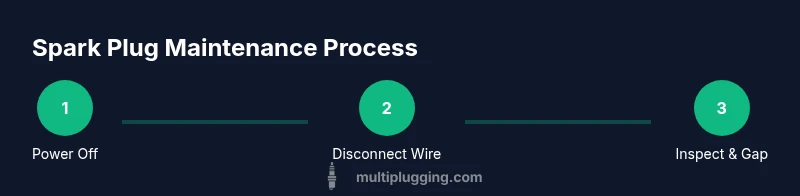
- 1
Power off engine
Ensure the engine is off and cool. Engage safety measures and remove any keys or electrical power to prevent accidental starting. This minimizes burns and keeps you safe while working on the spark plug.
Tip: Always verify the engine is cool before touching ignition components. - 2
Disconnect spark plug wire
Carefully pull the spark plug boot away from the plug by gripping the boot, not the wire. This prevents coil damage and electrical shock.
Tip: Use a gloved hand to avoid dropping the boot. - 3
Remove spark plug
Attach the spark plug socket, apply gentle counter-clockwise pressure, and lift straight out. Inspect the plug seat area for grime.
Tip: Keep the plug and socket aligned to avoid cross-threading. - 4
Inspect plug condition
Look for fouling, wear, cracks, or burnt deposits on the ground and center electrodes. Visual wear typically indicates replacement is needed.
Tip: A heavily fouled plug often signals fuel or oil balance issues. - 5
Set gap and decide on replacement
Measure gap with a gauge and adjust to the manufacturer’s spec if possible. If wear or deposits are present, replace with a new plug.
Tip: Follow manual-specified gap; avoid over-adjusting the gap. - 6
Reinstall and test
Thread plug by hand, then snug with a ratchet (or torque wrench if spec provided). Reconnect the boot and start the engine to verify starting and smooth operation.
Tip: Check for leaks around the plug after running briefly.
FAQ
What spark plug should I use for a Briggs Stratton 5hp engine?
Consult the engine manual for the exact plug type, heat range, and thread size. Model variations require model-specific parts.
Check your model's manual for the exact plug type and heat range.
How often should I replace the spark plug on a 5hp Briggs Stratton?
Replace when worn or fouled, typically at the start of a season or after testing shows ignition problems.
Replace when worn or fouled, usually at season start.
What is the correct spark plug gap for Briggs Stratton 5hp?
Gap depends on the model; verify with the manual. A common starting point is a small fixed gap to ensure reliable ignition.
Gap depends on your model; check the manual.
Can I clean a fouled spark plug instead of replacing it?
Light fouling can sometimes be cleaned, but heavy wear or oil/fuel fouling usually requires replacement.
Clean sparingly or replace if heavy wear.
Why won't my Briggs Stratton start after plug replacement?
If wiring, fuel, and carburetion are sound, re-check the plug gap and seating; other causes include ignition coil or carb issues.
Check wiring and fuel, then re-check the plug.
Is anti-seize needed on spark plug threads?
Only if the manual calls for it; torque integrity is usually sufficient to prevent loosening.
Only use anti-seize if the manual says so.
Watch Video
Main Points
- Identify the correct plug type for the engine model.
- Verify and adjust the spark plug gap to spec.
- Replace worn or fouled plugs rather than cleaning as a fix.
- Reinstall carefully and test to confirm ignition.
- Maintain regular spark plug maintenance as part of seasonal service.