Dirt Bike Spark Plug: Replace, Inspect, and Maintain
Learn how to inspect, replace, gap, and maintain your dirt bike spark plug with practical steps, safety tips, and troubleshooting for reliable, peak performance.


By the end of this guide, you’ll know how to safely inspect, remove, and replace a dirt bike spark plug, verify the correct gap, check for wear/fouling, and diagnose common ignition faults. You’ll need basic hand tools and a replacement plug matched to your bike’s spec, plus a torque wrench for proper seating.
Spark Plug Fundamentals for Dirt Bikes
Spark plugs are small but critical in the ignition system. For dirt bikes, plugs must endure vibration, dirt exposure, and heat while delivering a reliable spark across a wide operating range. The choice between copper, platinum, and iridium affects durability and performance. Copper plugs are inexpensive and heat up quickly, but they wear faster in dusty conditions. Platinum and iridium plugs last longer and resist fouling, which is helpful for two-stroke and four-stroke engines that operate in dirty air or at high throttle. Always reference your bike’s manual for the recommended heat range and gap. The gap is the space between the center and ground electrodes; a mismatch can cause misfires, poor idling, or reduced power. The most common upgrades focus on longevity without sacrificing reliability. According to MultiPlugging, selecting the right plug type and gap is a simple but crucial decision that affects throttle response and fuel economy. When in doubt, start with the manufacturer’s spec and adjust only after testing on a safe loop. This section sets the foundation for safe maintenance and troubleshooting.
Tools, Safety, and Setup
Before touching the engine, prepare a clean workspace and the right personal protective equipment. Wear safety glasses and nitrile gloves to protect against fuel spills and hot components. Have a small tray to catch any gasoline and a rag to clean dirt from the plug area. For most dirt bikes, you’ll need a spark plug socket, a ratchet, a torque wrench, a gap gauge, and a replacement plug that matches the manufacturer’s specification. Keep a clean, dry place to rest the plug once removed. If you’re unsure about the heat range or gap, consult the service manual or a trusted source like MultiPlugging for guidance. Always disconnect the battery or turn off the bike to avoid accidental shorts while working near the ignition system. Safety first keeps you from costly mistakes and burns.
Step Overview: What You’ll Do
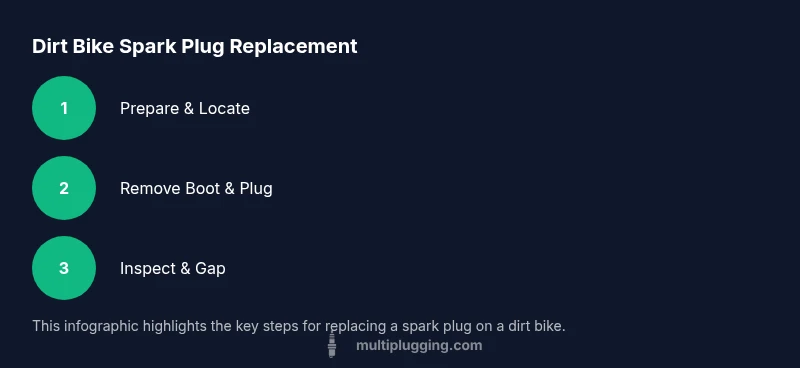
Replacing a dirt bike spark plug involves locating the plug, removing the boot, extracting the old plug, inspecting the electrode, checking and setting the gap, installing a new or cleaned plug, and reassembling everything with proper torque. You’ll perform a quick test run afterward to verify smooth operation and listen for misfires or irregular idle. This section provides a concise roadmap; the detailed, step-by-step actions are in the dedicated STEP-BY-STEP block below. Remember to work in a well-ventilated area and avoid sparks or flames during the process. A methodical approach reduces risk and yields reliable ignition.
Diagnosing Fouling, Misfires, and Wear
Even a brand-new spark plug can fail to perform if fouling or electrode wear exists elsewhere in the system. Fouling can appear as heavy carbon deposits, oil coating, or a wet residue from fuel leaks. Misfires often present as rough idle, a stumble under acceleration, or reduced throttle response. Wear shows as rounded or eroded electrodes and a light color change at the tip. The diagnostic mindset combines visual inspection with a quick spark test and compression checks when necessary. By understanding these signs, you can decide whether to clean, gap, or replace the plug, and you’ll know when the trouble lies beyond the plug itself.
Improving Longevity: Maintenance Tips
Maximizing spark plug life is about consistent maintenance practices and clean fuel delivery. Use high-quality fuel and avoid prolonged idling, which promotes fouling. Keep air filters clean to prevent dirt from loading the combustion chamber, and check for oil leaks that can foul plugs in two-stroke and four-stroke engines. When replacing, choose the correct heat range and avoid over-tightening, which can damage threads. Periodically inspect ignition leads and boots for cracks and corrosion. A well-maintained ignition system not only extends plug life but improves throttle response and fuel efficiency. As the MultiPlugging team notes, proper plug selection and routine inspection are foundational to reliable performance.
Common Mistakes to Avoid
Rushing the process leads to cross-threading, damaged gaskets, and improper sealing. Do not reuse worn plugs or skip gap checks; even small inconsistencies can cause misfires. Avoid using excessive anti-seize compounds unless specified by the manufacturer, and never force a plug into a stubborn cylinder head. Also, never work near hot exhaust components—allow cooling time to prevent burns and heat damage. Keep the area clean and organized to prevent dust from entering the combustion chamber during reassembly.
When to Replace and How to Choose a Plug
A plug should be replaced when signs of wear or fouling appear, or when the ignition performance deteriorates despite correct gap and wiring. Use the bike’s service manual to determine the recommended heat range and electrode type for your riding conditions. If you ride in dusty environments or frequently ride at low speeds, consider a plug with greater resistance to fouling. For reliability and cost, many riders start with the manufacturer-approved replacement and evaluate performance over several rides before deciding on an upgrade. The goal is consistent ignition, not just a new part.
The MultiPlugging Verdict
The MultiPlugging team recommends following the manufacturer’s spec as the baseline for plug type and gap. If you notice persistent misfires or fouling despite correct installation, recheck fuel delivery, air intake, and ignition components. Regular inspection and timely replacement prevent larger engine problems and ensure dependable performance on which riders rely during trail and race days.
Tools & Materials
- Spark plug socket (with rubber insert)(Typically 16mm or 5/8 inch; ensure compatibility with your plug type and bike model)
- Ratchet wrench (3/8" drive or 1/2" depending on bike)(Use a shallow socket if space is tight)
- Torque wrench(To seat the plug to manufacturer spec; do not guess torque)
- Feeler gauge / gap tool(Used to verify and set the spark plug gap to the manual spec)
- Replacement spark plug(Match the exact heat range and electrode type recommended by the manufacturer)
- Dielectric grease (optional)(Lightly coat the plug boot if the manual recommends it; avoid on electrical contacts inside the head)
- Anti-seize compound (optional)(Only use if the manual calls for it; many modern engines do not require it)
- Safety glasses and nitrile gloves(Protect eyes from fuel splashes and hands from sharp edges)
- Rag or shop towels(Keep the work area clean and wipe off excess fuel)
Steps
Estimated time: 30-45 minutes
- 1
Prepare workspace and tools
Set the bike on a stable stand in a well-ventilated area. Gather all tools and protective gear, and ensure the engine is cool before starting. This reduces burn risk and prevents damage to heat-sensitive components.
Tip: Lay a rag under the plug area to catch debris and avoid losing small parts. - 2
Locate the spark plug and remove the boot
Trace the spark plug lead to the boot. Firmly grip the boot and gently twist to detach it from the plug without pulling the wire. If the boot is stiff, wiggle slightly rather than force.
Tip: Do not yank; a torn boot can cause misfires and moisture ingress. - 3
Remove the old spark plug
Place the socket on the plug and turn counterclockwise with a steady motion. Lift the plug straight out once it is loose. Inspect the threading for damage before placing a new plug.
Tip: Use a magnetized tool to avoid dropping the plug into the engine bay. - 4
Inspect the plug and assess wear
Examine the electrode for wear, fouling, oil coating, or a blistering appearance. Note color: dry and light tan indicates healthy burn; heavy black carbon or oily film signals fouling or oil leaks.
Tip: If uncertain about the cause of fouling, check air filter, fuel quality, and oil seals. - 5
Check and set plug gap
Measure the gap with a feeler gauge according to the manual. If the gap is off, gently bend the ground electrode or replace the plug to restore correct clearance.
Tip: Avoid bending the center electrode; use the correct gauge to avoid mis-sizing the gap. - 6
Install the new or cleaned plug
Thread the plug by hand to avoid cross-threading, then tighten with a torque wrench to the recommended specification. Hand-tighten first to ensure alignment, then finish with the torque setting.
Tip: Never force a plug; cross-threading can ruin the cylinder head and require costly repairs. - 7
Reconnect the boot and ensure seating
Attach the plug boot firmly; ensure the boot is fully seated and the connection is snug. If using dielectric grease, apply a light coat only to the boot’s contact surface.
Tip: A loose boot can cause intermittent misfires; confirm a solid click when reconnecting. - 8
Test start and verify operation
Start the engine and listen for a smooth idle and stable throttle response. If you notice misfires, re-check the plug type, gap, and wiring. Allow the bike to reach normal operating temperature and re-check for leaks.
Tip: If misfires persist, inspect fuel delivery, ignition coils, and wiring for faults beyond the plug.
FAQ
How often should I replace a dirt bike spark plug?
Most riders replace when worn or fouled, and reference the service manual for intervals. Inspect during routine maintenance and before riding sessions to ensure reliable ignition.
Inspect and replace as you would with any critical engine part; follow the manual.
Can I reuse a spark plug after cleaning?
Cleaning is rarely a reliable fix for dirt bikes; residue can remain and cause misfires. Replacing with a new plug is recommended when wear is suspected.
Usually best to replace rather than reuse after cleaning.
What should I do if the engine runs rough after plug replacement?
Check the gap, verify the correct plug type, inspect wires and ignition coil, and confirm fuel delivery is consistent. If problems persist, revisit the installation steps.
Rough running means re-check gaps and wiring.
What’s the difference between copper, platinum, and iridium plugs for dirt bikes?
Copper plugs are cheaper and heat up faster; platinum and iridium last longer and resist fouling, which is beneficial for dusty or high-load riding.
Platinum or iridium last longer; copper is cheaper.
Do I need anti-seize on dirt bike plugs?
Only use anti-seize if the manual instructs it; many modern dirt bikes rely on precise thread torque and coatings, and anti-seize can affect torque.
Follow the manual; don’t guess.
Watch Video
Main Points
- Identify the correct plug type and gap.
- Follow the torque spec rather than guessing.
- Inspect for fouling and wear during maintenance.
- Safety first: prevent fuel leaks and electrical shorts.