Spark Plug Dirt Bike Troubleshooting & Maintenance
Urgent troubleshooting guide for spark plug dirt bike issues. Learn quick fixes, diagnostics, and step-by-step maintenance to get back on the trail safely.


The most likely cause is a fouled or worn spark plug in a dirt bike, leading to misfires and weak power. Start with a quick inspection: pull the plug, check for fouling or glazing, and gap accuracy. If in doubt, replace with a fresh plug and re-tune the air-fuel mix before testing on the trail.
Why spark plug dirt bike issues derail your ride
On a dirt bike, the spark plug is the gatekeeper of ignition. A fouled or worn plug can steal power, cause rough idle, and make starts unpredictable in the middle of a trail ride. The term spark plug dirt bike often crops up when debris, oil, or carbon buildup accumulates on the electrode, or when the wrong plug type or gap causes weak sparks. According to MultiPlugging, ignition faults from a fouled plug are a common culprit in both amateur and seasoned riders, especially after aggressive riding or hard acceleration. Regular inspection and maintenance of the spark plug dirt bike are essential to maintain reliable starts and clean combustion. A clean, correctly gapped plug helps your engine breathe, spray fuel efficiently, and produce a strong, consistent spark every revolution. If you own a dirt bike that’s losing power or stalling at mid-ride, a quick plug check is a smart first move. A well-maintained spark plug dirt bike not only runs smoother but also saves fuel and reduces emissions over time.
Symptoms that point to a bad spark plug dirt bike
Common signs include hard starting, rough idle, and intermittent misfires. You may notice a loss of power during throttle bursts, backfiring on deceleration, or a sudden stumble when the engine is under load. With dirt bike specifics, watch for misfires during hill climbs or deep sand where the mixture and ignition timing are stressed. Carbon fouling from oil or fuel can turn the plug dark and sooty, while engine oil fouling may leave a shiny, wet residue on the electrode. Worn electrodes or an eroded tip also reduces ionization and sparks. When you see any of these symptoms, check the plug first before diving into more complex diagnostics. The spark plug dirt bike is a simple, cheap component—and addressing it early prevents a chain of problems that could harm the piston, rings, or exhaust.
Diagnostic flow for spark plug dirt bike problems
A logical flow helps you avoid wasted effort. Start with the simplest checks: visually inspect the plug for fouling, oil, or scorch marks. If the plug looks clean and dry but performance remains suspect, perform a quick spark test using a spark tester. If there’s no spark, inspect the ignition coil and wiring for damage, moisture, or loose connections. Gas quality and air filter condition also affect combustion, so ensure fresh fuel and a clean air path. Always verify the correct plug type and gap specified by the manufacturer, as a mismatched plug can masquerade as fouling. This diagnostic loop—inspect plug, test spark, check fuel and air quality, verify gap—gives you a reliable map to the root cause.
Step-by-step: Fixing the most common cause (fouled or worn plug)
- Safety first: remove the gas cap, disconnect the battery if you’re working near electrical components, and ensure the bike is cool. 2) Remove the spark plug using the proper socket, keeping track of the boot and wire to prevent damage. 3) Inspect the electrode color: a white or gray insulator indicates lean burn or heat; dark, sooty deposits indicate fouling. Clean if necessary or replace if worn. 4) Check and adjust the gap to the manufacturer spec; use a feeler gauge and ensure the gap is consistent around the edge. 5) Reinstall the plug with caution, hand-tighten before final torque to avoid stripping the threads. 6) Reconnect all components, re-fuel, and perform a cautious test ride. If the plug remains fouled after replacement, examine the carburation or fuel-oil mix for excess oil or too-rich settings.
Safety tips and maintenance best practices
Safety is non-negotiable when working on dirt bikes. Always work on a cold engine, wear eye protection, and disconnect the battery before unplugging ignition components. Keep the workspace clean and dry, and avoid forcing components into place. Use anti-seize on spark plug threads if recommended by the manual, but never apply it to the ceramic insulator. When in doubt, consult the service manual or seek professional help. Regularly inspect the spark plug dirt bike for signs of wear, corrosion, or improper seating, and replace per the bike’s maintenance schedule. A well-informed rider avoids from-limp-out scenarios by keeping a spare plug and the right tools on hand for rides.
Practical tips for dirt-bike spark plugs in different conditions
Dusty and muddy riding conditions accelerate fouling and lead to wear. In hot climates, plugs can overheat and cause pre-ignition; in cold environments, cold plugs may foul more easily. Carry a spare spark plug and a compact plug wrench kit for field maintenance. If you ride in wet conditions, consider plugs with robust sealing and heat range suitable for your engine. Always verify the correct electrode material (brass vs. platinum vs. iridium) for your model and riding style. The spark plug dirt bike you choose should match the engine’s compression and ignition timing for optimal performance.
Preventive maintenance checklist you can follow
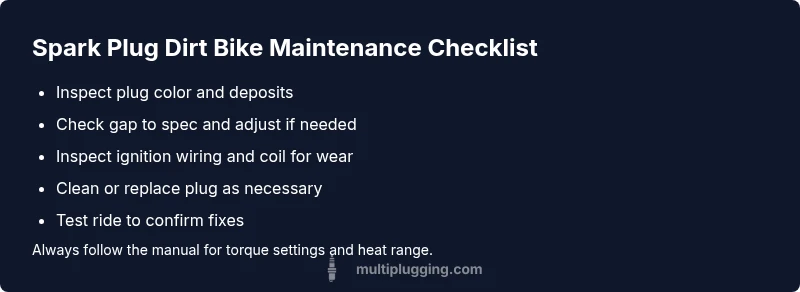
- Inspect spark plugs at every major service interval and after unusually hard rides. - Keep the air filter clean to reduce ingested particulates. - Check the fuel quality and moisture level before each ride. - Use the correct spark plug type and ensure proper cooling of the engine during long rides. - Maintain consistent throttle and avoid running rich or lean unintentionally. The spark plug dirt bike benefits from proactive care rather than reactive fixes.
Common mistakes to avoid
Avoid using the wrong heat range plug or gapping the plug incorrectly. Don’t torque plugs beyond the manufacturer’s specification—over-tightening can strip threads and cause leaks. Never reuse a visibly fouled plug without cleaning and testing. Finally, don’t ignore symptoms: misfires can indicate broader ignition or fuel-system issues that require broader diagnosis.
Steps
Estimated time: 20-40 minutes
- 1
Safety and prep
Park on a level surface, disconnect the battery, and allow the engine to cool. Gather the spark plug wrench, gap gauge, spare plugs, and a clean rag. This prevents accidental shocks and maintains a clean work area.
Tip: Keep track of screws and the spark plug boot; a dropped boot can crack and lead to misfires later. - 2
Remove old spark plug
Carefully unplug the spark plug boot, then slowly unscrew the plug counterclockwise. Do not force it; if it resists, apply gentle wiggling and use the correct socket size to avoid thread damage.
Tip: Note the plug color and deposits; this tells you whether fouling is oil-based, fuel-based, or carbon-related. - 3
Inspect and decide
Look at the ceramic insulator; if it’s oily, oily deposits indicate oil fouling. If it’s dry and dark, carbon buildup or running rich may be the cause. Check the electrode gap and the condition of the electrode tip.
Tip: If the plug is heavily fouled, replacement is recommended rather than cleaning. - 4
Gap and replace
If you’re reusing the plug, verify the gap with a gauge and adjust to the manufacturer’s spec. If replacing, thread the new plug by hand, then snug and torque to the recommended value.
Tip: Avoid over-tightening; improper torque can damage threads and seal later leaks. - 5
Reinstall and test
Reinstall the plug or new plug, reconnect the boot, reconnect the battery, and start the bike. Observe for smooth idle and power delivery; if misfires persist, move to fuel-air adjustments or ignition checks.
Tip: Test ride gradually to confirm the fix; a cold start test helps reveal intermittent issues. - 6
Evaluate results
If performance improves, monitor for repeat fouling after a few rides. If it returns, inspect the fuel-air mixture, air filter, and possible oil seals that could contribute to fouling.
Tip: Document symptoms and outcomes; it helps pinpoint recurrent problems quickly.
Diagnosis: Dirt bike exhibits hard starting, misfiring, or power loss
Possible Causes
- highFouled or worn spark plug
- mediumIncorrect plug gap
- lowOil fouling from engine wear or oil dilution
- mediumCarbon buildup from dirty air/fuel mixture
- lowIgnition coil or wiring problem
Fixes
- easyInspect and replace spark plug if fouled or worn; clean only if undamaged
- easySet plug gap to manufacturer spec and recheck
- mediumAddress oil/fuel balance and replace oil seals if oil fouling is observed
- easyClean carbon buildup with appropriate solvent or replace the plug
- mediumTest ignition coil and wiring; repair loose connections or replace faulty coil
FAQ
What causes spark plug fouling on dirt bikes?
Fouling is typically caused by oil leakage, overly rich fuel mixture, or carbon buildup from dirty intake air. Regular maintenance helps prevent these conditions from worsening.
Fouling is usually from oil leaks or too-rich fuel, or carbon buildup. Keep up on maintenance to stop it from getting worse.
How do I know if my plug gap is correct?
Consult the owner’s manual for the exact gap specification. Use a feeler gauge and gently measure the gap across the electrode; adjust carefully if needed.
Check the gap with a feeler gauge and adjust to the manual’s spec.
When should I replace vs clean a spark plug?
If the electrode is worn or deposits are excessive, replace the plug. Cleaning can work for light fouling, but repeated cleaning is not advised.
If the plug is worn or heavily fouled, replace it; cleaning is for minor buildup only.
Could ignition coil issues mimic plug problems?
Yes. A weak spark from a faulty coil can mimic a bad plug. Test the ignition system if plugging tests are inconclusive.
Weak spark from a bad coil can feel like a plug issue; test the ignition system if needed.
Is it safe to ride with a fouled plug?
Riding with a fouled plug can cause engine damage and poor performance. Replace or clean and test before resuming riding.
Don’t ride long with a fouled plug; replace or clean and test first.
Which spark plug types are best for dirt bikes?
Iridium or platinum plugs offer longer life and stable performance for many dirt bikes; consult your manual for the recommended type.
Iridium or platinum plugs often last longer; check your manual for the recommended type.
Watch Video
Main Points
- Inspect plugs early to avoid bigger engine problems
- Match plug heat range and gap to the manual
- Keep fuel and air pathways clean for optimal combustion
- Carry spare plugs and a basic tool kit on rides
- Document symptoms to streamline future diagnostics