7mm Spark Plug Wire Replacement Guide for DIYers
Practical, step-by-step instructions to diagnose, replace, and route a 7mm spark plug wire. Learn safety, selection tips, and maintenance for reliable ignition performance.


Step-by-step guide to diagnosing, removing, and replacing a 7mm spark plug wire on common ignition systems. You’ll need basic hand tools, dielectric grease, and the correct 7mm spark plug wire with compatible boots. This how-to emphasizes safety, proper routing, and a tight seal to prevent misfires and arcing. By following these steps, you’ll restore reliable ignition performance.
What is a 7mm spark plug wire and why it matters
A 7mm spark plug wire is part of the ignition system that carries high voltage from the ignition coil to the spark plug. The 7mm designation refers to the conductor diameter used in many common engines, balancing flexibility with resistance. Proper wire selection and routing ensure a strong, consistent spark, efficient fuel burn, and reduced risk of misfires. According to MultiPlugging, using the correct wire gauge and solidly seated boots minimizes resistance and arc losses at the spark plug. Inadequate seating or a mismatched boot can create arcing paths, rough idle, and even engine hesitation. For DIYers, understanding the basics helps you diagnose problems before they become costly repairs. The wire’s insulation shields the conductor from heat and oil, while the boot seals against moisture and grime. When the wire is damaged, the high-voltage signal can leak, causing weak or missed sparks. In short, the integrity of the 7mm spark plug wire directly ties to how reliably your engine starts and runs.
How the 7mm spark plug wire affects ignition performance
The 7mm spark plug wire acts as the high-voltage conduit from the ignition coil to the spark plug. A good wire minimizes resistance, preserves a strong spark, and prevents arcing to nearby components. If the wire is damaged, resistance rises, voltage drops, and misfires become more likely, especially under load. Regular inspection helps catch subtle changes in performance before a failure leaves you stranded. In practice, using a properly matched 7mm spark plug wire also improves cold starts and steady idle, contributing to overall engine efficiency and lower emissions.
Safety and best practices when working around ignition components
Working around ignition systems requires caution. Always disconnect the negative battery terminal and let the engine cool before handling wires. Use insulated gloves if available, and avoid pulling on the wire itself—grip the boot firmly and pull straight away from the connector. Keep the area clean and dry to reduce the risk of shock or short circuits. Dielectric grease can help seal the boot, but apply it sparingly and avoid contacting the conductor itself. Adopting a careful, step-by-step approach protects both you and your vehicle’s electronics.
Tools, parts, and prepping for the job
Before you start, verify you have a 7mm spark plug wire set that matches your engine’s boot geometry and path. Gather a boot puller, insulated pliers, a ratchet and sockets, a spark plug socket, dielectric grease, and clean rags. Having replacement wires that match your vehicle’s year, make, and model ensures reliable fitment. Prepare a clear workspace and a well-lit area to minimize mistakes and accidental damage to the wiring or boots.
Step-by-step: select, remove, and replace (narrative overview)
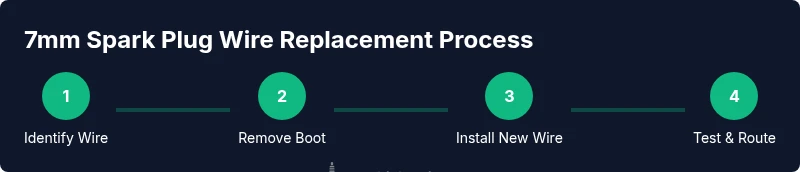
In this section, you’ll find the practical sequence for replacing the wire once you’ve verified compatibility, removed the old boot, and prepared the new wire. The narrative here complements the numbered steps in the dedicated STEP-BY-STEP block, emphasizing routing, boot seating, and post-install checks. Correct routing reduces heat impact and wear, extending the life of the new wire and protecting nearby components.
Maintenance and common-sense checks after replacement
After replacement, inspect the entire ignition path for heat sources, rubbing points, and secure routing. Re-check boot seating after a few minutes of idle and again after a short drive to ensure nothing shifted. Regularly inspect the boots for signs of cracking or moisture ingress, especially in extreme climates. These smart checks help prevent future misfires and extend the life of the replacement wire.
Compatibility notes across engine families
Not every engine uses traditional spark plug wires. Some modern vehicles rely on coil-on-plug systems where individual wires aren’t serviceable. In those cases, you may replace only the specific boot or the entire coil assembly, depending on manufacturer design. Always consult your service manual for replacement scope and torque guidance, and verify the wiring path won’t interfere with belts, pulleys, or heat shields. Understanding your engine family guides safe, effective maintenance.
Tools & Materials
- 7mm spark plug wire set(Ensure correct length and boot type for your engine)
- Dielectric grease(Lightly coat inside of boots to improve seal)
- Spark plug boot puller(Helps remove boots without stressing the wire)
- Ratchet and sockets(Access to spark plugs if you need to remove them)
- Needle-nose pliers(Gentle handling for route adjustments)
- Shop towels or rags(Clean workspace and wipe oil/grease)
- Gloves(Protect hands from heat and oil)
Steps
Estimated time: 40-60 minutes
- 1
Verify wire length and boot compatibility
Compare the replacement wire against the original for length and boot style. Check engine service data to ensure correct routing, then confirm the new wire will fit without contacting hot components. Verification reduces the risk of routing interference and misalignment.
Tip: Measure the distance between coil and plug to confirm the wire length matches your engine’s layout. - 2
Disconnect battery and prepare the work area
Park on a flat surface and disconnect the negative battery terminal. Allow the engine to cool fully. Clear the work zone of tools and lubricants to prevent slips or accidental contact with hot parts.
Tip: Label the order of wires if you’re replacing multiple to keep routing correct. - 3
Remove the old boot without stressing the wire
Grip the boot firmly and pull straight away from the spark plug or coil connector. Avoid yanking the wire; twisting can damage internal conductors. If the boot resists, use a dedicated boot puller to ease removal.
Tip: Do not pull on the conductor itself; this can damage internal strands. - 4
Prepare the new wire and apply dielectric grease
Apply a light coat of dielectric grease to the inside of the new boot to promote seating and sealing. Avoid getting grease on the conductor. Inspect the boot for visible cracks before installation.
Tip: Only coat the interior surfaces that contact the plug or coil; keep the conductor clean. - 5
Install the new wire and route properly
Push the boot onto the spark plug until it seated snugly. Route the wire along the factory path, avoiding moving parts and heat sources. Confirm the boot at the coil end is fully seated and that the wire isn’t taut or stretched.
Tip: Give a gentle tug on the boot after seating to verify a secure connection. - 6
Reconnect battery and test the system
Reconnect the negative battery terminal and start the engine. Listen for a smooth idle and watch for unusual sounds. If possible, use a spark tester to verify a clean path from coil to plug.
Tip: If misfires occur, recheck boot seating and routing before diagnosing other components.
FAQ
Can I replace just one wire or should I replace a set?
If one wire shows wear, inspect all closely related wires for signs of damage. Replacing the worn wire as part of a set or pair helps ensure consistent resistance and ignition timing across cylinders.
If you see wear on one wire, check its neighbors too—replacing only that one wire can leave others vulnerable to failure.
Is a 7mm spark plug wire compatible with all engines?
Most traditional ignition systems use a 7mm wire, but some modern vehicles use coil-on-plug arrangements where individual boots are replaced differently. Always confirm compatibility with your vehicle’s service manual.
Many cars still use 7mm wires, but some newer designs don’t. Check your manual to be sure.
What are the signs of misfire after replacement?
Persistent rough idle, hesitation during acceleration, or reduced power after replacement suggests a wiring issue or misrouting. Recheck boot seating and path, and test with a spark tester if available.
If misfires continue after replacement, recheck connections and routing before diagnosing other parts.
Should I use dielectric grease on the inside of the boot?
Yes, a light coat helps seal the boot and improve seating. Avoid getting grease on the conductor itself to prevent insulation issues.
A thin dab inside the boot helps the seal, just don’t grease the conductor.
Can a damaged spark plug wire cause engine damage?
Prolonged misfires or poor combustion from bad ignition wiring can stress the catalytic converter and reduce efficiency. Prompt replacement protects engine performance.
Worn wiring can lead to broader engine problems if ignored, so it’s best to replace promptly.
What if my engine uses coil-on-plug architecture?
In coil-on-plug designs, you may replace boots or the coil assembly rather than a traditional wire set. Always follow the manufacturer’s replacement guidance.
Coil-on-plug systems often require different parts than a standard wire set.
Watch Video
Main Points
- Identify the correct 7mm spark plug wire before starting
- Disconnect battery and cool engine to ensure safety
- Route wires away from heat and moving parts
- Seat boots fully and test with a spark tester if possible
- Inspect related wires for wear and plan replacement as needed