Push Mower Spark Plug Gap: A Practical Guide for DIYers
Learn how to check and adjust the spark plug gap on a push mower. This step-by-step guide covers safe tools, typical gap ranges, and a reliable process to measure, set, and test the plug for reliable starts.


This guide shows you how to check and adjust the spark plug gap on a push mower using a feeler gauge and basic tools. It covers when to replace the plug and safety tips. See our full step-by-step guide, tailored for DIYers and car owners.
Why the push mower spark plug gap matters
A correctly gapped spark plug is a small detail with big payoff for lawn care. For many push mowers, the spark plug creates the ignition event that starts and sustains the engine; if the gap is too wide or too narrow, the air-fuel mixture can fail to ignite reliably. That leads to hard starts, rough running, reduced power, or higher fuel consumption. For DIYers, checking and adjusting the gap is a straightforward maintenance task that can be done with basic tools and a calm workspace. In this guide, the MultiPlugging team shares practical steps to measure, adjust, and test the gap on common small engines. The goal is to improve starting reliability, prevent misfires, and extend spark plug life. By understanding the gap concept and using the right tools, you can diagnose ignition issues before they become bigger problems. According to MultiPlugging, this quick check pays off by saving time and avoiding unnecessary trips to the parts store, especially for beginners.
Gap ranges for common push mower engines
Gap specifications vary by engine model and plug type, but many small, air-cooled lawn-mower engines use a narrow, precise gap. Typical ranges found in common manuals and trusted maintenance guides fall roughly in the 0.020–0.032 inch band (0.50–0.80 mm). However, a manufacturer’s spec should always take priority. Based on MultiPlugging analysis, a broad majority of lawn mower engines tested in 2026 perform best within this band, with adjustments required for different plug heat ranges or electrode designs. If you don’t have the exact spec, use the closest safe range and verify performance with a light startup test after adjustments. Keep in mind that if you use a plug with a significantly different heat range, you may need a slightly different gap.
Tools and safety you need before you start
Before you touch the spark plug, gather the basics and review safety precautions:
- Feeler gauge set (covering 0.02–0.03 inches is ideal for most small engines)
- Spark plug socket with rubber insert
- Replacement spark plug of the same heat range (new plugs resist fouling better)
- Rag or brush for cleaning, gloves for grip and protection
- Anti-seize compound (optional, depending on the plug and engine)
- Own the mower’s manual or engine spec sheet for exact gap and torque guidance
- A clean, dry workspace away from flame and fuel sources Following these steps helps prevent accidental ignition and damage during the procedure.
How to prepare the mower and locate the spark plug
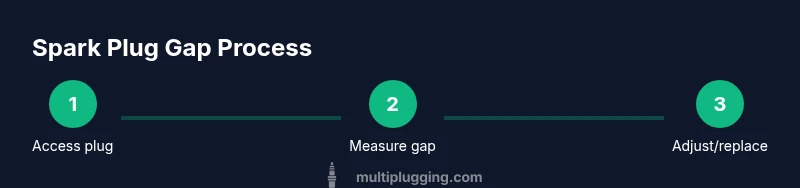
To access the spark plug, start with a cooled engine and a stable surface. Remove the air filter housing or cover if present so you can clearly see the spark plug seated on the cylinder head. Gently twist and pull the spark plug wire boot to disconnect it from the plug. Use a rag to wipe away loose dirt from the area around the plug so you don’t drop debris into the cylinder when you remove the plug.
How to measure and adjust the gap safely
With the plug removed or accessible, select a feeler gauge size that corresponds to the target gap range (often around 0.028–0.030 inches for many small engines). Slide the gauge between the center electrode and the ground electrode; if it fits with slight resistance, the gap is within spec. If it’s too tight, you’ll need a smaller gauge; if too loose, a larger gauge is needed. If the plug type is adjustable, gently bend the ground electrode only toward the center to decrease the gap, or away to increase it, then recheck with the gauge. If the plug is worn or has heavy fouling, replacing it is usually the best option—adjusting a worn plug is not reliable. Avoid excessive bending as it can crack the insulator or cause misfires.
Reinstalling and testing the plug after adjustment
Carefully reinstall the spark plug and hand-tighten it until snug, then use the socket to torque it to the manufacturer’s recommendation (or a firm tightness with a final ¼ turn if no spec is available). Reattach the spark plug boot. Reconnect any air-filter components you removed and start the mower in a well-ventilated area. Listen for a smooth, steady idle and verify that it starts reliably within a few pulls. If starting remains difficult, re-check the gap and inspect the plug for fouling, oiling, or carbon buildup, then replace if necessary.
Troubleshooting and routine maintenance
If the mower misfires after a gap adjustment, re-check wiring, ignition coils, and fuel quality. A spark plug that looks fouled, oily, or cracked should be replaced rather than re-gapped. Establish a simple maintenance cadence: inspect the plug at the start of each mowing season, clean the area around the plug with a dry brush, and replace the plug at the manufacturer-recommended intervals or when any visual wear is evident.
Tools & Materials
- Feeler gauge set(Includes 0.02"–0.03" blades; pick sizes in that range)
- Spark plug socket wrench(With rubber insert to protect the ceramic insulator)
- Replacement spark plug(Same heat range as the mower’s engine)
- Rag or brush(For cleaning around the plug area)
- Gloves(Grip and protection; optional but recommended)
- Anti-seize compound(Optional; follow engine manual guidance)
Steps
Estimated time: 30-45 minutes
- 1
Prepare and disconnect the spark plug
Power off the mower, let the engine cool, and gently remove the spark plug boot to prevent accidental ignition. This keeps you safe while you work and ensures you don’t spark while adjusting the gap.
Tip: Always wear gloves and keep the work area dry to avoid slipping. - 2
Remove the spark plug
Use a spark plug socket to loosen and lift the plug from its head. Keep the plug in a safe place so you don’t damage the ceramic insulator while inspecting it.
Tip: Note the plug type and heat range before removing. - 3
Inspect the plug condition
Check for fouling, oil, soot, or cracked ceramic. A clean, dry plug is essential for accurate gap measurement. If you see heavy fouling or oil, replacement is usually best.
Tip: A visual check helps decide between cleaning or replacing the plug. - 4
Measure the gap with a feeler gauge
Choose a gauge within the target range and slide it between the center electrode and the ground electrode. If the gauge fits with light resistance, the gap is correct. If not, move to step 5.
Tip: Be gentle when inserting the gauge to avoid bending electrodes. - 5
Adjust or replace the plug
If the plug is adjustable, gently bend the ground electrode to tighten or open the gap as needed, then re-measure. If the plug is worn or unadjustable, replace it with a new one.
Tip: Never force a bend; use small increments and recheck frequently. - 6
Reinstall and test
Reinstall the plug and boot, snug it, and perform a test start in a safe area. Listen for smooth operation; if the engine misfires, re-check the gap and plug condition.
Tip: If you’re unsure about torque, aim for snug then an extra quarter turn by hand.
FAQ
Can I reuse a spark plug after adjusting the gap?
If the plug is clean and within spec after adjustment, reusing it is acceptable. If there are signs of wear, fouling, or damage, replace it. Re-using a compromised plug increases misfires and startup issues.
If the plug looks good and reads within spec, you can reuse it. If you see wear or fouling, replace it.
What if I don’t know the correct gap for my mower model?
Check the mower’s manual or the engine manufacturer’s spec sheet. If that’s not available, use a conservative gap within the common small-engine range and test performance.
If you don’t have the exact spec, use a safe middle range and test starting and running.
Why does my mower still misfire after adjusting the gap?
Misfires can be caused by ignition coil wear, dirty connections, fuel quality, or a fouled plug. Re-check all ignition components and consider a plug replacement if in doubt.
Misfires may come from ignition or fuel system issues; re-check everything and replace the plug if needed.
Is it safe to bend the ground electrode to adjust the gap?
Only bend slightly and with the plug type designed for gap adjustment. For most plugs, if you’re unsure, replace with a correctly gapped new plug instead of bending.
If unsure, replace with a new properly gapped plug rather than bending the electrode.
Watch Video
Main Points
- Check spark plug gap as part of routine mower maintenance
- Use the correct gauge and follow the engine’s spec
- Replace worn plugs rather than repeatedly re-gapping
- Seal the work area and test the mower after reassembly