How to Spark Plug Gap: Step-by-Step Guide
Learn how to check and set spark plug gap safely with a clear, practical approach. This guide covers essential tools, step-by-step actions, common mistakes, and safety tips for DIY enthusiasts, with expert guidance from MultiPlugging.


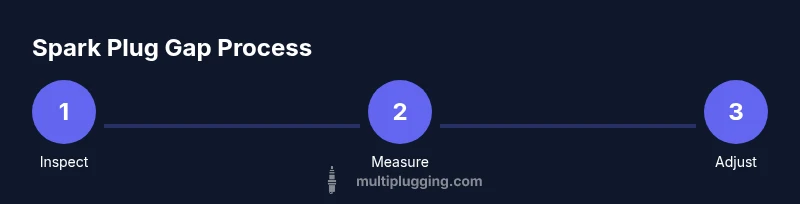
This guide shows you how to check and set spark plug gap safely using common tools, manufacturer specs, and sensible steps. You’ll learn how to locate the correct gap, measure accurately with a feeler gauge, adjust the ground electrode if needed, and verify seating before re-installing. Perfect for DIY enthusiasts.
Why the spark plug gap matters for engine performance
According to MultiPlugging, the spark plug gap is a critical parameter that influences ignition quality, fuel efficiency, and smooth running. A correct gap ensures a reliable spark, efficient fuel burn, and reduced misfires across the operating range. In this section, we’ll establish the foundation: what the gap is, why it matters, and how variances can affect performance. You’ll also learn the terms used in gap specs, such as the center electrode and the ground electrode. Understanding these concepts helps you read manufacturer data, service manuals, and plug packaging without confusion. As you follow this guide, keep your vehicle’s manual handy and remember that the gap spec is tailored to your engine and plug type. The MultiPlugging team emphasizes that consistency and care are essential for long-term reliability.
note":"Aim to understand the concept and avoid guesswork. The exact gap value is vehicle-specific."
Tools & Materials
- Feeler gauge set(Range covering the standard gaps for most spark plugs (including inches and millimeters))
- Spark plug gap tool or feeler gauge with a screwdriver handle(Used to adjust the ground electrode precisely without stressing the insulator)
- Spark plug socket and ratchet(To remove/install plugs without damaging them)
- Torque wrench(Optional but recommended to set proper seating torque for plug threads)
- Dielectric grease(To seal the threads and ease future removal)
- Soft brush or rag(For cleaning the plug seating area and thread wells)
Steps
Estimated time: 25-45 minutes
- 1
Prepare your workspace and safety gear
Set up a well-lit workspace and disconnect the battery to minimize any risk when handling ignition components. Remove any loose debris from the engine bay and wear eye protection. A clean area reduces the chance of contaminating the plug seat during removal and reinstallation.
Tip: Double-check you’re working on the correct engine bank if you have a multi-bank setup. - 2
Locate the correct spark plugs and remove the ignition wires
Identify the plug you’ll service using the vehicle’s manual or markings on the wires. Gently remove the ignition coil or wire by pulling on the boot, not the wire, to avoid internal damage. Keep track of each wire’s position for accurate reassembly.
Tip: Label wires if you’re working on a tight engine bay to prevent mix-ups. - 3
Inspect the spark plug condition visually
Examine the plug tip, insulator, and electrode for wear, fouling, or damage. If you notice heavy fouling, oil on the electrode, or melted insulator, plan for replacement rather than re-gap. A healthy plug should show a clean electrode edge and no corrosion.
Tip: Note any signs of engine issues (misfires, oil burn) that could affect gap requirements. - 4
Remove the old gap and measure with the feeler gauge
Dip the gauge in the gap to check if the current gap matches the manufacturer’s specification. Compare the gauge thickness with the gap; if it doesn’t fit or feels loose, the gap is out of spec. Use caution to avoid bending the center electrode.
Tip: Never force the gauge; if it binds, the gap is not adjustable in that direction. - 5
Adjust the gap by bending the ground electrode
If adjustment is needed, gently bend the ground electrode with the tool to increase or decrease the gap. Make small adjustments, then re-measure. Ensure the bend is uniform and the electrode edge remains sharp and straight.
Tip: Avoid over-bending; small changes yield big differences in gap. - 6
Re-check the gap and cleanliness before reassembly
Once adjusted, re-measure to confirm the gap matches the spec. Clean the plug seat and threads with a rag, removing any debris that could affect seating or heat transfer. Apply a light coat of dielectric grease if desired.
Tip: A clean seating surface prevents air leaks and ensures proper torque. - 7
Reinstall, torque the plug, and reconnect wires
Thread the plug by hand to avoid cross-threading, then torque to the manufacturer’s specification using a torque wrench. Reconnect the ignition coil or wire boot firmly. Start the engine to verify smooth operation and absence of misfires.
Tip: If you don’t have the exact torque spec, err on the safer side and tighten gradually while monitoring the seat.
FAQ
What should I do if the gap is out of spec after checking it?
If the gap is out of spec, adjust it carefully using the ground electrode as described, then re-measure. If the gap cannot be set accurately or the plug shows wear or damage, replace it. Always refer to the vehicle manual for the exact specification and re-check after installation.
If the gap isn’t right, adjust it carefully, then re-check. If the plug is worn, replace it and recheck the system.
Can I gap a plug without removing it from the engine?
Gap adjustment is much easier and safer when the plug is removed from the engine. Gapping through the boot or while installed risks damage to the threads or insulator and makes accurate measurement difficult.
It’s best to remove the plug to gap it accurately and safely.
What tools do I absolutely need for gap adjustment?
A feeler gauge, a plug gap tool or proper pliers, a torque wrench (optional but recommended), and a spark plug socket are the essential tools. A soft brush and rag help keep the seat clean.
You mainly need a feeler gauge, a gap tool, and a socket to gap and install a plug.
How often should I check spark plug gaps?
Check gaps whenever you install new plugs, during a tune-up, or if you notice rough idling, misfires, or reduced fuel efficiency. Regular intervals depend on your vehicle and driving conditions.
Check gaps during tune-ups or early when you notice engine performance changes.
Are all spark plug gaps the same across engines?
No. Gap specifications vary by plug type, engine design, and operating conditions. Always refer to the vehicle manual or plug packaging for the exact gap.
No—the gap depends on engine and plug type, so follow the official spec.
Watch Video
Main Points
- Check the manufacturer spec before adjusting gaps
- Use proper tools to avoid damaging plugs
- Re-check gap after any adjustment
- Torque plugs to spec and verify engine run