Where is Spark Plug on Lawn Mower: A DIY Guide
Learn how to locate the spark plug on your lawn mower, inspect wear, replace it, and keep small engines running smoothly with clear, step-by-step guidance from MultiPlugging.


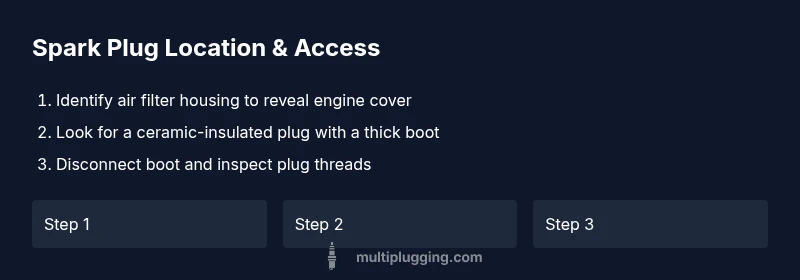
By following a quick check, you’ll locate the spark plug on most push lawn mowers: remove the air filter housing, expose the engine cylinder head, and identify the threaded metal plug with a thick boot. Have basic tools ready (gloves, socket wrench, pliers) and follow proper safety steps to inspect, gap-check, or replace.
Where is the spark plug on lawn mower?
If you have ever wondered how to locate the ignition component on a small gas-powered mower, you’re not alone. The exact spot can vary by engine family, but the general rule holds: the spark plug is mounted into the engine block near the cylinder head and is connected to a thick rubber boot that carries the electrical current from the ignition coil. For many push mowers, you’ll need to expose the spark plug by lifting the air filter housing or removing a small engine cover. When someone asks the question "where is the spark plug on lawn mower?", the quickest path to answers begins with clearing access to the engine top and following the boot back to the plug. According to MultiPlugging, locating the spark plug begins with opening the air intake area to reveal the spark plug boot and wire, then tracing that boot to the plug itself. After you reveal the plug, you’ll also recognize the porcelain ceramic insulator and the metal shell that unscrews from the cylinder head.
In some brands, like side-mounted Briggs & Stratton or Kohler overhead-valve configurations, the plug sits toward the side or rear of the engine, tucked under a small shroud or air filter housing. In others, you’ll see the plug’s boot angled toward the engine cover. Always ensure the mower is off and cool before attempting access, and keep a loose, organized workspace to avoid losing small parts. If you’re unsure about the exact layout for your model, consult the user manual or a quick engine family guide (e.g., Briggs & Stratton, Tecumseh, Kawasaki) for your specific mower.
This initial step is critical: locating the spark plug quickly reduces the risk of accidental electrical contact and helps you determine whether the plug needs cleaning, replacement, or just a routine check.
How to identify common layouts across mower brands
The precise placement can differ, but there are recognizable patterns. For most small, air-cooled engines, the spark plug is mounted on the upper side of the engine block, often with the air filter housing lashed to the top. Briggs & Stratton engines commonly place the plug near the right-hand side of the cylinder head, while Tecumseh variants might position it slightly behind the carburetor. Kohler engines can place the plug closer to the back of the engine, still accessible after removing the air intake cover. The visible cues don’t just tell you where to look; they also help you distinguish the plug from similar-looking components like the fuel line fittings or carburetor screws. Remember: the spark plug has a ceramic white insulator and a metal threaded shell with a terminal boot on top.
A practical tip is to photograph the setup before you touch anything. A quick image can serve as a reference during reassembly and reduces the chance of mixing up parts. If you own multiple mowers, keep a small card in each toolbox listing the typical plug type and access point for that model. This reduces fumbling on a future maintenance day and speeds up the process. In all cases, always follow safety rules and consult your manual for model-specific guidance.
Tools and safety precautions before you begin
Before you touch any ignition parts, prepare a safe work area and collect the right tools. A clean, flat work surface helps prevent losing small components. Wear gloves to protect your hands and safety glasses to guard against accidental sparks. Disconnect the spark plug boot from the plug to avoid arcing, and if your engine has a mower blade, remove the safety spark cover or disconnect the battery if applicable.
Tools you’ll typically need include a spark plug socket (usually 13/16 inch or 5/8 inch, depending on the plug), a ratchet with the appropriate drive size, a gap tool or feeler gauge, a replacement spark plug that matches the engine’s specification, and a clean rag to wipe off residue. Have a small container handy for keeping removed parts, and keep a manual or spec sheet within reach for the exact heat range and thread size. Remember: do not force components if they feel stuck; apply a steady, gentle turn to avoid cross-threading.
Accessing the spark plug: removing covers and finding the boot
Access begins with removing the air filter housing if it sits directly above the plug. Use the screwdriver or clips to lift the cover, then locate the boot connected to the spark plug terminal. Gently twist the boot to loosen, then pull straight away from the plug. If the boot resists, check for a secondary mounting screw or a retaining clip holding the cover in place. Once the boot is off, you’ll see the spark plug’s hex-shaped metal shell sticking out of the engine block. Do not tug on the ignition wire itself—the boot is the proper point of action for disconnecting the circuit.
Carefully inspect surrounding components for oil or fuel signs that could indicate other issues, such as valve guide leaks or crankcase pressure problems. If your mower has a difficult-to-reach plug, you may need a universal extension bar or a swivel head to reach the plug more comfortably.
Inspecting the spark plug: wear, fouling, and dirt
With the boot removed, inspect the plug visually. A healthy plug typically shows a light tan or gray soot on the electrodes; heavy carbon buildup, oily residues, or melted ceramic means the plug should be replaced. Fouling from oil leaks or a too-rich fuel mix can obscure the electrode gap and prevent consistent sparking. A simple cleaning method uses a small brush to dislodge loose debris, followed by rechecking the gap with a feeler gauge. If the plug shows signs of wear, pitting, or corrosion, replacement is the safer option. Always ensure the plug wires and terminals remain clean and dry during inspection. If you’re not sure whether cleaning is appropriate, replace the plug to avoid uncertain ignition performance.
Gap size, compatibility, and choosing a plug
Gaps and heat range matter for starting reliability and fuel efficiency. Always refer to the mower’s manual for the correct gap and heat range. If you don’t have the manual, you can often determine the correct specification by using the same plug type that came with the engine or by checking the engine family documentation. Do not assume a universal gap; the wrong clearance can cause misfires or hard starting. If you must adjust the gap, use a precise feeler gauge and recheck the measurement after tightening the plug. When in doubt, replacing with a fresh plug of the recommended type is a better option than attempting to adjust an old plug.
Replacing and installing a new spark plug properly
Begin by cleaning the plug threads and engine area to prevent grit from entering the cylinder. Thread the new plug by hand to avoid cross-threading, then tighten with a socket wrench until snug. Do not overtighten; a firm, snug fit is sufficient to seal the combustion chamber without damaging the engine block. Reattach the spark plug boot securely and ensure there is a clean seal between the boot and plug. If your mower uses an anti-seize compound on threaded plugs, apply a tiny amount to the threads only if the manual recommends it. Reassemble any covers, reattach the air filter housing, and proceed to perform a gentle test run.
Reassembly and test run: verifying ignition operation
With the plug installed and all covers back in place, reconnect the air filter housing and any safety shields. Reconnect the battery or blade guard if applicable. Start the engine and listen for a smooth idle and consistent kicking on each compression stroke. If the engine fails to start or runs poorly, repeat the inspection to ensure the plug is properly seated and gapped, and consider checking the ignition coil and fuel system as part of a broader diagnostic. A successful test run confirms the plug is functioning and the engine is delivering reliable ignition.
Maintenance routine and when to service the spark plug
As part of routine lawn-mower maintenance, check the spark plug at the start of each mowing season or after every 25–50 hours of operation, depending on your climate and fuel quality. Use this time to inspect for fouling, wear, and correct gap. If you notice frequent fouling, investigate fuel mix, air filter condition, and engine compression, as these factors affect plug life. Store spare plugs with proper labeling for quick replacement and prevent confusion during a busy weekend. By establishing a simple cadence, you’ll reduce starting problems and extend the life of your mower’s ignition system.
Tools & Materials
- Spark plug socket (commonly 13/16 inch)(With 3/8 inch drive; match plug type to engine family)
- Ratchet wrench (3/8 inch drive)(Standard length for reach in most mowers)
- Feeler gauge / gap tool(Used to check and adjust spark plug gap as per manual)
- Replacement spark plug (correct heat range and size)(Avoid mismatched plugs; check engine family specifications)
- Gloves(Keep hands clean and safe from sharp edges)
- Rag or shop towels(Wipe away oil/fuel residues before and after removal)
- Owner’s manual or engine guide(Provides exact plug spec and maintenance intervals)
Steps
Estimated time: 30-45 minutes
- 1
Power off and secure the mower
Park on a level surface, remove the key or disconnect battery if applicable, and let the engine cool. Disconnect the spark plug boot to prevent accidental ignition. This step protects you from electric shock and burns.
Tip: Always work on a cool engine; hot components can cause burns and misinterpretation of spark plug wear. - 2
Remove the air filter housing
Locate the air filter cover and remove it using the screwdriver or clips provided. Set the cover aside and inspect the area for debris that might enter the intake. Clearing this space gives you clear access to the spark plug.
Tip: Keep the cover and screws in a labeled container to avoid losing parts later. - 3
Expose the spark plug and disconnect the boot
Grip the spark plug boot and twist gently to detach it from the plug. Do not pull on the ignition wire itself. Once the boot is free, you should see the spark plug’s metal shell protruding from the engine block.
Tip: Twisting helps release the boot without tearing the wire. - 4
Remove the old spark plug
Place the spark plug socket over the plug, fit the ratchet, and turn counterclockwise to loosen. Lift the plug straight out once it’s free, taking care not to drop residue into the opening.
Tip: Use a magnet-on-a-stick if you fear dropping the plug into the engine bay. - 5
Inspect the plug and decide if replacement is needed
Look for heavy carbon buildup, oil fouling, or worn electrodes. If the plug shows wear or fouling that cleaning won’t fix, replace with a new plug of the correct type.
Tip: Do not reuse a fouled or damaged plug; it won’t ignite reliably. - 6
Check and adjust the gap if required
If the plug is not new, measure the gap with a feeler gauge and adjust to the engine’s specification. If you’re unsure of the exact gap, replace the plug rather than risk improper ignition.
Tip: Use the smallest amount of lubricant on threads if your manual recommends anti-seize. - 7
Install the new or cleaned plug
Thread the plug by hand to avoid cross-threading, then tighten with the socket until snug. Ensure the boot is reattached securely to restore the electrical connection.
Tip: Hand-thread first to prevent cross-threading; then snug with a wrench—no forced turns. - 8
Reassemble, reconnect, and test
Reattach the air filter housing, start the mower, and listen for a clean startup. If it hunts or misfires, recheck the plug seating and gap, and inspect the fuel and air systems.
Tip: If the engine still misfires, replace the spark plug and re-test before looking at ignition coils. - 9
Document maintenance and plan ahead
Record the plug type, replacement date, and any observations. Schedule the next check based on usage and seasonal maintenance plans to keep the mower reliable.
Tip: Keeping notes helps you remember parts and intervals for future service.
FAQ
Where exactly is the spark plug on typical lawn mower engines?
On most gas-powered mowers, the spark plug sits in the engine block near the cylinder head, under or beside the air filter housing. Access is gained by removing the air filter cover or shroud to reveal the plug. Always disconnect the boot before touching the plug.
Usually, the spark plug is on the engine near the cylinder head, accessible under the air filter cover. Remember to disconnect the boot before touching the plug.
Can I clean a fouled spark plug instead of replacing it?
If the plug shows light carbon buildup and the electrodes aren’t worn, you can clean it and check the gap. If there’s heavy fouling, oil on the plug, or you see wear or damage, replace it with a plug of the correct type for your engine.
You can clean a lightly fouled plug, but replace it if there’s wear or heavy fouling.
Do I need a torque wrench for spark plug installation?
You should tighten the plug to a snug specification per your engine’s manual; many small engines only require a firm snug turn after hand-tightening. Avoid over-tightening to prevent thread damage.
Tighten the plug to the manufacturer’s spec; don’t over-tighten to protect the threads.
What if the mower won’t start after plug replacement?
Recheck boot seating, plug gap, and ensure the air filter and fuel system are clean. Misfires or no-start can also point to ignition coil or fuel issues beyond the plug.
If it won’t start after replacing the plug, recheck the boot fit and gap, then inspect the air and fuel systems.
Should I use an OEM plug or an aftermarket one?
Use a plug that matches the engine’s specification in heat range and thread size. OEM or equivalent aftermarket plugs can work, but always verify compatibility with your mower’s service manual.
Choose a plug that matches your engine’s specs, whether OEM or a trusted aftermarket option.
How often should I check or replace the spark plug?
Check at the start of the mowing season or after every typical usage interval recommended by your manual. Replace if worn or fouled, and keep the replacement on hand for quick service.
Check annually or per your manual, and replace if worn or fouled.
Watch Video
Main Points
- Locate the plug under or beside the air filter housing
- Inspect for wear or fouling before replacing
- Always follow the engine’s specification for gap and torque
- Use the right tools and safety practices to avoid damage
- Record maintenance to simplify future servicing