Spark Plug and Engine Coil: Diagnostics, Testing, and Replacement
A thorough, objective comparison of spark plugs and engine coils, covering roles, testing methods, replacement strategies, and real-world scenarios for DIY enthusiasts.


Understanding spark plug and engine coil health is essential for reliable starts and smooth running. The coil supplies high voltage to the plug, which fires the air-fuel mixture in each cylinder. When either part misbehaves, you’ll notice misfires, rough idle, or reduced power. Testing should distinguish coil from plug faults, then target replacements to restore proper ignition and efficiency.
Understanding the basics: spark plug vs engine coil
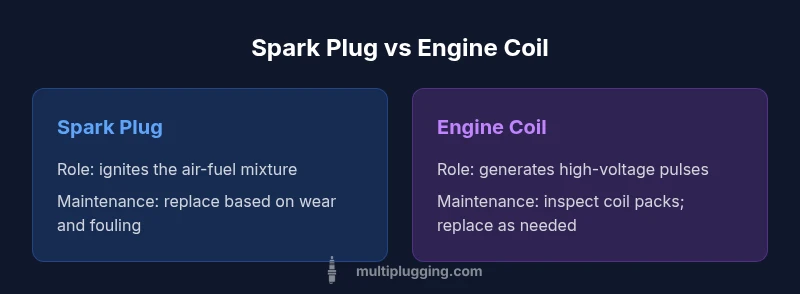
In modern gasoline engines, the ignition system is a coordinated network of parts that starts with a sensor and ends with a controlled spark at the right time. Two core components in this chain are the spark plug and the engine coil. The spark plug is the tiny device that creates a spark in the cylinder to ignite the air-fuel mixture, while the engine coil is the energy source that steps up the vehicle's battery voltage to the thousands of volts needed to produce that spark. The phrase spark plug and engine coil often appears in DIY guides because their performance directly affects starting reliability, idling quality, and overall efficiency. According to MultiPlugging, the health of both parts matters for consistent combustion, and diagnosing issues requires distinguishing when one component is failing versus when the other is at fault. Understanding their roles helps you prioritize tests, plan replacements, and avoid wasted maintenance. In this block, we’ll establish the key differences, explain how each part functions within the ignition system, and set up a practical assessment framework that you can apply in your driveway.
Evolution of ignition systems: coil-on-plug vs distributor
Ignition technology has evolved from distributor-based systems to coil-on-plug layouts in many modern cars. In a distributor setup, a single coil or coil pack sends high voltage to a mechanical distributor, which then routes the energy to each cylinder via spark plug wires. In coil-on-plug (COP) systems, each cylinder has its own coil directly above or integrated with the spark plug, eliminating bulky wires and reducing energy loss. This fundamental difference changes how you diagnose failures. When a coil or coil pack fails in a COP design, you often see misfires in multiple cylinders or a consistent hard start issue. In older distributors and wasted-spark setups, a single failing coil can affect more cylinders and mimic other problems, such as ignition timing or fuel delivery issues. For the DIY diagnostician, recognizing the architecture of your ignition system is essential before swapping parts. The MultiPlugging team notes that different architectures demand different testing approaches: COP systems are typically diagnosed by testing coil function in isolation, while distributor systems require tracing energy through wires and the cap modules. Understanding these distinctions helps you select the right replacement parts and avoid unnecessary work.
How ignition systems interact: sequence and synergy
Battery power flows to the ignition control module (or ECU) which signals the ignition coil(s). The coil steps up the voltage, sending a high-energy pulse to the spark plug at exactly the right moment. The spark is created as the air-fuel mixture reaches a combustible state. In a modern engine, this sequence is tightly timed with crankshaft position sensors and fuel injection events. If either the coil or the plug underperforms, the timing can drift, causing misfires, rough idle, reduced power, and increased emissions. The spark plug searches for a robust ground path; the coil's duty cycle regulates energy delivery. When both components are healthy, the engine produces consistent starts and smooth acceleration. When diagnosing, you must consider both components together and separately. A failing coil does not always imply a failing plug, but a failing plug may cause symptoms that look like coil trouble. This synergy is why modern maintenance guides emphasize simultaneous inspection of plugs and coils in a systematic way.
Diagnosing symptoms: coil vs plug indicators
Rough idle, misfires, and hesitation can be caused by a weak spark, a fouled plug, or a failing coil. Some symptoms point more strongly to one component: persistent misfires at high engine load with normal cold starts often indicate coil problems, while consistent misfires on cold starts combined with a soiled plug suggest replacement. If you notice a recurring misfire in a single cylinder, you test that coil and its plug first. If the misfire shifts to another cylinder after swapping, you’re likely chasing a broader ignition issue. A cracked coil housing or dark, carbon tracks along the plug gap are visual clues of failure. Always check ignition cables or coil boots for moisture and cracks. When the check engine light illuminates, retrieve the fault codes; MAP or misfire codes are common indicators. This multi-factor approach helps DIYers translate symptoms into targeted tests, rather than replacing parts blindly. Throughout this process, keep notes of what you test, the results, and the sequence of events that led to a diagnosis.
Testing methods you can perform at home (safety first)
Begin with a visual inspection: remove each plug, inspect electrode wear, electrode gap, and insulator chips. If the plug shows heavy fouling, oil on the threads, or a worn electrode, replacing it is reasonable. For coils, a spark tester or an infrared temperature check can help identify weak or intermittent sparks in COP systems. A basic primary/secondary resistance test can reveal a failed coil pack, but remember that resistance values vary by design and manufacturer, so compare with the vehicle's service manual or a known-good reference. If you own a scan tool, perform live data tests to observe ignition timing and misfire counts under load. While at it, check for loose or corroded connections and inspect the spark plug wires (where applicable). Always work with the engine off and cool, disconnect the battery before unplugging connectors, and wear eye protection. Document each step and verify that the engine runs smoothly after testing to confirm your diagnosis.
Replacement considerations and compatibility
Not all plugs and coils are interchangeable between engines. Premium coils and OEM-design plugs are engineered to match specific ignition curves, heat ranges, and threading patterns. Some engines use a single coil pack that serves all cylinders, while others use coil-on-plug units per cylinder. Replacing with a mismatched coil or plug can result in weak sparks, misfires, or timing issues that degrade performance and emissions. In many cars, a failing coil pack may be replaced in sets rather than individually to ensure uniform performance. Likewise, plugs come in various electrode materials, heat ranges, and gap specifications; choosing the right combination helps maintain optimal combustion and fuel efficiency. Economic considerations matter: while premium iridium or platinum plugs may cost more upfront, they can provide longer life and steadier performance, reducing maintenance intervals. Always consult the vehicle's service manual and follow torque specs when installing, to avoid thread damage or misfires.
Common failure modes and how to spot them quickly
Coils fail due to heat cycling, vibration, and moisture ingress, leading to intermittent sparks or complete failure. Cracked housings or corroded terminals often show up as arcing or a burning smell under hood. Spark plugs fail due to electrode wear, carbon fouling, or oil fouling, all of which reduce combustion efficiency. In a mixed ignition system, a failing coil may cause multiple cylinder misfires, while a foul plug may cause consistent misfires in a single cylinder. Look for signs like rough acceleration, stumble at idle, or poor cold starts. A check engine light with misfire codes is a strong indicator of ignition problems. If you have access to a hood-mounted spark tester, you can quickly confirm whether a spark is present at the plug tip under live conditions. Keep a log of symptoms and correlate them to replacement actions to build a practical maintenance record.
Selecting replacement parts: plugs, coils, and heat range decisions
Choosing spark plugs involves electrode material and heat range suited to your engine. Copper plugs offer reliability, while platinum and iridium plugs provide longer life in demanding conditions. Coils vary as well: traditional coil packs, COP modules, and coil-on-plug assemblies have different replacement needs and service intervals. Consider the maintenance practices and driving conditions when selecting parts: cold-start rich fueling, frequent short trips, and high-load driving stress ignition components differently. A careful selection process balances longevity, performance, and cost. For DIYers, the most impactful step is to verify that the plug gap is correct for your engine and to confirm the coil's resistance and contact integrity before installation. Finally, use anti-seize on plugs where recommended by the manufacturer to facilitate future removal, but avoid excessive use in sensitive threads.
Installation tips, safety, and torque basics
Follow the manufacturer's torque specs for spark plug threads and coil mountings to prevent thread damage or improper seating. Use a proper spark plug socket and, when needed, a torque wrench to ensure consistent seating pressure. Be mindful of heat expansion and corrosion on threaded seats. Clear the area of debris and avoid overtightening. If you're replacing COP pairs, ensure each coil aligns with its cylinder hole to maintain correct firing order. Use dielectric grease on boot connectors to improve electrical contact and reduce moisture intrusion. After installation, perform a cautious test run to confirm starting reliability and smooth engine operation, listening for any abnormal sounds or misfires. Finally, maintain a record of the parts used and the dates of service; this helps with future maintenance planning and warranty claims.
Real-world scenarios: choosing between upgrades and age-based decisions
Older engines with distributor ignition may benefit from an ignition service that includes coil and plug inspection, but a modern turbocharged or direct-injected engine often relies on precise coil-on-plug timing; in such cases, a coil failure can trigger complex diagnostics. For DIY owners, consider a staged approach: start with a visual check and plug condition, test the coil pack, and only replace components when diagnostic results support the action. In high-mileage vehicles, replacing both coils and plugs at the manufacturer-recommended intervals can reduce the risk of cascading ignition problems and improve reliability. Always verify warranty considerations and service advisories, as some manufacturers issue guidance on ignition parts replacement that differs from generic recommendations. Using a structured diagnostic approach helps you avoid overhauls and unnecessary parts costs while protecting engine performance.
Comparison
| Feature | spark plug | engine coil |
|---|---|---|
| Primary function | Creates a spark to ignite the air-fuel mixture in the cylinder | Generates and delivers high-voltage pulses to the spark plugs |
| Symptoms of failure | Misfires, rough idle, reduced fuel efficiency | Hard starts, intermittent misfires, rough running |
| Common test methods | Visual inspection, gap check, fouling or wear | Primary/secondary resistance checks, spark tester |
| Replacement considerations | Inexpensive to moderate cost; electrode materials vary by design | Can be part of a coil pack or COP; higher upfront cost for some designs |
| Best for | Engine combustion consistency and fuel economy | Reliable high-voltage delivery and ignition timing |
Strengths
- Clear diagnostic feedback when insulated visually observed wear
- Improved combustion stability after replacement
- Parts testing can be performed with common tools
Negatives
- Coil failures can mimic plug problems and vice versa
- Coils, especially COP units, can be relatively expensive to replace
- Modern ignition designs complicate diagnosis for non-experts
Coils and plugs are both critical; replace as needed based on diagnostics.
If ignition symptoms appear, perform a systematic test of coils and plugs. In many engines, replacing worn plugs and weak coils together yields the best reliability and performance. The MultiPlugging team recommends a cautious, diagnosis-driven replacement strategy to avoid unnecessary parts costs.
FAQ
What is the difference between a spark plug and an engine coil?
A spark plug creates the spark that ignites the air-fuel mixture, while the engine coil generates and delivers the high voltage required for that spark. They work in tandem, but diagnosing which one is failing requires targeted testing.
A spark plug makes the spark; the coil provides the energy. If you have ignition issues, test both parts to see which is failing.
How do I test an ignition coil at home?
Perform a basic visual inspection, check for cracks or moisture, and use a spark tester or a multimeter to assess primary and secondary resistance. Compare results with your vehicle’s service manual or a known-good reference.
Visually inspect the coil, then use a spark tester or meter to check resistance and spark quality.
Can a bad spark plug affect coil life?
Yes. A fouled or oil-soaked plug can cause misfires that stress ignition circuitry, potentially accelerating wear on coils. It’s best to replace both if symptoms overlap.
A bad plug can stress the coil; replacing both is wise when symptoms overlap.
Should I replace spark plugs and ignition coils together?
In many cases, replacing both together reduces the likelihood of future misfires and ensures balanced ignition performance. Follow the manufacturer’s guidance and consider age and mileage.
Often yes—replacing both together can prevent future misfires and save time.
What tools do I need for replacement?
Common tools include a spark plug socket, torque wrench, screwdriver or pliers for coil connectors, dielectric grease, and a spark tester. Always refer to your vehicle manual for torque specs.
You’ll need a spark plug socket, a torque wrench, and basic hand tools.
Main Points
- Test both components, not just one when ignition issues arise
- Modern COP systems demand isolated coil tests for accuracy
- Keep a maintenance log of symptoms and replacements
- Check for correct heat range and gap for plugs