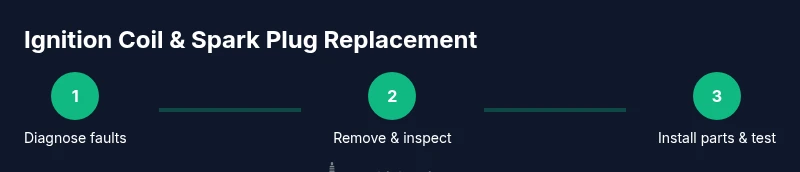
Ignition Coil and Spark Plug: DIY Diagnosis & Replacement
Learn to diagnose and replace ignition coil and spark plug components with clear, step-by-step instructions, practical tips, and safety guidance for DIY enthusiasts.


By the end, you'll diagnose and replace the ignition coil and spark plug to restore reliable ignition. This quick guide covers symptoms of misfire, tool lists, step-by-step removal and installation, safety cautions, and testing methods to verify heat range, gap, and proper firing. It also highlights when to seek professional help and how to verify results after starting.
What are ignition coil and spark plug, and why they matter
According to MultiPlugging, the ignition coil and spark plug work in tandem to create a timed electrical spark that ignites air-fuel in each cylinder. The coil stores energy from the battery and releases a high-voltage pulse through the distributor or directly to the spark plug. The spark plug then conducts the spark into the combustion chamber. When either component wears or fails, you’ll notice symptoms such as rough idle, misfires, loss of power, or decreased fuel efficiency. Understanding their roles helps you diagnose issues more accurately and execute safer maintenance work. This section sets the stage for practical, hands-on guidance that follows, with an emphasis on safety and method over guesswork.
In practice, a healthy ignition system ensures smooth combustion and predictable starting. The ignition coil and spark plug are not isolated parts; they are part of a chain that includes ignition wires, coil packs, and the engine control unit. If one link weakens, the chain’s timing and voltage delivery falter. With that context, you’ll see why a methodical approach—checking signals, inspecting components, and testing outcomes—delivers reliable results.
How ignition coils work and main types
Ignition coils convert the car battery’s low voltage into a high-voltage spark needed for ignition. Most modern engines use coil-on-plug (COP) systems where each cylinder has its own coil positioned directly atop the spark plug. Other configurations include coil packs and distributor-based coils. COP designs improve reliability by reducing high-voltage routing and minimizing energy loss. Coil packs group several coils together and can simplify service on some engines, while distributor-based systems separate timing and spark delivery more distinctly. Each type has its own maintenance considerations, but the core principle remains the same: store energy and discharge it at the right moment to ignite the air-fuel mixture. In this section, you’ll learn how these configurations affect diagnosis and replacement.
Spark plugs: construction, heat range, and materials
Spark plugs vary in construction, including copper, platinum, and iridium alloys. The electrodes and insulator shape determine durability, firing quality, and heat dissipation. Heat range refers to how quickly a plug releases heat from the tip; choosing the right range helps prevent fouling or pre-ignition. Iridium and platinum plugs last longer but may cost more, while copper plugs can offer excellent conductivity and lower upfront cost but shorter life. Gapping is another critical factor: a correct gap ensures a crisp spark without excessive voltage. When you select replacement plugs, consider ignition timing, engine type, and running conditions. This section explains how to read plug markings and select a type that matches your engine’s needs.
Symptoms of ignition coil or spark plug problems
Recognizing symptoms early can save time and prevent further damage. Common signs include rough idling, engine misfires that feel like sporadic hiccups, a noticeable loss of power under load, reduced fuel economy, and difficulty starting in cold weather. A check engine light may illuminate with misfire codes such as P0300 or cylinder-specific codes. You might also notice increased exhaust emissions and unexplained vibrations. If you experience any of these symptoms, perform targeted checks before replacing parts to avoid unnecessary work. This section helps you distinguish between coil and plug symptoms and guides you toward effective testing.
Diagnostic approach: isolating coil vs plug
A systematic approach makes it easier to pinpoint the faulty component. Start with a diagnostic scan to read trouble codes. If a misfire code points to a specific cylinder, swap components to test. For example, swap a suspected bad coil or plug with a known-good one from another cylinder to observe if the misfire follows the component. A spark plug tester can help verify spark delivery, and a compression check rules out mechanical issues. MultiPlugging Analysis, 2026 notes that misfires most often originate from worn plugs or failing coils, so prioritized tests should focus on those parts first. Document your results as you go to build a clear picture of the fault.
Tools, safety, and prep for ignition work
Safety comes first when working on ignition components. Disconnect the negative battery cable to prevent accidental shocks and short circuits. Work in a well-ventilated area and keep a clean workspace to prevent debris from entering the cylinders. Gather essential tools: a spark plug socket, ratchet, extension, torque wrench, dielectric grease, and a spark plug gap tool. Having all tools ready reduces work interruptions and helps you stay organized. If you’re working on a busy engine bay, consider removing components in a logical sequence to avoid reassembly mistakes. This preparation minimizes risk and speeds up the replacement process.
Replacement considerations: when to replace coil vs plug and choosing parts
Replacement decisions depend on the fault source, age, and driving conditions. If several cylinders show misfire codes or worn electrical insulation, coil replacement may be more effective than changing multiple plugs. Conversely, if inspection reveals worn electrodes or fouling on several plugs, replace them and inspect the coils for signs of wear. When selecting parts, align with manufacturer recommendations and engine design. Iridium or platinum plugs generally offer longer life, while copper plugs may be cheaper upfront but wear out faster. Avoid guessing—base your choice on a combination of symptoms, inspection results, and the engine’s service manual.
Testing after replacement: verification and safe start-up
After replacement, reassemble the engine bay and reconnect any harnesses. Start the engine and listen for a clean, smooth idle with steady RPMs. Use a scan tool to confirm that no new codes appear and that misfire data shows improvement. A short test drive can reveal how the engine responds under acceleration and load. If misfires persist, recheck gaps, torque, and connections. Document the results and plan follow-up checks to confirm long-term reliability. Proper testing ensures your repair delivers the expected performance gains.
Tools & Materials
- Spark plug socket(With rubber insert; fits 3/8" drive where applicable)
- Ratchet wrench(3/8" or 1/2" drive depending on vehicle)
- Extension bar(For accessing deep plugs/coils)
- Torque wrench(To manufacturer spec for plugs and coils)
- Dielectric grease(On boots and connectors to prevent moisture)
- Spark plug gap gauge(Ensure correct electrode gap)
- Screwdrivers or pry tool(Optional for removing covers)
- Spark plug boot puller(Useful in tight spaces)
- Replacement spark plugs(Match OEM/engine requirements)
- Replacement ignition coil or coil-on-plug kit(Only if coils are suspect)
- Die-cut rag or shop towels(Keep workspace clean and catch spills)
- Gloves and eye protection(Safety first)
- Anti-seize lubricant(Check manufacturer—many modern engines do not require)
Steps
Estimated time: 60-120 minutes
- 1
Verify symptoms and plan
Assess current engine symptoms and decide whether coils or plugs are likely culprits. Confirm vehicle model and engine type to tailor your approach. Create a simple checklist to stay organized throughout the job.
Tip: Document symptoms with notes or a short video; it helps track improvements after replacement. - 2
Power down and isolate battery
Disconnect the negative battery terminal to prevent electrical shocks and accidental short circuits. Wait a few minutes for any residual energy to dissipate before touching components.
Tip: If your vehicle has air bags or other high-energy systems, wait longer and follow a manufacturer protocol. - 3
Locate coil and spark plug locations
Identify which cylinders use a coil-on-plug or a coil pack. In some engines the coils sit atop the plugs, while in others the coils are grouped in packs away from the plugs.
Tip: Take photos before removal to aid correct reassembly and wiring orientation. - 4
Disconnect ignition coil connectors
Carefully unplug the electrical connector from the coil or coil pack. Avoid pulling on wires; use a small tool to release locking tabs if needed.
Tip: Work one component at a time to reduce mix-ups during reassembly. - 5
Remove the ignition coil and boot
Unscrew or unclip the coil from its mounting. Gently pull the coil and boot away from the spark plug, avoiding hard prying that could damage boots.
Tip: Inspect boot for cracks or heat damage; replace if compromised. - 6
Remove and inspect spark plug
Using a spark plug socket, unthread the plug and remove it. Inspect the electrode condition, insulator, and carbon fouling. If the plug is foul or worn, replace it with a correctly gapped unit.
Tip: Measure plug gap with a gauge and adjust to the manufacturer’s spec if needed. - 7
Install new spark plug and seat
Thread the new plug by hand to avoid cross-threading, then tighten to spec. Refit the coil boot and connector with dielectric grease for a good seal.
Tip: Do not over-torque; overtightening can damage threads and seating surfaces. - 8
Reconnect and reassemble
Reconnect all electrical connectors and secure mounts. Reinstall any engine covers or brackets you removed for access. Double-check all hoses and wiring for clearance.
Tip: Keep a tidy workspace to prevent loose parts from causing future issues. - 9
Test start and verify
Reconnect the battery and start the engine. Listen for a clean idle and watch for signs of misfire. If available, run a quick diagnostic scan to confirm the codes are cleared.
Tip: Take a short test drive to verify performance under load and throttle response.
FAQ
How do I know if my ignition coil is bad?
Look for misfires, hard starting, rough idle, or a check engine light. Use a diagnostic scanner and, if needed, swap tested components to confirm whether the coil is at fault.
Common signs include misfires and poor starting; use a scanner and swap tests to confirm.
Can I replace spark plugs without touching the ignition coils?
Yes, standard plug replacement can be done with the coil in place in many engines. However, make sure to inspect the coil and boot condition during access and replace if you notice wear.
You can replace plugs with the coil in place on many engines; inspect coils during access.
What’s the difference between COP and coil pack?
Coil-on-plug (COP) uses individual coils per cylinder for precise timing, while coil packs group multiple coils together. COPs are common in modern engines for reliability; packs simplify wiring in some layouts.
COPs have one coil per cylinder; packs group coils together for simpler wiring.
How often should I inspect ignition plugs and coils?
Regular inspection is sensible during routine maintenance or whenever symptoms appear. Look for wear, fouling, oil contamination, and heat damage; replace parts based on wear and OEM guidance.
Inspect during maintenance or symptoms; replace as wear dictates.
Is it safe to drive with a misfiring cylinder?
Driving with a misfire can damage catalytic converters and increase emissions. If you notice persistent misfires, reduce load and seek repair promptly.
Don’t drive hard with a misfire; it can harm the exhaust system and emissions.
Watch Video
Main Points
- Inspect both coil and plug health to diagnose misfires.
- Use proper tools and safety practices for ignition work.
- Verify fixes with test starts and diagnostic checks.
- Choose plugs and coils based on engine design and guidance.
- Prevent future failures with regular maintenance and clean connections.