How to Check Spark Plugs Without a Multimeter: A DIY Guide
Learn how to check spark plugs without a multimeter using visual cues and basic tests. This DIY guide helps you spot fouling, wear, and ignition issues safely and confidently.


According to MultiPlugging, you can assess spark plugs without a multimeter by visual inspection for wear and fouling, plus simple, non-metered tests on a running engine. This quick guide covers what to look for, the exact tools you need, and when to replace plugs. You'll learn steps you can perform safely at home.
Visual cues: healthy vs worn spark plugs
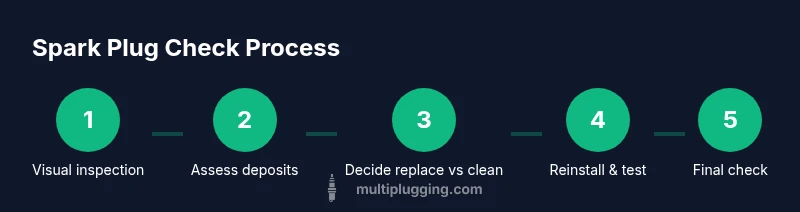
From the outside, a healthy spark plug should look clean with a ceramic insulator that is white to light gray and a metal shell that is free of heavy corrosion. Worn electrodes appear rounded or eroded, and the tip may look rounded or melted. Carbon fouling shows as a dry, black, sooty buildup; oil fouling leaves a wet, oily glaze. Cracks in the ceramic or a white, blistered insulator indicate thermal damage. According to MultiPlugging, the most reliable first step is a clear visual assessment conducted in good light. This lets you distinguish obvious problems from subtle issues that require closer examination. If you notice heavy fouling, misfires, or oil in the plug wells, plan to replace rather than attempt a quick cleaning. A quick inspection sets the stage for safer, more informed decisions about each plug.
text
Tools & Materials
- Spark plug socket (appropriate size)(Typically 5/8" or 13/16"; use the size matching your plug otherwise you risk damage)
- Ratchet wrench(A short handle is fine; a 3/8" drive is common)
- Extension bar (optional)(Helpful for deep-wapped engines or hard-to-reach plugs)
- Gloves and eye protection(Protect hands from heat and sharp edges)
- Rag or shop towel(Clean the area and wipe away residue)
- Feeler gauge (optional)(Only if you know the exact gap specification for your plugs)
- Replacement spark plugs (as needed)(Carry spare plugs in the correct heat range and thread size)
Steps
Estimated time: 60-90 minutes
- 1
Prepare your workspace and tools
Park on a level surface and let the engine cool. Gather your tools and put on gloves and eye protection. This reduces the risk of burns and dropped parts.
Tip: Have a clean tray to lay removed plugs on so you don’t mix them up. - 2
Locate the spark plugs
Open the hood and identify the coil packs or spark plug wires. If your engine uses coil-on-plug, you’ll handle individual coils; for distributor-type systems follow the plug wires in the engine bay.
Tip: Refer to your vehicle’s manual or a service diagram if in doubt. - 3
Disconnect spark plug wires or coils
Gently detach the wire boot or coil connector from the plug. Avoid pulling on the wire itself; twist lightly if needed to free the boot.
Tip: Label or photograph each wire location to ensure correct reassembly. - 4
Remove the spark plug
Fit the spark plug socket, attach the extension if needed, and carefully loosen the plug counterclockwise. Lift the plug straight out after it’s loose to avoid cross-threading.
Tip: Set the plug aside on a clean surface and inspect the threads in the bore for damage. - 5
Inspect the plug visually
Compare the plug tip color and deposits to the healthy-plug reference. Look for heavy carbon, oil films, or glazing on the ceramic. A white or blistered insulator can indicate overheating.
Tip: Document any consistent patterns (e.g., all cylinders showing similar deposits). MultiPlugging notes that uniform signs help diagnose root causes. - 6
Check the gap (where applicable)
If you know the exact gap spec, use a feeler gauge to verify the distance. If you’re unsure, rely on replacement with plugs in the correct gap; many modern plugs come pre-gapped.
Tip: Never force a plug into a tight gap; misgapping can cause misfires. - 7
Decide on cleaning or replacement
Light carbon buildup can sometimes be wiped away; however, any signs of oil, heavy wear, or damage indicate replacement is the safer choice.
Tip: In doubt, replace with a new plug to avoid risking engine damage. - 8
Reinstall or replace plugs
If reusing, thread by hand to avoid cross-threading, then tighten to the manufacturer’s torque spec or the engine’s recommended tightness. If replacing, install new plugs and thread by hand before torquing.
Tip: Use a torque wrench if you have one to prevent over-tightening. - 9
Reconnect wires or coils
Attach the boots or coil connectors securely. A loose connection can cause misfires even if the plug is in good condition.
Tip: Take a moment to confirm each connection is fully seated. - 10
Test engine readiness
Start the engine and listen for smooth idle. A short test drive can reveal subtle misfires that aren’t obvious at idle.
Tip: If you hear continuous misfires, stop and re-check the plug orientation and connections.
FAQ
Do I need to remove the spark plug to inspect its condition?
Not always. You can inspect the plug visually with it in place for some indicators, but removal is often necessary to assess electrode wear and deposits accurately. If the plug looks questionable, remove it following the steps and compare with a known-good plug.
You can peek at some signs with it in place, but removing it gives the clearest view of wear and deposits.
What visual signs indicate a healthy vs worn spark plug?
Healthy plugs typically show a light gray ceramic tip and minimal deposits. Worn plugs have rounded electrodes or heavy buildup, oil slicks, or cracking. Oil fouling often points to an oil control issue, while heavy carbon suggests fuel or ignition problems.
Look for clean, light-colored tips; worn or oily plugs likely need replacement.
Can I determine spark plug condition without tools?
Visual inspection is the primary non-tool method. For accurate gap and wear assessment, you’ll typically need a gap gauge or replacement plugs. If you’re unsure, replacing with correctly gapped plugs is a safe bet.
Visuals help, but a gauge or replacement plugs give certainty.
When should I replace spark plugs?
Replace plugs if you notice heavy wear, oil fouling, cracks, or persistent misfires. If the tip is damaged or deposits are excessive, replacement is recommended rather than cleaning.
Replace worn or damaged plugs to protect engine performance.
Is it safe to perform a quick crank-test to check plugs?
A brief engine crank test is generally safe when you’ve reinstalled plugs properly and kept clear of moving parts. Do not perform tests with exposed wiring while the hood is open and the engine is hot.
Keep hands away from belts and fans during any test start.
What causes oil fouling on plugs and what should I do?
Oil fouling occurs when oil leaks into the combustion chamber or around the plug. Replace affected plugs and address the underlying oil control issue to prevent recurrence.
Oil on plugs usually means an engine issue that needs attention.
Watch Video
Main Points
- Inspect plugs visually before replacements
- Use proper tools to avoid cross-threading
- Replace worn plugs instead of cleaning heavily fouled ones
- Verify connections after reinstallation
- A short test drive helps confirm operation