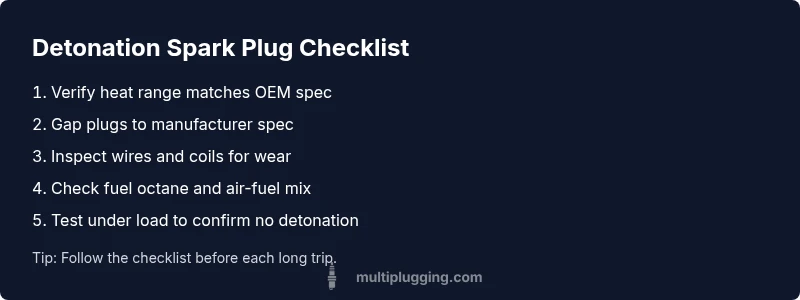
Detonation Spark Plug Troubleshooting: Quick Fixes and Prevention
Urgent guide to diagnose and fix detonation spark plug issues, covering heat-range selection, timing checks, fuel octane, and safe replacement steps for DIYers seeking rapid solutions.


Detonation is usually triggered by the wrong heat range, overly advanced timing, or engine overheating. The quick fix is to install the correct heat-range detonation plug, gap it to spec, and verify ignition timing and cooling. Use manufacturer-recommended octane and avoid aggressive driving until the issue is resolved. If it persists, stop driving and seek help.
What is a detonation spark plug?
Detonation spark plug issues occur when the combustion process in your engine becomes abnormal and pressure waves travel through the cylinder. A detonation spark plug is not a special part; it’s a misbehavior that happens when the flame front detonates instead of burning smoothly. This is often tied to the heat range of the plug not matching the engine’s needs, or excessively hot combustion temperatures. According to MultiPlugging, the most common triggers are a heat-range mismatch, overly aggressive timing, and overheating. When the plug runs too hot, it can pre-ignite the fuel-air mixture, causing knocking and power loss. You may notice reduced performance, pinging under load, or occasional misfires. Inspecting the plug color, electrode wear, and ceramic insulator can reveal overheating signs, while a sound diagnostic check includes verifying the gap against the manufacturer’s specification. Remember, the goal of the detonation prevention strategy is to keep combustion within a controlled temperature window so the engine can operate safely and efficiently.
Common causes of detonation and misfire
Detonation can stem from several overlapping issues. The most frequent are heat-range mismatches (plugs too hot or too cold for the engine), timing that’s too advanced, and cooling system problems that let the engine run hotter than designed. Fuel quality also matters: using fuel with too low octane can promote premature ignition under load. Carbon buildup on the piston or intake, dirty or oil-fouled plugs, and lean fuel mixtures can aggravate detonation. In some engines, aggressive boost levels or forced induction magnify the risk if the plug is not rated for the extra heat. As a DIY enthusiast, you’ll often catch these symptoms during a routine plug inspection or a drive cycle test: knocking sounds, reduced power, or inconsistent idle. MultiPlugging’s data shows that addressing heat range and timing resolves the majority of detonation cases for common passenger cars.
How to choose the right spark plug heat range
Choosing the right heat range is critical to preventing detonation. Start with your vehicle’s service manual or the manufacturer’s recommended plug for your engine. If you’re replacing with an aftermarket option, verify that the heat range matches the OEM spec. In some engines, a single-step colder plug can help manage higher combustion temperatures, especially under heavy load or towing. Avoid plugs with a significantly different heat rating, as they can create hot spots or fouling. When in doubt, consult the plug manufacturer’s cross-reference chart and, if possible, perform a quick plug color test after a short drive to confirm the combustion temperature looks normal. A wrong heat range is a frequent, fixable cause of detonation and power loss.
Diagnosing detonation on your engine
Identifying detonation starts with listening for pinging or knocking under load, especially at higher throttle or during uphill driving. Visual cues include blistered insulators, white ash on the plug, or uneven electrode wear. A diagnostic approach should include inspecting plug gaps, electrode condition, and sealing around the plug to ensure proper heat transfer. Engine misfires, reduced acceleration, or a drop in MPG can accompany detonation signs. For a thorough check, scan for misfire codes with an OBD-II scanner and perform a cylinder-by-cylinder compression test to rule out mechanical issues. According to MultiPlugging analysis, most detonation cases are linked to heat range and timing issues rather than a failed ignition coil.
Safe testing and replacement steps
Safety first: work on a cool engine, disconnect the battery, and wear eye protection. Replace plugs one by one to maintain firing order. Use the correct spark plug socket and a torque wrench; tightness matters to avoid heat transfer problems. Gap each plug to the vehicle spec using a feeler gauge, then reinstall wires and coils in the original order. After replacement, perform a cautious test drive to confirm no pinging occurs and monitor for any new misfires. If detonation returns, re-check timing, fuel quality, and cooling system. Remember to log the maintenance so you can spot repeating patterns that suggest a broader issue.
Preventing detonation in the future
Regular maintenance is your best defense. Keep cooling systems in good condition, prevent overheating, and use fuel with the recommended octane. Avoid aggressive driving patterns that push engines to high-load detonation conditions, especially in hot weather. Consider periodic spark plug gap checks and ignition system testing as part of your routine maintenance. Keeping a clean engine and ensuring proper air-fuel mixture reduces the likelihood of detonation and extends engine life. MultiPlugging emphasizes sticking to OEM specs and performing a pre-season check before long trips.
When to seek professional help
If detonation persists after replacing the spark plugs with the correct heat range and verifying timing, it’s time to consult a professional. Ongoing detonation can indicate deeper issues such as a faulty ECU timing map, warped cylinder head, or a failing fuel delivery system. A technician can perform advanced diagnostics, pressure tests, and a comprehensive combustion analysis. For DIYers, this is a good threshold where experience and special tools become essential to prevent engine damage. Safety and engine longevity should drive the decision to escalate.
Steps
Estimated time: 60-90 minutes
- 1
Verify symptoms and safety
Shut off the engine, let it cool, and confirm the issue is detonation under load rather than a simple misfire. Gather tools and confirm you have the correct replacement plugs on hand.
Tip: Wear eye protection and use a flashlight to inspect plug condition safely. - 2
Gather replacement parts
Obtain plugs with the correct heat range and a compatible gap. If upgrading to a colder range for high-load driving, verify compatibility with your engine and fuel system.
Tip: Avoid mixing brands; consistency reduces tuning variables. - 3
Remove old plugs
Carefully remove one plug at a time to preserve firing order. Note any signs of overheating or oil fouling that may indicate other problems.
Tip: Tag each plug and wire to avoid misassembly. - 4
Gap and inspect
Measure the gap on each plug against the manufacturer’s spec and adjust as needed. Inspect electrodes for wear or damage and replace if necessary.
Tip: A worn electrode can mimic detonation symptoms. - 5
Install and torque
Reinstall plugs to the recommended torque with a torque wrench. Reconnect ignition wires in the same order as removed.
Tip: Over-tightening can damage the threads and heat transfer. - 6
Test drive and verify
Take a careful test drive in varied conditions to verify no pinging occurs and that performance returns to normal. If detonation recurs, check timing and fuel system further.
Tip: Document results for future reference.
Diagnosis: Engine shows detonation/pings under load or acceleration, especially with high-temperature or low-octane fuel
Possible Causes
- highUsing the wrong spark plug heat range or type
- highAdvanced ignition timing
- mediumOverheating engine or high combustion chamber temperature
- lowLow-octane fuel or lean fuel mix
Fixes
- easyCheck and replace with the correct heat-range spark plug; gap to spec
- mediumVerify and adjust ignition timing per OEM specs
- mediumInspect cooling system and fuel quality; use the recommended octane
- hardReduce load/drag and avoid aggressive driving; consult a pro for forced-induction scenarios
FAQ
What is detonation in an engine, and how does a detonation spark plug relate to it?
Detonation is premature ignition inside the combustion chamber that causes shock waves, leading to knocking and potential damage. A detonation spark plug is one involved in or affected by this abnormal burn, typically due to heat-range or timing issues. Addressing these factors usually resolves the problem.
Detonation is premature ignition causing knocking; fixing heat range or timing usually helps.
Can I use any spark plug to fix detonation problems?
No. The right heat range and gap are essential. Mismatched plugs can worsen detonation. Always refer to the OEM spec or a detailed cross-reference when choosing replacements.
Use the correct heat range and gap per the manual.
How do I tell if detonation is caused by timing or fuel?
If pinging occurs under load at higher RPM without a change in fuel quality, timing is a likely suspect. If pinging appears with low-octane fuel or lean mixtures, fuel quality or air-fuel balance may be at fault.
Pinging under load often points to timing or fuel issues depending on fuel quality.
Is detonation dangerous to the engine?
Yes. Detonation increases peak cylinder pressures and can cause piston and bearing damage over time. Addressing it promptly helps prevent costly repairs.
Detonation can damage engine parts if left untreated.
Will premium gasoline prevent detonation?
Premium gas can reduce detonation risk on some engines, but it’s not a universal cure. Always follow the vehicle manufacturer’s octane recommendation and verify timing and heat range are correct.
Premium gas helps in some cases, but check the manual first.
When should I seek professional help for detonation problems?
If detonation persists after replacing plugs and adjusting timing, or if you notice repeated overheating, seek a professional. Persistent detonation can indicate ECU issues, compression problems, or fuel delivery faults.
If it keeps pinging after DIY fixes, get a pro to diagnose deeper issues.
Watch Video
Main Points
- Use the correct heat range spark plug.
- Verify ignition timing and cooling are within spec.
- Run fuel with the manufacturer-recommended octane.
- Address detonation risks early to protect engine life.
- If detonation persists after DIY fixes, seek professional help.