Spark Plug Running Hot? Urgent Troubleshooting Guide
Learn fast, safe steps to diagnose and fix a spark plug that’s running hot. This urgent guide covers heat-range issues, lean mixtures, timing, cooling problems, and prevention for DIYers and car owners.


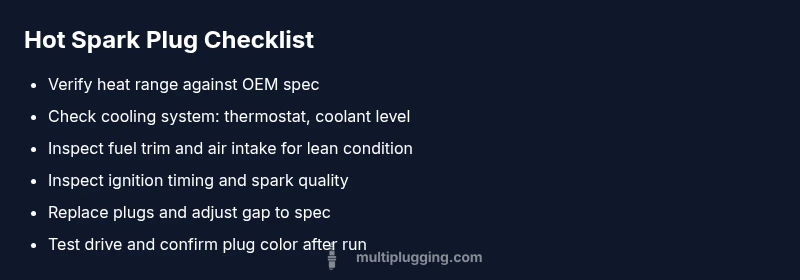
Most likely the spark plug to hot is caused by a heat-range mismatch, lean fuel, or advanced timing. Start by confirming you’re using the correct heat range plug and verifying the cooling system, thermostat, and coolant level. Next, inspect the plug color and gaps, test fuel trim with a scanner, and check ignition timing. If unresolved, consult a pro.
Understanding the heat issue: spark plug to hot and what it means
A spark plug that runs hotter than intended can trigger pre-ignition, faster wear, and even engine damage if ignored. In many engines, a plug that is too hot indicates a heat-range mismatch, a lean air-fuel mixture, or timing that’s too advanced. When you see a 'spark plug to hot' condition, address it quickly to prevent costly repairs. The goal is to restore the balance between combustion temperature, cooling capacity, and the plug’s designed thermal range. This is a common problem for DIYers who rely on set-it-and-forget-it maintenance, and the MultiPlugging team emphasizes systematic checks rather than guesswork.
Primary causes of hot plugs
- Heat-range mismatch: Using a plug with a hotter heat range than the engine requires can push the tip temperature higher than intended.
- Lean fuel mixture: Too little fuel makes combustion hotter, increasing plug temperature and risk of pre-ignition.
- Advanced ignition timing: Timing that’s set too far advanced causes early flame front, raising peak temperatures at the plug.
- Cooling system issues: A stuck thermostat, low coolant level, or blocked radiator reduces heat removal.
- Oil or carbon fouling: Deposits can insulate the electrode, trapping heat and raising tip temperature.
- Worn spark plug gap: Incorrect gap changes combustion characteristics and heat transfer.
Diagnostics: spot signs and quick checks
Inspect the spark plug itself: a spark plug that’s visibly white or light tan often indicates overheating, while a shiny, melted-looking tip suggests excessive heat. Remove the plug and measure the gap; compare against the vehicle’s service spec. Use a scan tool to review fuel trims and misfire data. Check coolant temperature and verify the thermostat is operating smoothly. If you notice oil on the plug, diagnose possible valve seal or piston ring issues. MultiPlugging analyses shows that heat-range mismatches and lean conditions are frequent culprits in hot-plug scenarios.
Safe, quick tests you can perform today
- Verify coolant level and thermostat operation; replace if necessary. A properly cooling system is essential when addressing hot plugs.
- Check the plug heat range and ensure the correct model is installed for your engine.
- Inspect air intake and fuel delivery for lean conditions (check for vacuum leaks, dirty injectors, or incorrect injector flow).
- Measure ignition timing and adjust if your engine uses fixed timing or a programmable setup. Do not adjust timing without confirming engine specs.
- Ground the plug to test for spark quality in a controlled, safe environment. If the plug arc looks weak or inconsistent, address the ignition system.
Step-by-step fixes for hot plugs
- Confirm correct heat range: cross-check OEM spec or service bulletin for your engine and replace with the proper plug if needed.
- Correct the air-fuel balance: clean or replace dirty injectors, seal vacuum leaks, and ensure the mass airflow sensor reads accurately.
- Restore proper timing: verify timing marks or program ECU settings; adjust only if you’re sure about the engine spec.
- Improve cooling: repair or replace thermostat, radiator, and hoses; replace coolant with the correct specification.
- Inspect plug gap and condition: set the correct gap, apply anti-seize if recommended, and torque to spec.
- Re-test under load: take a short road test to monitor for continued overheating symptoms; monitor spark plug color after a run.
Safety, prevention, and avoiding repeats
- Always disconnect the battery and wear eye protection when inspecting the engine bay.
- Use correct torque specs to avoid damaging threads or fouling.
- Maintain cooling system: regular coolant flushes, clean radiator fins, and proper thermostat operation.
- Use the right heat range plugs for your engine and avoid mismatched replacements.
- Document any changes and monitor engine temperature and fuel trims after fixes.
How to choose the right heat range spark plug and maintain cooling
Choosing the right heat range is critical to avoid the spark plug running hot. Consider engine type, compression, and whether you routinely tow or operate at high RPM. Always refer to OEM specifications or trusted guides like MultiPlugging when selecting plugs. Regular coolant checks and thermostat service are equally important to prevent heat-related issues and keep plugs within their designed thermal range.
Road test and final verification
After performing fixes, conduct a controlled road test to check for overheating indicators under load. Re-check plug color after a brief run and inspect for any signs of pre-ignition or detonation. If temperatures stay high, re-check air-fuel and cooling systems, then consult a professional if needed.
Steps
Estimated time: 1-2 hours
- 1
Prepare safely and gather tools
Park on a level surface, disconnect the battery, and gather a spark plug socket, feeler gauge, torque wrench, and basic diagnostic tools. Safety first to avoid shocks or burns.
Tip: Put on eye protection and gloves; a cool engine is safer to work with. - 2
Verify heat range and plug type
Check the vehicle’s manual or OEM spec to confirm the correct heat range and thread size. If you find a mismatch, replace with the proper plug before any further testing.
Tip: Do not mix brands or heat ranges in a single engine. - 3
Inspect plug condition and gap
Remove the plug and inspect the electrode and porcelain for signs of overheating. Measure the gap with a feeler gauge and adjust to the recommended specification.
Tip: A consistent gap helps ensure proper combustion and heat transfer. - 4
Assess cooling and fuel system
Check coolant level and thermostat operation; inspect for leaks. Scan for lean conditions and inspect for vacuum leaks or dirty injectors that could cause a hot plug.
Tip: A cooling system issue is a common root cause that must be fixed first. - 5
Check ignition timing and spark quality
If applicable, verify timing marks and ensure the ignition system produces a strong, consistent spark. Poor spark can contribute to misfiring and overheating.
Tip: An inconsistent spark can masquerade as a heat issue. - 6
Install correct plug and retest
Install the correct heat-range plug and torque to spec. Reconnect the battery, start the engine, and monitor temperature and performance.
Tip: Take notes of plug color after a test run to confirm the fix. - 7
Road test and monitor
Take a short drive under typical conditions; monitor for overheating signs and listen for detonation or misfires. Re-inspect plug color after the test.
Tip: If symptoms persist, escalate to a professional with data from the test drive.
Diagnosis: Engine runs hotter than normal or shows signs of pre-ignition and misfires, especially under load.
Possible Causes
- highHeat-range mismatch (hotter plug than required)
- highLean air-fuel mixture
- highAdvanced ignition timing
- mediumCooling system malfunction (thermostat, low coolant)
- lowDeposits or oil fouling on plug
Fixes
- easyVerify and install the correct heat-range plug for your engine
- easyInspect air intake, clean injectors, and fix vacuum leaks to correct mixture
- mediumCheck and adjust ignition timing if applicable, or reprogram ECU per spec
- easyInspect cooling system components and replace faulty thermostat or coolant
- easyClean or replace fouled plugs and retorque to spec
FAQ
What does it mean if my spark plug is white or light tan?
White or light tan plugs typically indicate overheating or a very lean mixture. Check coolant temperature, engine timing, and fuel delivery to address the root cause. If the plug remains abnormal after fixes, consult a mechanic.
White plugs often mean overheating or a lean mixture; check cooling, timing, and fuel delivery, and seek help if needed.
Can a bad thermostat cause spark plugs to run hot?
Yes. A thermostat stuck closed prevents proper cooling, causing higher combustion temperatures and hotter plugs. Inspect or replace the thermostat and ensure coolant circulation.
A stuck thermostat can make the engine overheat and heat the plugs; check the cooling system first.
Is a lean condition the most common cause of hot plugs?
Lean mixtures are a frequent cause of hot plugs because less fuel means higher combustion temperatures. Inspect air intake, vacuum lines, and injector performance.
Lean fuel can overheat plugs; inspect air intake and fuel delivery.
Should I replace all plugs if one is overheating?
If one plug shows signs of overheating, replace all plugs with the correct heat range to ensure consistent performance and heat transfer across the system.
If one plug overheats, it's wise to replace all with the correct heat range.
When is it necessary to seek professional help?
If overheating persists after basic checks, or you notice detonation, loss of power, or coolant issues, consult a qualified technician. Ignoring symptoms can lead to engine damage.
If the problem persists, seek a professional to avoid engine damage.
Watch Video
Main Points
- Verify heat range before replacing plugs
- Keep cooling system in top condition
- Check air-fuel balance and timing
- Inspect spark plug color and gap after testing
- Road test and monitor to confirm fixes