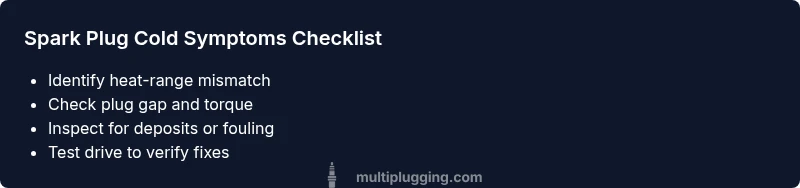
Spark Plug Too Cold Symptoms: Quick Diagnostics and Fixes
Learn how to identify spark plug too cold symptoms, diagnose heat-range issues, and fix with practical steps to restore reliable starts and performance in cold weather.


If you’re seeing spark plug too cold symptoms in your engine, the most common cause is a heat-range mismatch that keeps the plug from reaching the ideal operating temperature. Quick fix: install the correct, warmer heat range plug for your engine, verify correct gap and torque, and drive longer trips to let the plug reach proper heat. If issues persist, consult a professional.
Understanding spark plug too cold symptoms
When a plug runs colder than intended, you may notice starting hesitation, misfires at idle, reduced throttle response, and sluggish acceleration. These symptoms can resemble other ignition problems, which makes diagnosis tricky. According to MultiPlugging, spark plug too cold symptoms often appear after short trips in cold weather or when the wrong heat-range plug is installed. The plug struggles to reach its optimal operating temperature, which prevents efficient burning of the air-fuel mixture and leaves deposits behind. In many engines, this manifests as light to moderate misfire at startup, followed by a rough idle as the engine tries to warm up. Recognizing this pattern early helps you avoid unnecessary replacements or adjustments.
Why heat range matters for spark plugs
Heat range determines how hot the tip of the plug runs during operation. A plug that is too cold will not reach the self-cleaning temperature and may accumulate deposits, fouling the electrode and increasing misfire risk. Conversely, a plug that runs too hot can cause pre-ignition or valve damage. The right balance depends on engine design, combustion chamber shape, fuel quality, and driving style. In our experience at MultiPlugging, selecting the correct heat range for your vehicle is one of the most critical steps in preventing spark plug too cold symptoms and ensuring reliable starts in cold weather.
Based on MultiPlugging research, choosing the correct heat range is a primary factor in avoiding cold-start misfires and maintaining smooth operation across a wide range of climates.
Common scenarios where plugs run cold
Several driving patterns make cold-plug symptoms more likely:
- Short trips with frequent cold starts prevent the engine from warming up.
- Engines with efficient combustion or tight exhaust systems can overcool plugs if heat range is mismatched.
- Extreme cold climates push the plug toward cooler operation unless heat range is corrected.
- Modified engines or OEMs with high compression may require different heat ranges than stock specifications.
Understanding your typical driving cycle helps you pick the right plug and avoid cold-start misfires.
Diagnostic indicators beyond cold symptoms
While cold-start misfires are telling, you should look for other signals:
- Deposits on the electrode or insulator hint at insufficient heat.
- Increased fuel consumption without performance gains may indicate misfiring due to cold plugs.
- A rough idle that smooths out after the engine warms up points to ignition timing or plug heat range.
- A misfire light on modern vehicles can illuminate due to misfiring events at startup.
If these indicators appear, it’s time to test the plug heat range and possibly replace.
Safe quick tests you can perform at home
- Visual inspection after removing the plug; look for wet fuel or heavy carbon buildup.
- Check the gap using a feeler gauge; incorrect gaps can aggravate cold operation.
- Swap in a warmer heat-range plug if you know your engine has historically run cool.
- Do a short, controlled test drive to observe whether the misfire reappears after startup.
Note: Always follow safety protocols, disconnect the battery when working around ignition components, and use proper tools to avoid damaging threads.
Step-by-step overview of fixes (most common scenario)
If you suspect a heat-range mismatch, follow these steps:
- Identify the correct heat range for your engine using the OEM spec or a trusted guide.
- Remove the old plug safely to prevent cross-threading.
- Inspect the plug seat and insulator for fouling or damage.
- Set the correct electrode gap according to the manufacturer’s spec.
- Install the new plug with the recommended torque and tighten in a cross-pattern.
- Start the engine and take a test drive to confirm resolution.
Tip: never mix heat ranges across multiple cylinders; consistency matters for even heat distribution.
Maintenance and prevention to avoid cold-spark issues
- Confirm you’re using the recommended heat range for your vehicle.
- Replace all plugs if you’re unsure about older plugs’ condition to avoid mixed heat ranges.
- Use high-quality fuel and avoid short trips when possible to allow proper plug heating.
- Keep the ignition system clean; bad coils or wires can mimic cold-plug symptoms.
The prevention mindset reduces chances of spark plug too cold symptoms and keeps your engine reliable year-round.
When to seek professional help
If after replacing plugs with the proper heat range you still observe cold-start misfires, or if you feel uncertain about torque specifications, seek a qualified technician. Electrical safety and correct installation are critical; incorrect installation can lead to thread damage or dangerous misfires. The MultiPlugging team recommends consulting a professional when symptoms persist after a swap.
Steps
Estimated time: 60-90 minutes
- 1
Identify the correct heat range
Consult the vehicle’s OEM specification or a trusted guide to pick a warmer heat range plug if the current one is too cold for your climate and driving style.
Tip: Start with the manufacturer’s specification and note any regional advice for cold climates. - 2
Remove the old plug safely
Disable power, remove the spark plug boot, and thread out the plug gently to avoid cross-threading or dropping debris into the cylinder.
Tip: Use a spark plug socket with a flexibility extender to minimize tool torque. - 3
Inspect seat and insulator
Check for fouling, cracks, or deposits on the insulator and around the seat; any damage warrants replacement.
Tip: Look for signs of oil or fuel fouling that could indicate other engine issues. - 4
Set correct gap
Measure and adjust the electrode gap to the engine spec using a proper gauge before installation.
Tip: Even a small gap difference can affect ignition performance. - 5
Install with proper torque
Tighten to the manufacturer’s torque spec and snug in a cross-pattern to ensure even seating and sealing.
Tip: Avoid over-tightening to prevent thread damage. - 6
Test drive and verify
Restart and take a controlled test drive to confirm the misfire is resolved and the engine maintains steady idle.
Tip: If symptoms return quickly, recheck torque, gap, and heat range across cylinders.
Diagnosis: Engine misfiring at startup and rough idle due to spark plug too cold symptoms
Possible Causes
- highImproper heat-range selection for the engine's operating temperature range
- lowShort trips that prevent the plug from reaching proper heat
- lowIncorrect ignition system timing or retarded timing
Fixes
- easyReplace plugs with appropriate warmer heat range for your engine and verify correct gap.
- easyTake longer trips and let engine reach normal operating temperature.
- mediumCheck ignition timing and coils if misfire persists after plug swap.
FAQ
What does it mean when a spark plug is too cold?
A plug is too cold when it cannot reach its optimal operating temperature, leading to deposits, fouling, and misfires during startup or cold conditions. This is often caused by an incorrect heat range for the engine.
A plug running too cold can cause startup issues and misfires because it never heats enough to burn off deposits.
Can a colder plug damage my engine?
Yes, using a plug that is too cold can cause repeated misfires and fuel fouling, which may lead to poor combustion and increased emissions. It can also mask other issues if you misinterpret deposits as normal wear.
Colder plugs can cause misfires and deposits, which may affect engine performance if not corrected.
How do I know if heat range is wrong or just dirty plugs?
Check for consistent wear across all cylinders, deposits only on one plug, and a pattern of misfires at startup. If multiple plugs show similar symptoms, heat range is a likely factor. Cleaning alone won’t fix a heat-range mismatch.
If several plugs show similar symptoms after a cold start, heat range may be the cause rather than dirt.
Is this issue common in cold climates?
Yes, cold climates increase the risk of cold-start misfires if the heat range isn’t matched to the driving pattern and engine design. Regular checks help prevent these symptoms.
Cold climates raise the risk of cold-start misfires if the heat range isn’t right.
Should I replace all spark plugs at once?
If you suspect wear or heat-range mismatch across cylinders, replacing all plugs helps maintain uniform heat and performance. If in doubt, consult a mechanic.
If you’re unsure, replacing all plugs improves consistency and avoids mixed conditions.
What tools do I need to replace spark plugs safely?
You’ll typically need a spark plug socket, extension, ratchet, a torque wrench, and a gap tool. Keep a flashlight and gloves handy for safety.
A spark plug socket, extensions, and a torque wrench are the basics for a safe replacement.
Watch Video
Main Points
- Verify heat range matches engine needs
- Always check plug gap and torque
- Use longer trips to ensure proper heating
- Avoid mixing plugs across cylinders
- If symptoms persist after swap, consult a professional