Overheating Spark Plug Troubleshooting: Quick Fixes and Prevention
Diagnose and fix an overheating spark plug with a clear, step-by-step plan. Learn heat-range checks, cooling system health, timing and fuel considerations, and safe replacement practices for DIYers.


Overheating spark plug is usually caused by heat-related engine conditions, often a heat-range mismatch, a lean fuel mix, or overly advanced timing. Start with the plug’s rating, gap, and condition, then verify the cooling system and thermostat. Replace with the correct heat-range plug if needed and address any cooling or ignition timing issues before driving hard again.
Why overheating spark plug happens
According to MultiPlugging, an overheating spark plug signals the engine is producing more heat than the plug can safely shed. This can stem from a heat-range mismatch, excessive combustion temperatures, or persistent engine stress. When a plug operates near or above its designed temperature, insulators can blister, electrode gap can widen, and fouling patterns may appear. Understanding the heat range window helps DIYers prioritize fixes that prevent damage and improve efficiency. This section sets the foundation for a methodical approach: verify plug selection, inspect cooling, and review ignition parameters to bring engine temperatures back into a safe range.
Top causes of overheating spark plugs
- Wrong heat range or improper heat transfer: A plug that’s too hot for the engine state will retain heat, risking pre-ignition and local damage. A plug that’s too cold can foul and run hot due to weak heat dissipation.
- Lean air-fuel mixture or high engine load: Lean burn or heavy loads raise combustion temperatures, stressing the plug and accelerating heat buildup.
- Cooling system shortcomings: A stuck thermostat, low coolant, air pockets, or a clogged radiator reduce heat removal and promote overheating at the spark plug.
- Ignition timing or ECU faults: Advanced timing or miscalibrated ignition controls can cause hotter-than-expected combustion, pushing the plug into an overheating zone.
- Carbon fouling and deposits: Carbon buildup insulates the plug and traps heat, causing higher surface temperatures.
- Frequent high-speed/high-load driving: Prolonged high-rpm or towing conditions increase heat and shortens plug life if cooling isn’t adequate.
Immediate checks you can perform today
Before diving into parts replacement, perform a quick audit of related systems. Check coolant level and condition, ensure fans run on demand, and confirm the radiator isn’t blocked. Inspect the air intake and filter for restriction, and measure spark plug gap against the manufacturer’s spec. If you find a plug that is blistered, fouled, or eroded, plan to replace with the correct heat range promptly. Finally, validate that the engine timing is within spec and that there are no vacuum leaks that could lean the mixture.
Diagnostic flow overview
A structured diagnostic flow helps you isolate the root cause without guesswork. Start with the simplest, least invasive checks and progress to targeted tests. If a single fix resolves the symptom, you’ve narrowed the issue effectively. For persistent symptoms, escalate to professional service, especially if cooling systems or fuel delivery components warrant deeper inspection.
Steps
Estimated time: 60-90 minutes
- 1
Verify spark plug heat range and gap
Remove the plug and compare its heat range to the manufacturer specification. Clean off fouling if present, then set the correct gap using a precise gauge. Replace if the insulator is cracked or visibly damaged.
Tip: Always ground yourself and use insulated tools to prevent shock when working around the ignition system. - 2
Inspect cooling system health
Check coolant level in the reservoir and radiator. Inspect for leaks and ensure the thermostat opens properly. Confirm cooling fans engage at the correct temperature and check for blockages in the radiator fins.
Tip: Do not open a hot cooling system; allow the engine to cool for at least 15 minutes before inspection. - 3
Test for lean condition and airflow
Check for vacuum leaks and inspect the air intake and throttle body. Test fuel pressure to ensure the engine isn’t running too lean, especially under load. Replace the air filter if dirty.
Tip: A lean condition often shows up as higher engine temperatures under light to moderate load; verify with a scan tool if available. - 4
Validate ignition timing
Use a timing light or the vehicle’s diagnostic tool to verify that ignition timing is within spec. If timing drifts, inspect the distributor, crank sensor, or ECU for faults and adjust or replace as needed.
Tip: Incorrect timing can cause heat spikes; always recheck after any timing adjustment. - 5
Replace with correct plug and re-test
Install a fresh spark plug of the correct heat range and a new gasket if applicable. Re-gap to spec and torque to manufacturer recommendations. Start the engine and monitor temperature and idling quality.
Tip: Take note of heat range markings on the side of the plug and align with the service manual. - 6
Take a controlled road test
Drive under varied loads to confirm the issue is resolved. Observe engine temperature, idle stability, and smooth acceleration. Listen for misfires or knocking that may indicate other issues.
Tip: Avoid high-load driving until you confirm the fix; this prevents potential damage to the new plug. - 7
Document and monitor
Record the symptoms, fixes performed, and results. Schedule a follow-up check if overheating recurs, as it may indicate a more systemic problem.
Tip: Set a reminder to recheck coolant and spark plug condition after about 1,000 miles.
Diagnosis: Engine runs hotter than normal and spark plug shows signs of overheating (blistered insulator, melted electrode, or excessive heat discoloration).
Possible Causes
- highWrong heat range spark plug for the engine, causing excessive heat retention
- highLean fuel mixture or heavy engine load increasing combustion temperatures
- mediumCooling system issues (stuck thermostat, low coolant, radiator blockage)
- mediumAdvanced ignition timing or faulty ECU causing hotter burn
Fixes
- easyCheck and replace the spark plug with the correct heat range for your engine; inspect and set the proper gap
- easyInspect cooling system: coolant level, thermostat operation, radiator flow, and fan operation; bleed air if needed
- mediumScan and verify ignition timing/ECU settings; correct timing or update control module if required
- easyAddress fuel delivery and air intake: test fuel pressure, clean or replace injectors, replace dirty air filter
FAQ
What causes an overheating spark plug?
Overheating plugs are typically caused by heat-range mismatch, lean mixtures, or timing issues that raise combustion temperatures. Cooling system problems can also contribute by not removing heat efficiently.
Overheating plugs usually come from the plug being too hot for the engine, a lean mixture, or timing issues. Cooling problems can make it worse.
Can I keep driving if the plug is overheating?
Continuing to drive can cause pre-ignition or severe damage to the piston and valve seats. If you notice overheating signs, stop driving and perform a safe inspection or seek professional help.
If you see overheating signs, stop driving and check the cooling system and spark plug. Don’t push it further without fixing the issue.
Should I always replace with a hotter plug when overheating occurs?
Not necessarily. Using a hotter plug than the engine requires can cause fouling and misfires. Always verify the recommended heat range for your engine and follow the manufacturer guidance.
Don't just switch to a hotter plug without checking the engine's heat range recommendation.
How can cooling system problems trigger spark plug overheating?
If the cooling system fails to shed heat, the engine temperature rises and pushes the plug into a higher temperature range. This can happen with a faulty thermostat, low coolant, or radiator blockage.
A failing cooling system means the engine runs hotter, which can overheat the plug.
What maintenance prevents plug overheating?
Regular coolant checks, timely thermostat and radiator maintenance, and using the correct heat-range plugs keep engine temperatures in check and reduce heat-related plug issues.
Stay on top of cooling system checks and use the right spark plug type to prevent overheating.
Can fuel system issues cause plugs to overheat?
Yes. A lean condition or injector problems can raise combustion temperatures and overheat the plug. Check fuel pressure and injector cleanliness as part of diagnostics.
A lean fuel mix can push the plug into overheating; check fuel delivery as part of diagnostics.
Watch Video
Main Points
- Identify and fit the correct heat range plug
- Ensure cooling system is healthy and capable
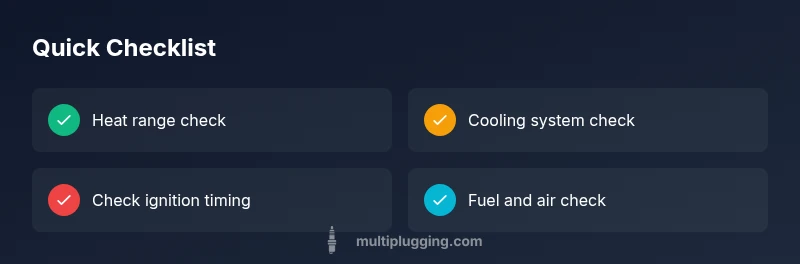
- Check fuel/air mix and ignition timing for heat spikes
- Test-drive after fixes to confirm resolution