What Causes Spark Plug Blowouts: Troubleshooting Guide
Urgent guide to diagnose and fix spark plug blowouts, covering heat range, torque, oil/fouling, cross-threading, and prevention. Learn quick fixes and when to call a pro.


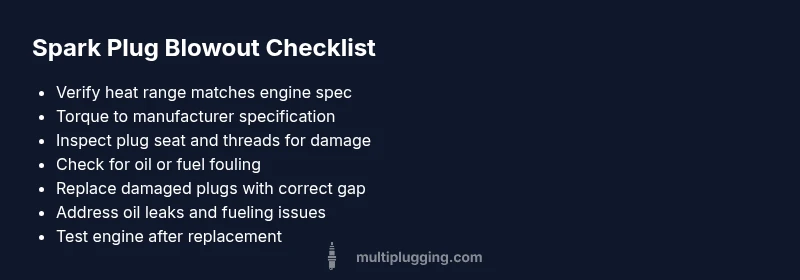
Common spark plug blowouts are caused by incorrect heat range, overtightening, or damaged threads. Quick fix: verify the plug type matches the engine, re-torque to spec, and replace damaged gaskets/threads. Inspect for oil or fuel fouling and fix root causes (oil leaks, rich fuel mixture). If the plug still blows out, stop using the vehicle and seek professional service.
Why the spark plug blow out happens
The question what causes spark plug to blow out hinges on two big ideas: installation quality and operating conditions. The spark plug must seal against combustion chamber pressure; if the threads or seat are damaged or the plug is not seated properly, pressure can push the plug out. According to MultiPlugging, the most common culprits are an incorrect heat range for the engine, overtightening, and damaged or cross-threaded threads. In many cases, a blowout occurs during or after maintenance when the plug is forced beyond its seating depth or when the engine experiences a high-load event. Other contributors include oil fouling, which coats the electrode and disrupts heat transfer, and an excessively rich fuel mixture that increases combustion pressure around the plug. Understanding these root causes helps you target the right repair: verify the plug type and heat range, confirm torque to spec, inspect the seat and threads, and address any oil leaks or fuel-system issues before replacing the plug.
Heat range, heat rating, and installation torque
Spark plugs are designed with a heat range to manage combustion temperatures. Using a plug that runs hotter or cooler than the engine expects can lead to carbon deposits, pre-ignition, or thermal cycling that weakens the plug’s threads. Installation torque matters because under-torquing allows combustion gases to push the plug out slowly, while over-torquing can strip threads or crack the ceramic insulator. Always consult the vehicle’s manual or a trusted guide to determine the correct torque and seating depth. If the plug requires anti-seize, apply a thin, even coat on the threads only; applying it to the gasket face or the seat can interfere with sealing. After installation, torque with a calibrated torque wrench to the specified value and recheck after a short run. These steps address the root causes of blowouts related to heat range and installation.
Fuel controls and oil fouling as culprits
Oil fouling occurs when oil leaks into the combustion chamber or the cylinder head area, coating the plug with oily residue. This disrupts heat transfer and can foul the electrode, leading to misfires and eventual plug ejection under pressure. A rich fuel mixture or misadjusted carburetor can also produce excessive deposits, increasing cylinder pressure near the plug. Both scenarios reduce the plug’s seating stability and can contribute to blowouts when the engine experiences rapid throttle changes or high RPMs. Start by inspecting for oil leaks around the valve cover and piston rings, and check the fuel system for overly rich fuel delivery. Replacing gaskets and correcting fuel trim often resolves these issues and lowers risk of recurrence.
Mechanical damage and improper installation
Cross-threading is a frequent cause of plug blowouts. If the plug was installed with improper alignment, the threads can be weakened or damaged, creating a poor seal and a path for gases to forcibly eject the plug. Cracked ceramic, worn bevels, or damaged washers at the plug seat can also reduce clamping force and promote blowout under pressure. Inspect the plug seat and cylinder head threads; if damage is discovered, replacement of the head component or the entire plug assembly may be necessary. When reinstalling, use the proper socket, ensure clean threads, and gently hand-tighten before final torque with a wrench. Never reuse a plug if threads show signs of deformation or if the seat is damaged.
Symptoms you might notice before a blowout
Rough idle, misfires, or a decrease in power are common early indicators that something is amiss with a spark plug. You may also notice increased fuel consumption or unusual exhaust smells due to incomplete combustion. If you detect a metallic pinging sound or an engine knocking pattern during acceleration, it could be a sign that combustion pressure is escalating around the plug. A quick check of the plug condition—whether it’s fouled, coated with oil, or damaged—can help confirm potential blowout risk. Addressing these signs early can prevent a catastrophic plug ejection and prevent further engine damage.
Quick diagnostics you can perform safely
Turn off the engine, remove the key, and allow the engine to cool. Disconnect the battery to avoid sparks when removing plugs. Use a proper spark plug socket to remove the spark plug and inspect the threads for damage. Look for oil staining, carbon buildup, or stripped threads. Reinsert a new plug temporarily and perform a controlled test, but do not run the engine if you suspect a blown plug; cross-threaded, cracked, or oil-soaked plugs should be replaced. If you are uncertain, consult a professional.
Replacing and torquing correctly: step-by-step basics
Use the correct heat range plug recommended by the manufacturer. Clean the plug seat, apply anti-seize if needed, and torque to spec using a torque wrench. Check the plug gap with a feeler gauge and set to the recommended clearance. Reinstall wires or ignition coils and ensure a proper seal with new gaskets if required. Start the engine and monitor for smooth operation and proper cooling. If misfires persist, stop and re-evaluate the installation. Record the service history to help diagnose future issues.
Prevention tips to avoid future blowouts
Perform regular inspections of spark plugs during routine maintenance intervals. Replace plugs according to the engine’s maintenance schedule and avoid aggressive driving that stresses ignition components. Use the correct heat range and avoid reusing damaged plugs. Keep the ignition system clean and ensure coil packs are in good condition. Address oil leaks and vacuum leaks that can affect combustion and plug health. Finally, store and handle plugs with care to avoid thread damage during installation.
Safety and professional help
Working with ignition components carries a risk of electric shock and fire. Always disconnect the battery before servicing, work in a well-ventilated area, and wear eye protection. If the plug has already blown out or you see signs of engine damage, do not drive the vehicle. Seek professional service promptly to assess the cylinder head, gasket seals, and ignition system for hidden damage.
Steps
Estimated time: 60-90 minutes
- 1
Power down and safety prep
Park the vehicle on a flat surface, turn off the engine, remove the key, and disconnect the negative battery cable to prevent accidental sparks. Gather a spark plug socket, extension, torque wrench, anti-seize (if recommended), and replacement plugs.
Tip: Use insulated gloves and eye protection before touching the engine. - 2
Access the spark plug
Locate the affected spark plug and remove any wiring harness or coil pack connected to it. Carefully release any ignition boot to avoid tearing. Inspect surrounding components for oil leaks or gasket issues.
Tip: Label wires if you’re doing multiple plugs to avoid mix-ups. - 3
Inspect the plug and threads
Remove the plug and examine the threads for stripping or cross-threading. Check the ceramic insulator for cracks and the sealing surface for residue. If damage is found, replace the plug and, if needed, the seat or head.
Tip: Do not reuse damaged plugs or damaged seats. - 4
Check for fouling and gaps
Look for oil, fuel, or carbon fouling on the electrode. Measure the plug gap to the manufacturer spec and adjust if necessary using an appropriate gap tool.
Tip: Small gap changes can affect ignition; verify with the spec. - 5
Select the correct replacement
Choose a plug with the correct heat range and thread size for your engine. If you’re unsure, consult the service manual or a trusted guide.
Tip: Avoid mixing plug brands unless specified by the vehicle maker. - 6
Reinstall with proper torque
Apply a light coat of anti-seize only if recommended, thread the plug by hand, then tighten with a torque wrench to the manufacturer’s specification. Avoid over-tightening.
Tip: Torque is critical—under-torque can cause leaks, over-torque can damage threads. - 7
Reconnect and test safe
Reconnect the ignition wire or coil, restore battery connection, and start the engine. Listen for smooth idle and check for misfires or unusual noises.
Tip: If it runs rough, recheck the torque and gap before driving. - 8
Document and monitor
Record the service and monitor engine performance over the next few days. Watch for signs of oil leaks, misfires, or changed fuel economy.
Tip: Keep notes to help diagnose future ignition issues. - 9
Road test and assess
Take a short, gentle road test to confirm the fix. If symptoms return, re-evaluate components or seek professional service.
Tip: Persistent issues may indicate deeper engine problems.
Diagnosis: Engine misfires, sudden plug ejection, or loss of compression during operation
Possible Causes
- highIncorrect heat range or mismatch to engine design
- highOver-tightening or cross-threading during installation
- mediumOil fouling from leaks or worn rings
- mediumExcessively rich fuel mixture or misadjusted fuel system
Fixes
- easyCheck the plug heat range against manufacturer spec and replace with the correct type if needed
- easyInspect threads, seating, and head for damage; repair or replace components and re-torque to spec
- mediumAddress oil leaks and correct fuel trim issues to prevent fouling
- easyUse a torque wrench to re-install plugs to manufacturer-recommended torque
FAQ
What causes spark plug blowouts?
Blowouts are typically due to heat-range mismatch, over-tightening, or damaged threads. Oil or fuel fouling and a misfit gap can contribute as well. Correct the root cause and re-seat with proper torque.
Blowouts usually happen because of heat-range issues, overtightening, or damaged threads, with fouling and wrong gap as possible contributors.
Can a blowout damage the engine?
Yes, a blowout can lead to compression loss, gasket failures, and potential cylinder head damage if debris enters the chamber or if the seal is compromised. Have the engine inspected.
Yes, there can be engine damage—get a professional check if you suspect.
Is it safe to drive after noticing a spark plug issue?
If you suspect a blowout, do not continue driving. Stop safely, assess the plug, and seek professional service to prevent further damage.
Don’t drive if you think there’s a blown plug; check it and get it looked at.
How can I prevent spark plug blowouts?
Use the correct heat range, torque to spec, and keep the ignition system clean. Address oil leaks and fuel system issues promptly to reduce risk.
Prevent by using the right heat range, torque correctly, and fix leaks quickly.
Should I reuse a blown-out spark plug?
No. Damaged threads or seat integrity means replacement is necessary. Reuse can lead to further blowouts or engine damage.
No, replace it to avoid repeating the problem.
Do weather conditions affect spark plug blowouts?
Extreme temperatures and humidity can influence combustion and deposits, but the primary causes are installation and maintenance issues rather than weather alone.
Weather matters less than proper heat range and torque.
Watch Video
Main Points
- Check heat range and torque first
- Inspect threads for damage before reuse
- Address oil/fuel fouling to prevent recurrence
- Avoid reusing damaged plugs
- Consult a professional if unsure