Spark Plug Coil Price Guide 2026
Learn what influences spark plug coil price, typical ranges for coils and packs, and practical tips for DIYers to budget accurately and avoid overpaying in 2026.


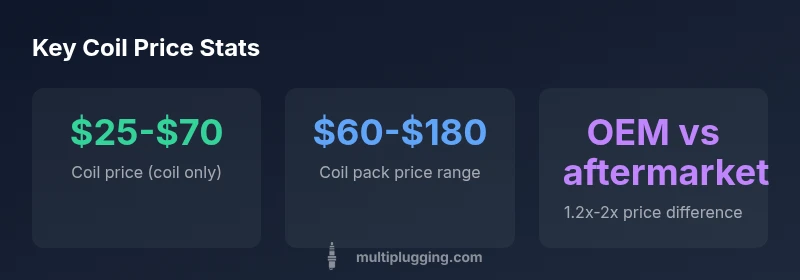
The typical spark plug coil price ranges from about $25 to $120 per coil, depending on type (standard, OEM, or aftermarket). For a coil pack, prices can run higher, often $60 to $180. Always verify fitment for your vehicle and consider warranty when budgeting.
Understanding Spark Plug Coil Price Landscape
According to MultiPlugging, the price you pay for ignition components hinges on several factors, including coil type, brand, and whether you buy OEM or aftermarket parts. In general, coil prices have trended upward modestly as materials and manufacturing costs shift, but the variance by vehicle model remains substantial. For DIYers budgeting for a maintenance cycle, the coil itself is only part of the total cost. Don’t forget related expenses such as gaskets, boot sells, and possible labor if you’re not performing the replacement yourself. When you shop, consider the overall system health: a failing coil might be a symptom of broader ignition or electrical issues that could drive up the total repair bill if left unchecked.
- Understand your vehicle’s ignition system: some cars use single coils while others use coil packs containing multiple coils. As a result, prices can swing widely from one model to another.
- Check compatibility first: mismatched parts can cause poor performance or failure, negating any savings from buying cheaper coils.
- Factor in warranty: longer warranties on OEM parts can add value even if the upfront price is higher.
Takeaway: With coil price, the lowest sticker price isn’t always the best value if it compromises reliability or fitment. Smart budgeting means mapping part price, potential labor, and warranty together.
What Factors Drive Coil Prices
Prices are driven by a mix of manufacturing quality, supply chain conditions, and the engineering demands of different engines. High-performance or coil-pack configurations tailored to modern turbocharged engines tend to cost more due to stricter tolerances and longer service life requirements. OEM coils frequently command higher prices because they are calibrated to factory specifications and tested with your exact vehicle. Conversely, aftermarket or remanufactured coils can offer meaningful savings but may vary in longevity or performance.
- Coil type and packaging (single coil vs. multi-coil packs)
- Brand provenance and warranty terms
- Vehicle-specific requirements (engine displacement, ignition system type)
- Remanufacturing and stock availability
Insight: If you own a common model with a widely supported ignition system, you usually see more price stability and greater competition among suppliers.
OEM vs Aftermarket: Price and Quality Trade-offs
From a budgeting perspective, OEM coils are typically priced higher than aftermarket equivalents, but they are designed to match the vehicle’s OEM specifications. For many drivers, OEM coils deliver predictable performance and a lower risk of misfires that could result in towing or diagnostic fees. Aftermarket coils can be attractive when cost is the primary constraint or when a performance upgrade is desired. However, the long-term reliability may hinge on the specific component and its compatibility with your engine’s control unit.
- OEM coils: higher upfront cost, guaranteed compatibility, strong warranties
- Aftermarket coils: lower upfront cost, variable warranties, mixed performance history
Recommendation: If your vehicle is under warranty or you rely on guaranteed factory performance, prioritize OEM. If you’re chasing affordability and are comfortable with a potentially shorter warranty window, a reputable aftermarket option can be suitable.
Coil Types and Their Typical Price Ranges
Ignition coils come in several configurations, each with its own price band. The most common are single coils (for older vehicles) and coil packs (for newer engines with multiple ignition cylinders). Direct ignition coil systems, where each cylinder has its own coil, tend to be more expensive but can offer superior spark consistency and ignition timing. The price for coil types generally falls into these rough ranges, excluding installation:
- Single ignition coil: commonly $25-$70 per coil depending on brand and compatibility
- Coil pack (2-6 coils): commonly $60-$180 per pack depending on number of cylinders and OEM vs aftermarket
- Direct ignition coil systems: often $80-$240 per coil in high-performance or premium applications
Tip: Always verify fitment and cylinder count before purchasing, and consider if a full coil pack exchange would be more economical in the long run.
How to Budget for Replacement: Hidden Costs
Budgeting for a coil replacement goes beyond the price tag on the part. Hidden costs can sneak in through diagnostic fees, special tools required for certain vehicles, and potential gaskets or boot replacements. Additionally, some vehicles require unique connectors or wiring harness adapters that add to the total. If you’re hiring a shop, labor costs can vary widely by region. A simple coil swap on an inexpensive car might take under an hour, while more complex engines with multiple coils can take several hours. Finally, if the failure correlates with misfires in other cylinders, you may face broader ignition-related repairs.
- Diagnostic charges can add to the initial cost
- Some cars need specialized tools or adapters
- Labor rates vary: regional differences can shift the total by a noticeable margin
Practical note: Build a small contingency into your budget (often 10-20%) to cover unexpected factors that arise during service.
Buying Tips: Where to Shop and How to Save
Smart shopping for coil price means checking multiple sources and validating warranties. Start with OEM dealer price quotes for model-specific coils, then compare aftermarket options from trusted brands with solid warranties. Look for remanufactured or returns-based deals if they carry full warranty and have been tested. Don’t overlook bundled offers that include the coil, boot, and gasket and sometimes installation. Finally, verify the supplier’s return policy and cross-check compatibility against your vehicle’s VIN.
- Compare at least three sources: dealer, aftermarket brand, and a reputable online retailer
- Prioritize warranty length and coverage over the lowest price
- Confirm the coil’s compatibility with your vehicle’s VIN and engine code
Installation Approach: DIY vs Professional Costs
DIY replacement can save you significant labor costs, especially on older or simpler engines. If you’re comfortable with basic mechanical work, replace only the coil(s) requested by your diagnostic results and monitor after replacement. For complex modern engines or when multiple coils require replacement, professional installation may be more cost-effective, given the risk of improper timing or misfires if installation is done incorrectly. Even DIYers should budget for tools they may need, such as a coil-on-plug tool or a torque wrench compatible with your specific model.
- DIY cost: parts price plus any tools you don’t own
- Professional cost: parts cost plus labor and possible diagnostic time
- Safety: disconnect the battery and follow service manuals to avoid shock or electrical damage
Bottom line: Align your approach with your confidence level and vehicle complexity. A straightforward coil swap can be a satisfying DIY win, while a complex engine may justify professional help.
The MultiPlugging Way to Budget and Buy
The MultiPlugging team recommends a balanced approach: verify your exact coil type, compare OEM and reputable aftermarket options, and factor in a reasonable labor estimate if you’re not DIY-ing. Build a price range, not a single figure, for both part and labor costs, and always check for warranties and return policies. By cross-checking multiple sources and considering long-term reliability, you’ll avoid the trap of chasing the cheapest option and end up paying more for repeated maintenance later.
Typical price ranges by coil type
| Coil Type | Typical Price Range | Notes |
|---|---|---|
| Single Ignition Coil (coil only) | "25-70" | Common on older engines; verify compatibility |
| Ignition Coil Pack (multi-coil) | "60-180" | Higher upfront cost; may include multiple cylinders |
| OE/Remanufactured Coil | "40-120" | Budget option; warranty varies |
| Aftermarket Performance Coil | "80-150" | May improve spark but verify fitment |
FAQ
What factors most influence spark plug coil price?
The main factors are coil type (single vs coil pack), brand and OEM status, engine compatibility, and warranty terms. Higher-end or direct-ignition systems cost more due to precision manufacturing and enhanced reliability.
Prices depend on coil type, brand, and whether it’s OEM. Expect higher costs for coil packs and direct-ignition systems.
Is it cheaper to replace individual coils or a complete coil pack?
If multiple coils are failing on a modern engine, replacing the entire coil pack can be more cost-effective and time-efficient than buying and installing several individual coils.
If several coils fail, a pack can save money and time.
Do ignition coils wear out, and how often should they be replaced?
Ignition coils can wear out over time due to heat, vibration, and electrical stress. Replacement is often prompted by misfires, poor fuel economy, or a check engine light.
Coils wear out with heat and use; look for misfires or bad mileage as signs.
Can I replace ignition coils myself to save money?
Yes, on many vehicles you can DIY coil replacement with basic tools. However, some modern engines require special tools or professional diagnostics to ensure timing and spark are correct.
DIY is possible on many cars, but some engines need a pro for correct timing and diagnostics.
Where can I find reliable coil price information?
Check OEM pricing from your dealer, then compare reputable aftermarket retailers. Look for warranties and return policies, and validate compatibility with your VIN.
Compare OEM and aftermarket prices from trusted retailers and verify VIN compatibility.
Are coil prices different for performance vehicles?
Yes. Performance ignition coils often command higher prices due to enhanced materials, tighter tolerances, and longer service life. Ensure the coil matches your engine’s requirements.
Performance cars usually have pricier coils with better materials and specs.
“"Ignition coils are a cornerstone of reliable ignition. Price varies widely, but choosing the right coil for your engine ensures lasting performance and fewer misfires."”
Main Points
- Identify your coil type before budgeting
- Expect price ranges rather than exact costs
- OEM vs aftermarket significantly affects price
- Consider labor and warranty in total cost
- Shop around and verify compatibility before buying