How Much Are Spark Plugs and Coils in 2026? A Practical DIY Guide
Learn the real prices for spark plugs and ignition coils, including parts, labor, OEM vs aftermarket options, and budgeting tips for 2026.


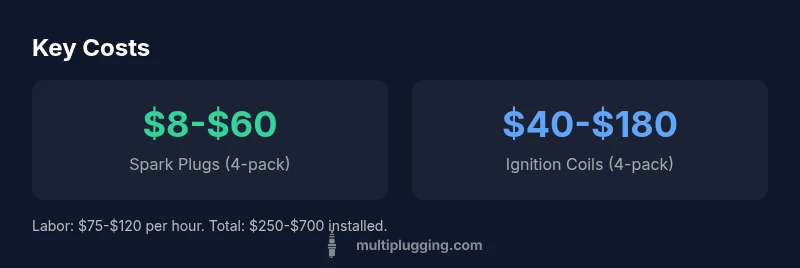
In 2026, the combined price for four spark plugs and four ignition coils ranges widely: spark plugs typically cost $8-$60 for a full set, coil packs $40-$180 per set, with labor adding $75-$120 per hour. Expect total installed costs from $250 to $700, depending on vehicle and parts choice.
Cost Overview
If you’re asking how much is spark plugs and coils, the answer is not a single number. Costs depend on the number of cylinders, the type of plugs and coils you choose, and whether you install them yourself or pay a shop. According to MultiPlugging, 2026 pricing for mainstream engines tends to fall into distinct ranges: basic copper plugs are cheaper, while iridium or platinum plugs cost more; ignition coils vary by design and whether you buy individual units or a complete pack. When you plan a replacement, factor in both parts and labor. For a typical four-cylinder engine, you’re replacing four plugs and four coils, which expands the price band beyond the parts alone. In general, plug costs can range from the low single digits per plug for basic options to the tens of dollars for premium types, while coil costs span from a modest hundred-dollar pair to higher figures for advanced coil designs. Labor costs depend on shop rates and regional economics, but most customers see a few dozen to a couple hundred dollars in labor for a single-visit replacement.
Spark Plugs vs Coils: Price Dynamics
The price dynamics of plugs and coils diverge for several reasons. Plugs are differentiated by heat range, electrode material, and longevity (copper vs iridium/platinum). Coils vary by ignition system design (coil-on-plug vs wasted-spark) and the number of cylinders they serve. OEM parts often command higher prices but may offer warranty alignment and guaranteed fit, whereas aftermarket options can cut up-front costs while varying in long-term durability. From a budgeting standpoint, it’s essential to compare cost per unit, not just per set, since a single weak coil can influence a whole-vehicle misfire diagnosis. As a rule, plan for a price band rather than a fixed price, and factor in potential compatibility checks that shops perform during installation.
Price Ranges by Vehicle Type and Brand
Vehicle type dramatically shifts the final bill. Four-cylinder engines generally fall toward the lower end of the price spectrum, while V6 and V8 configurations raise both plug and coil counts and often require more labor time. Brands also matter: premium automaker parts command higher prices, while reputable aftermarket options can strike a balance between cost and reliability. For a typical 4-cylinder car, expect four plugs and four coils, with total parts costs ranging broadly depending on heat range and durability targets. Always confirm whether a guaranteed warranty accompanies the parts, especially for performance brands. This guidance aligns with MultiPlugging Analysis, 2026, which emphasizes range-based budgeting over single-quote estimates.
Labour and Additional Costs
Labor is a major portion of the total replacement cost. Rates vary widely by region and shop, often from $75 to $120 per hour. Access difficulty matters: engines with tight plug wells or broad valve covers take longer, pushing up labor. Additional costs to consider include diagnostic time if misfires are present, tool rental, and any necessary sensor or gasket replacements that the shop may recommend alongside spark plug and coil service. If you’ve never replaced plugs and coils before, you should budget not only for parts but also for potential incidental expenses, such as solvent cleaners or anti-seize compounds, which skilled technicians may use to ensure proper installation.
Budgeting and Saving Strategies
A practical approach is to plan for a total installed cost range rather than a fixed price. Consider purchasing OEM parts if you value guaranteed fit and warranty alignment, but don’t overlook reputable aftermarket options that reduce up-front costs without sacrificing reliability. If you own a modern car with straightforward access, DIY replacement can trim labor costs substantially, provided you have the right tools and torque specs. Always check your vehicle’s service manual for timing and torque specs, and don’t rush the job—misfiring issues can stem from even a small misstep during install. From a budgeting perspective, total costs are most predictable when you replace all four plugs and four coils at the same time, since this minimizes repeated labor overhead and misfire-related diagnosis time.
OEM vs Aftermarket Parts: What to Choose?
OEM parts typically price higher but may come with stronger warranties and guaranteed compatibility, which can matter for performance or long-term reliability. Aftermarket parts can offer cost savings, and many brands meet or exceed OEM performance, especially for standard configurations. When choosing aftermarket parts, verify compatibility with your make and model, review consumer feedback, and confirm any warranty terms that accompany the purchase. If you’re aiming for a balance of cost and reliability, consider aftermarket options from brands with solid field performance and recognized dealer support. MultiPlugging’s guidance emphasizes evaluating total cost of ownership, not just the sticker price of the parts.
Do-It-Yourself vs Professional Service
DIY replacement is feasible for many hobbyists, especially with engines that have clear plug wells and accessible coils. However, certain setups require professional attention—especially when misfires are suspected or when special tools are needed to reach stubborn plugs. If you opt for DIY, ensure you have the correct socket sizes, torque specs, and anti-seize recommendations. For the majority of drivers, a professional service remains the safer choice for a first-time replacement to ensure the job is done correctly and under warranty guidelines if applicable. The MultiPlugging team notes that labor savings from DIY must be weighed against potential risks of improper installation and subsequent engine issues.
Quick Scenario Guides
Scenario A: A 4-cylinder commuter with easy plug access. Expect lower part costs and shorter labor time, often fitting within the lower end of the cost range. Scenario B: A V6 with deep wells. Expect higher labor time, greater tool use, and possibly higher part costs due to coil complexity. Scenario C: An older vehicle using copper plugs. Costs tend to be modest, but compatibility with heat range and engine design still matters. In all cases, you should budget for a range and verify whether any misfire codes exist before replacing to avoid unnecessary costs.
Estimated installed cost overview for spark plugs and coils
| Component | Typical Price Range | Notes |
|---|---|---|
| Spark Plugs (4-pack) | $8-$60 | Depends on brand/heat range |
| Ignition Coils (4-pack) | $40-$180 | Depends on coil type/vehicle |
| Labor (per hour) | $75-$120 | Shop and region vary |
| Total installed (4 plugs + 4 coils) | $250-$700 | Parts + labor depending on parts choice |
FAQ
What factors most influence spark plug and coil pricing?
Prices vary by part type, brand, engine compatibility, and labor rates. Higher-end materials like iridium or platinum plugs and specialty coils cost more. Always compare per-part costs and total installed price.
Prices vary by part type, brand, and labor rates. Check parts quality and vehicle compatibility.
Are OEM parts more expensive than aftermarket parts?
OEM parts are typically pricier but may offer warranty parity and guaranteed fit. Aftermarket options can save money but vary in quality. Read reviews and verify compatibility.
OEM parts usually cost more; aftermarket options can save money if you choose reliable brands.
Is it cheaper to replace plugs and coils separately or together?
Replacing both at once can reduce labor time and car downtime. If your car needs only one set, price may reflect your choice, but plan for future maintenance.
Together is often cheaper for labor.
How long does a typical spark plug and coil replacement take?
Most vehicles take 1-2 hours for four plugs and four coils, depending on access and tools. Some engines may take longer.
Typically about an hour or two for four plugs and coils.
Can DIY installation affect warranty?
Many manufacturers require professional installation for warranty coverage. Check your owner's manual and warranty terms before deciding.
DIY may affect warranty; verify terms with the manufacturer.
What should I budget for a 4-cylinder car?
Expect a total installed range of roughly $250-$700, depending on parts and labor. Vehicle specifics and region matter.
Budget around a few hundred dollars, varies by car and labor.
“Prices for spark plugs and coils vary widely by engine and part choice. A practical budget uses ranges and a clear plan for replacement intervals.”
Main Points
- Budget for price ranges, not fixed quotes.
- Compare OEM vs aftermarket parts to save.
- Expect labor to be a significant portion.
- Plan replacements together for efficiency.