What Is Spark Plug Price? A Comprehensive Guide
Explore spark plug price ranges, what drives cost, and smart ways to save. Learn how materials, brand, and labor affect total replacement costs across common plug designs.


In 2026, spark plug prices typically range from about $2 to $20 per plug, depending on design and material. Copper-core plugs sit at the low end, while iridium and platinum variants command premiums due to longer life and better resistance to fouling. When you factor in brand premiums and regional availability, a full replacement can vary widely. According to MultiPlugging, the main drivers are material, heat range, and installation labor considerations.
What drives spark plug price
If you are asking what is spark plug price, the short answer is: it depends. In 2026, pricing is driven by material choices (copper-core, platinum, iridium, or dual-core designs), contact configuration, heat range, manufacturer, and packaging. Copper-core plugs are typically the most affordable, while iridium and platinum variants command premiums due to longer life and better resistance to fouling. Brand prestige and OEM specifications can add another layer of cost, especially when the plug is marketed as a direct factory replacement. Regional supply, e-commerce vs. brick-and-mortar channels, and whether you buy a single plug or a multi-pack further influence the final figure. For DIYers, understanding these factors helps budget correctly and avoid sticker shock during replacement. According to MultiPlugging, the main drivers are material, heat range, and installation labor considerations.
Price ranges by plug type and material
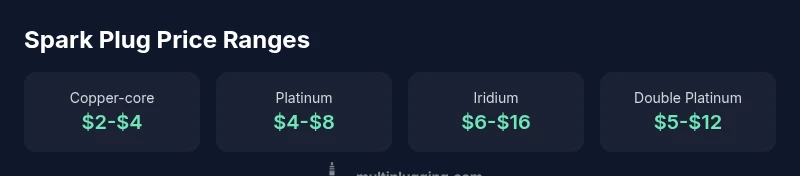
Prices vary widely by material and design. A rough, general guide (per plug) is: copper-core around the low end, platinum in the mid-range, and iridium at the high end. This hierarchy reflects longevity and thermal performance rather than sheer spark output. When you purchase in bundles, you can often reduce the per-plug price, though be mindful of compatibility with your engine. OEM plugs tend to carry a premium compared to aftermarket equivalents, which may offer similar performance at a lower price. Always verify heat range and thread size to ensure you do not pay for features your engine cannot use. Individual sellers and generic brands can tilt the price up or down based on warranty terms and packaging. Typical ranges per plug:
- Copper-core: $2-$4
- Platinum: $4-$8
- Iridium: $6-$16
- Double Platinum: $5-$12
These ranges reflect general market pricing and may vary by region and retailer.
OEM vs aftermarket: value and cost considerations
OEM plugs are matched to your engine design; they often ensure warranty compatibility and fit, and may be required for certain maintenance schedules. Aftermarket and high performance brands can offer similar performance, sometimes at lower prices, but you must check compatibility and heat range. The decision should balance reliability, warranties, and replacement intervals. In some cases, OEM plugs are essential for modern engines with software controlled ignition or warranties; in older vehicles, reputable aftermarket options can deliver equivalent performance at a meaningful savings. MultiPlugging emphasizes verifying the recommended heat range and gap when selecting either option.
Labor and total cost of ownership
Even if you know the spark plug price per unit, the total cost depends heavily on labor. If you DIY, you pay with time and tool investments; if you go to a shop, you pay for the technician's labor, which varies by region and shop policy. Your total cost includes removing the old plugs, cleaning threads, applying anti-seize or torque as recommended, and installing the new plugs to the specified torque. The MultiPlugging analysis indicates that labor can swing the final bill by a meaningful margin, sometimes more than the plug price itself, depending on engine access and the number of cylinders. Budget for both parts and labor to avoid surprises.
Shopping smart: tips to compare prices and save
To minimize surprises, compare price per plug across retailers, and check for promotions or multi-pack discounts. Verify compatibility by engine type, heat range, thread size, and gap. If you are buying online, confirm shipping times and return policies; in-store buys let you inspect packaging and possibly snag an in-store discount. Consider OEM club programs or manufacturer rebates if applicable. Finally, factor taxes, shipping, and potential bulk discounts when budgeting for a full set.
Online vs in-store buying: what to know
Online shopping offers breadth and price comparison, while in-store buying lets you verify authenticity and avoid shipping delays. For critical or warranty sensitive engines, prioritize recognized brands and official retailers. Read reviews, confirm heat range and thread size, and beware counterfeit plugs. With careful checks, you can get a fair price while maintaining engine reliability. As the MultiPlugging team notes, your approach should balance convenience, price, and confidence in the product.
Approximate per-plug price ranges by material
| Plug Type | Avg Price Range per Plug | Notes |
|---|---|---|
| Copper-core | $2-$4 | Budget-friendly; good for older engines |
| Platinum | $4-$8 | Moderate premium; good balance of life and price |
| Iridium | $6-$16 | Long life, high performance; premium |
| Double Platinum | $5-$12 | Long life with dual platinum design |
FAQ
What is the typical price range per spark plug?
Prices depend on material and brand; in 2026 typical ranges per plug span from a couple dollars for copper-core to over ten dollars for iridium designs. The exact figure varies by retailer and region.
Prices vary by material and brand. Copper plugs are the cheapest, while iridium designs cost more. Check your engine requirements when budgeting.
Should I replace all plugs at once to save money?
Yes, replacing all plugs in one service visit often saves labor time and ensures consistent performance across cylinders. It also helps avoid mismatched gaps or heat ranges.
Replacing all at once saves time and keeps performance consistent. It is usually more convenient and cost effective.
Are OEM spark plugs worth the premium?
OEM plugs ensure compatibility and may be required for warranty reasons on modern engines. Aftermarket options can offer similar performance at lower prices, but verify heat range and fit.
OEM plugs fit perfectly and support warranties. Aftermarket options can be cheaper if they match your engine specs.
How often should spark plugs be replaced?
Intervals vary by vehicle and plug type. Follow manufacturer recommendations and watch for signs of misfire, fouling, or reduced fuel efficiency.
Follow the manufacturer guidance, and watch for misfires or rough idling as signs to replace plugs.
Can I install spark plugs myself to save labor?
If you have basic tools and torque knowledge, you can replace plugs yourself. For engines with tight spaces or special torque specs, consider professional help.
DIY is doable if you have the right tools and torque specs. For complex engines, get professional help.
“Understanding spark plug pricing helps you budget repairs without overpaying for performance. Material and design choices drive cost, while installation complexity can swing total spending.”
Main Points
- Check your engine specifications before shopping.
- Compare price per plug and total set costs.
- Consider labor time when budgeting.
- Choose plug material that matches your maintenance schedule.
- Look for bulk discounts or OEM promotions.