Why is Spark Plug Replacement So Expensive? A Practical Breakdown
Discover why spark plug replacement can be expensive, including parts, labor, access, diagnostics, and how to estimate costs to save on your next service.


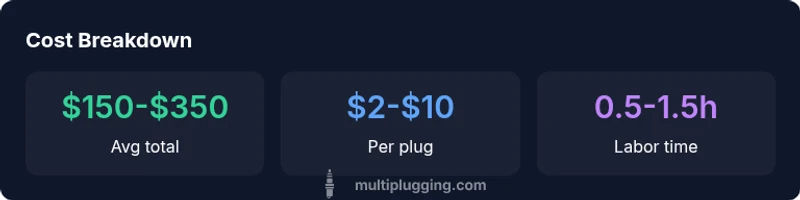
The cost of spark plug replacement typically ranges from about $150 to $350, depending on vehicle type and labor rates. Elevated prices arise from difficult access in modern engines, premium plug types, possible ignition coil work, and required diagnostic checks. Expect the price to rise for luxury or performance models.
Why is Spark Plug Replacement Expensive (in 2026)?
In today’s vehicles, spark plug replacement can feel pricey because the price isn’t just for the plug itself. The final bill includes parts (plugs vary widely in price by material and design), labor, and sometimes added diagnostics or coil work. According to MultiPlugging, the most significant drivers are engine design and access difficulty, which can dramatically increase the time needed for a clean and correct replacement. Modern engines with tight clearances, chained coil-on-plug setups, or interference engines demand skilled labor and special tools, all of which push costs upward. Additionally, some high-performance or hybrid models require premium iridium or platinum plugs that cost more per unit. The result is a broader price range than you might expect when you shop by part alone.
Parts vs Labor: Where the Money Goes
The price breakdown typically splits into parts and labor. Plugs themselves range from affordable copper varieties to long-life iridium or platinum variants. In many engines, a single bank contains four to eight plugs; replacement scope scales with the number of cylinders. Labor costs reflect the time and difficulty: removing intake manifolds, routing harnesses, or unplugging coils can add significant minutes or hours. When you see a high quote, it may reflect premium plugs, new coil boots, or gaskets that must be replaced during the service.
Access and Engine Design: Why Some Engines Cost More to Service
Access is king in plug replacement pricing. In engines with shallow bays, obstructed ignition coils, or overhead configurations, technicians spend extra time creating working space, protecting components, and ensuring no coolant or oil intrusion. Indirect costs include potential sensor checks or adding a diagnostic scan if the vehicle’s computer flags misfire codes after replacement. These steps, though routine, add up in both time and labor rate charges, especially at dealership service centers where labor rates tend to be higher.
Diagnostics and Ancillary Services that Increase Cost
Beyond installing new plugs, many shops perform a misfire diagnostic, fuel trim analysis, and coil health checks to ensure reliability after replacement. If the misfire was caused by a coil, ignition module, or wiring issue, the bill may rise quickly. Some technicians also replace other ignition components (boots, seals, or valve cover gaskets) as a precaution, particularly on higher-mileage engines. These add-ons improve long-term reliability but contribute to the overall expense.
Estimating Costs for Your Vehicle: A Step-by-Step Guide
To estimate costs accurately, start with the owner’s manual and service schedule for the exact plug type and number of plugs. Obtain quotes from multiple shops, including both independent mechanics and dealers. Ask for a line-item breakdown: plugs, labor hours, parts markup, and any diagnostic fees. If your car uses coil-on-plug ignition, request confirmation that coils will be inspected and tested. By gathering several quotes, you’ll build a realistic expectation of the true cost and the best value.
Cost-Saving Strategies: How to lower the bill
Consider targeting preventative maintenance so you aren’t paying for problems caused by neglected ignition systems. Compare brands but beware extreme cheap options that may fail early. Some shops offer bundled service pricing if you’re getting other repairs or maintenance performed at the same time. DIY-friendly owners can save, but only if they have the right tools and follow torque specs precisely.
DIY vs Professional: Making the Right Call
DIY spark plug replacement can save labor costs, but many modern engines require specialized tools, torque wrenches, and careful handling to avoid cross-threading or damaging sensors. If you’re unsure, it’s safer and more cost-effective in the long run to let a professional handle the replacement. For those who do DIY, invest in a quality torque wrench and follow the manufacturer torque specs to avoid costly mistakes.
Price Ranges by Vehicle Class
Economy cars typically fall in the lower portion of the cost spectrum, often between $120 and $250. Midsize sedans and crossovers usually range from $180 to $320. Luxury or performance vehicles with advanced ignition systems can see quotes from $260 to $450, depending on plug type and engine access. Always verify whether any quoted price includes labor and taxes.
Typical spark plug replacement cost ranges by vehicle class
| Vehicle Type | Typical Replacement Cost Range | Notes |
|---|---|---|
| Economy/Compact | $120-$250 | Basic plug types; easy access |
| Midsize/Sedan | $180-$320 | Mid-range plugs; moderate access |
| Luxury/Performance | $260-$450 | Premium plugs; complex access; possible coil work |
FAQ
What factors influence spark plug replacement cost?
Prices depend on plug type, engine accessibility, and whether coils or gaskets are replaced. Diagnostics and vehicle-specific labor rates also affect the total.
Costs depend on plug type, accessibility, and any needed coil or gasket work, plus your shop's labor rate.
Can I replace spark plugs myself to save money?
If you have the right tools and torque specs, DIY can save labor costs. However, improper installation can cause damage and additional repair costs.
DIY can save labor, but you must follow torque specs and safety steps to avoid damage.
Are there cheaper alternatives to replace all plugs at once?
Some shops offer bundled pricing for plugs and related services. Replacing only faulty plugs, if diagnosed correctly, could lower costs.
Ask for bundled pricing or replace only the faulty plugs if diagnosed correctly.
How do OEM vs aftermarket plugs affect price and performance?
OEM plugs are often pricier but designed for your exact engine. Aftermarket options can save money and may offer similar performance depending on the vehicle.
OEM plugs cost more but fit exactly; aftermarket can save money if matched to your engine.
Is there a cost difference between engine types?
Yes. Engines with complex layouts or coil-on-plug designs typically cost more due to labor and special tools.
Engine complexity and design drive cost differences.
“A thorough spark plug replacement involves more than the plug itself; engine access, coil health, and diagnostic steps often drive the final price.”
Main Points
- Know the full cost picture (parts + labor + diagnostics).
- Expect higher quotes for luxury or complex engines.
- Compare multiple quotes for best value.
- Premium plugs increase the parts cost but may last longer.
- DIY can trim costs if you have the right tools and skills.