Are Spark Plugs Expensive? A 2026 Cost Guide for DIYers
Discover whether spark plugs are expensive, what drives price, and how to budget for copper, platinum, or iridium plugs. A practical, data-driven guide from MultiPlugging.


Spark plugs vary in price, but parts typically cost a few dollars to around $15 per plug, depending on material (copper, platinum, or iridium). Labor to replace them can double or triple the part cost, making total service range broad. DIY installation saves money for many drivers, while professional replacement adds expertise and reliability.
Are Spark Plugs Expensive? A Realistic Upfront Look
According to MultiPlugging, are spark plugs expensive? Not always—costs hinge on design, vehicle requirements, and whether you install them yourself. Basic copper plugs for older engines are among the cheapest parts you’ll replace during routine maintenance, while modern vehicles often use platinum or iridium plugs that last longer but cost more per plug. More importantly, the total spend is not just the sticker price of the part; labor, tools, and potential sensor or coil checks in the same service can shift the final bill. For many DIYers, the question isn't just the sticker price but the overall value—do longer-lived plugs justify the higher upfront cost? Understanding the cost drivers helps you plan replacements without surprise expenses. This article breaks down the numbers, so you can decide which plug makes sense for your car and driving style. The goal is to give you a clear framework to compare options without guesswork.
What Determines Spark Plug Cost
Spark plug pricing is driven by material, design, and application. The cheapest option is copper, which is common in older vehicles and basic maintenance. Platinum plugs offer a middle ground, providing longer life with a modest premium. Iridium plugs are the top end, designed for longevity and performance but with the highest upfront price. Other cost factors include electrode design (single vs multi-ground), heat range compatibility with your engine, thread size, and whether you buy OEM or aftermarket parts. Brand familiarity and distribution channels can add a few dollars per plug. Finally, the kit composition (single plugs vs sets) can influence per-plug pricing. Understanding these factors helps you pick a plug that balances cost and reliability.
Typical Price Ranges by Type
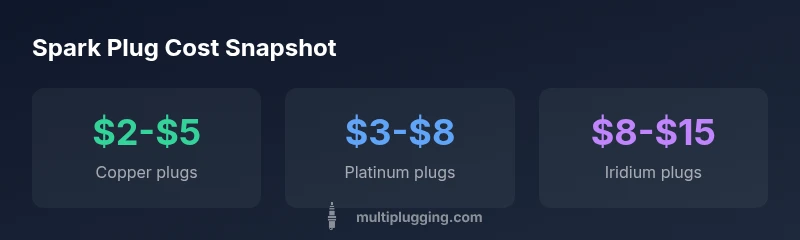
- Copper plugs: typically $2-$5 per plug (shorter lifespan, suitable for older engines)
- Platinum plugs: $3-$8 per plug (balanced cost and endurance)
- Iridium plugs: $8-$15 per plug (highest longevity, premium performance)
- Premium OEM or high-performance options: may exceed these ranges in some cases
Note: These ranges reflect common retail prices and can vary by region, retailer, and vehicle requirements. MultiPlugging recommends verifying OEM specs for your exact engine before buying.
Labor and Service Costs
Labor is often the largest portion of the total cost, and it varies with engine design and accessibility. In many shops, replacing a full set can cost between $60 and $180 in labor, depending on the number of cylinders and the complexity of access to the plugs. Vehicles with straightforward, front-mounted plugs are cheaper to service than V-shaped, rear-bank, or turbocharged engines where plugs sit deeper in the head or behind components. If you’re doing the work yourself, you’ll save on labor, but you’ll still need basic tools (socket, ratchet, torque wrench, feeler gauges) and possibly a gap tool. Some services also include inspection of ignition coils and boots, which can add a small diagnostic fee.
DIY vs Professional: When to Do It Yourself
If the plugs are easily accessible and you have the right tools, DIY replacement is a practical route. For many four-, six-, or eight-cylinder engines with simple access, the job takes less than an hour per bank. For engines with coil-on-plug setups or difficult rear-bank access, the risk of cross-threading or damaging a coil increases, making professional service a safer option. Always consult the vehicle’s manual for torque specifications and gap settings. If you’re unsure, a quick consult with a local technician can save future headaches and costs.
Hidden Costs to Consider
Beyond the plug price, consider the cost of worn ignition coils, boots, or gaskets that may require replacement during a plug change. Some engines benefit from replacing adjacent components to prevent future misfires. You may also need tools you don’t own (spark plug socket with a flex head, torque wrench, or a plug gap gauge). If you remove components like intake manifolds or coils, gasket replacements or coolant/oil seal checks may appear on the bill. Budget for these potential extras to avoid sticker shock.
How Longevity Affects the Overall Cost
Longevity varies by metal and engine design. Copper plugs typically wear out sooner, with lifespans in the 20k-40k mile range under normal driving. Platinum and iridium plugs generally last longer, often 60k-120k miles in many modern engines, reducing replacement frequency. Even so, harsher driving conditions, frequent short trips, or high-heat environments can shorten a plug’s life. While the upfront price for iridium plugs is higher, the longer service intervals can yield lower cost-per-mile over the life of the vehicle.
Budgeting for Regular Maintenance
Build a predictable maintenance budget by aligning with the vehicle manual’s recommended interval. If you own an older car with copper plugs, you might budget for more frequent changes, while newer vehicles with iridium or platinum plugs can spread replacement costs over longer periods. Don’t forget to factor in potential labor costs and the possibility of needing coils, boots, or gaskets. A simple forecasting approach is to estimate the cost of a full set plus labor every maintenance cycle and add a small contingency for unexpected parts replacements.
Making the Cost Decision: Which Plug to Use for Your Vehicle
Bottom line: the cheapest option isn’t always the best long-term value. Start with the OEM specification in your owner manual and weigh your driving habits. If you rack up miles in harsh climates, on aggressive throttle, or in stop-and-go traffic, the higher-end plugs can reduce maintenance headaches and fuel variability. In many cases, the optimal choice balances upfront cost, longevity, and performance. By comparing the cost ranges in this guide, you can select the right plug for your car and your lifestyle.
Close with Confidence
Remember that spark plug costs are just one piece of the maintenance puzzle. When in doubt, consult the vehicle manual, verify compatibility, and consider the long-term value rather than focusing solely on upfront price.
Spark plug cost and longevity by type
| Plug Type | Typical Price Per Plug | Lifespan | Notes |
|---|---|---|---|
| Copper | "$2-$5" | "20k-40k miles" | "Cheapest option; good for older cars" |
| Platinum | "$3-$8" | "60k-100k miles" | "Balanced cost and longevity" |
| Iridium | "$8-$15" | "60k-120k miles" | "Premium longevity and performance" |
FAQ
Are spark plugs expensive?
Costs vary by type and labor; parts commonly range from a few dollars to around $15 per plug, while total service can vary based on engine design and location. Labor is a major factor in total cost.
Plug prices vary by type, and labor can be a bigger part of the bill. Check your manual to estimate total costs.
Do iridium plugs last longer?
Yes, iridium plugs generally offer longer life than copper or platinum, often in the 60k-120k mile range depending on driving conditions.
Yes. Iridium plugs tend to last longer, especially under heavy use or extreme conditions.
Can I replace spark plugs myself?
For many engines, yes. If plugs are accessible and you have basic tools, you can replace them yourself. For complex layouts, consider professional help to avoid damage to coils or threads.
Yes, many people replace plugs themselves if accessible and you have the right tools. When in doubt, ask a pro.
How often should I replace spark plugs?
Intervals depend on plug type and vehicle. Check your manual; typical ranges span from 30k to 100k miles for modern plugs, with shorter intervals for copper in older cars.
Follow your manual; intervals vary by plug type and engine.
Do premium plugs save money in fuel?
Premium plugs can improve combustion efficiency and reduce misfires in some engines, potentially yielding small fuel economy gains, but results vary by vehicle and driving habits.
They can improve efficiency in some engines, but gains aren’t universal.
“Spark plug costs are a small part of engine maintenance, but the right plug choice can boost reliability and fuel efficiency.”
Main Points
- Identify the price range for plug types.
- Expect labor to drive total cost.
- Match plug type to your vehicle and driving.
- DIY installation can save money with the right tools.
- Budget for extra parts and inspection during service.