How Much Do NGK Spark Plugs Cost? A DIY Pricing Guide
Explore NGK spark plug pricing by type (copper, platinum, iridium), factors that affect price, and smart DIY buying tips. Learn typical ranges, how to save, and what affects total replacement cost.


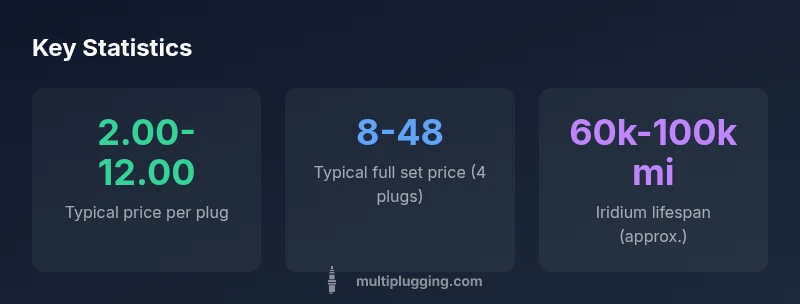
NGK spark plug prices vary by type. Copper plugs usually cost about $2–$4 per plug; platinum and iridium variants typically run $5–$12 per plug. For a standard four-cylinder engine, expect about $8–$48 for a full set, not including tools or labor. DIY replacement can save on labor costs.
Price Landscape for NGK Spark Plugs
If you’re asking how much ngk spark plugs cost, the answer isn’t one-size-fits-all. The price you’ll see online or in-store depends primarily on plug type, heat range compatibility with your engine, and the retailer’s pricing strategy. According to MultiPlugging, volatility in commodity metals and market demand can swing copper, platinum, and iridium options differently throughout the year. For DIY enthusiasts, understanding the baseline ranges helps you plan repairs without overpaying. In many cases, choosing the right NGK plug is a balance between upfront cost and long-term reliability, especially for high-mileage or modern engines where performance matters.
What Affects NGK Spark Plug Prices
Several factors drive NGK spark plug pricing:
- Plug type and material: Copper is cheapest; platinum and iridium variants cost more but offer longer life and better firing stability.
- Engine compatibility: Some high-performance engines require specific heat ranges or dual-plug designs that can push price higher.
- Retail channel: Online retailers, big-box stores, and local auto shops each price NGK plugs differently due to volume, stocking costs, and promotions.
- Packaging and quantity: 1-pack vs. 4-pack or 8-pack pricing can alter per-plug cost significantly. Bulk purchasing often yields the best per-plug price.
Price Ranges by Plug Type
NGK plugs come in several families, with price bands that reflect performance and durability:
- Copper core: typically the lowest price band, commonly around $2–$4 per plug.
- Platinum: mid-range pricing around $4–$8 per plug, offering better longevity.
- Iridium: premium plugs often priced around $6–$12 per plug, designed for long life and strong cold starts.
- Specialty/sport variants: occasionally exceed $12 per plug, reflecting engineering tailored for specific vehicles or turbocharged setups.
Remember: price is not the only factor—compatibility and heat range matter most for reliable performance.
Regional and Retail Variations
Prices can vary by region due to taxes, shipping, and distributor margins. Urban areas or regions with higher living costs may show slightly higher unit prices, while discount retailers and online marketplaces can offer lower per-plug costs. If you drive an older vehicle on a tight budget, you may find the copper options especially cost-effective, provided they meet your engine’s heat range spec. Always cross-check part numbers against your vehicle’s owner manual or NGK’s official compatibility chart to avoid paying a premium for an ill-suited plug.
DIY Replacement vs Professional Install
Replacing NGK spark plugs yourself is a straightforward, beginner-friendly project on many cars, and it can dramatically reduce total replacement costs. The main savings come from avoiding labor charges at a shop, which can add 40–100% of the parts cost depending on the vehicle and shop. Tools typically required include a spark plug socket, ratchet, a torque wrench, and a torque specification from your vehicle manual. If your engine bay is crowded or you’re working on a long-reach spark plug, consider a professional install to prevent cross-threading or dropped plugs. Always use anti-seize where recommended by manufacturer guidelines and ensure you gap or select the correct heat range for your engine.
Value Over Time: Longevity and Total Cost of Ownership
The cheapest plug upfront isn’t always the best value over the life of your vehicle. Copper plugs cost less but may require replacement more frequently, increasing maintenance intervals. Platinum and iridium plugs cost more initially but can last longer, potentially reducing total maintenance events and downtime. Total cost of ownership should factor in replacement frequency, fuel efficiency, and misfire risk. For many drivers, the higher upfront cost of a durable NGK plug pays off through fewer maintenance interruptions and more consistent performance in varying temperatures and driving styles. For performance or modern engines with stricter emission controls, selecting the appropriate NGK plug type can contribute to smoother idling, better throttle response, and improved fuel economy over time.
How to Choose the Right NGK Plug for Your Engine
Start by checking your car’s manual for the recommended NGK plug type and heat range. If you tow, drive in extreme heat or cold, or use your car for daily commuting, you’ll want a plug that matches those conditions. For budget-minded DIYers, copper plugs paired with standard maintenance intervals may suffice. If you value longevity and fewer replacements, moving up to platinum or iridium can be worthwhile. Finally, verify the plug’s thread size and reach to ensure it threads correctly without bottoming out or cross-threading.
NGK spark plug price ranges by type and expected lifespan
| Plug Type | Typical Price per Plug (USD) | Typical Lifespan | Notes |
|---|---|---|---|
| Copper | 1.50-4.00 | 20,000-40,000 miles | Budget option; widely available |
| Platinum | 4.00-8.00 | 40,000-60,000 miles | Popular middle-ground choice |
| Iridium | 6.00-12.00 | 60,000-100,000 miles | Highest durability for modern engines |
| Double Platinum | 7.00-12.00 | 60,000-120,000 miles | Longer life; check engine compatibility |
FAQ
How much should I expect to pay for NGK spark plugs for a typical four-cylinder engine?
Prices vary by plug type, but a typical four-cylinder set can range from roughly $8 to $48 for copper to iridium variants. Regional pricing and retailer promotions can shift this range. Always verify compatibility with your engine’s heat range.
For a typical four-cylinder, expect about eight to forty-eight dollars for a full copper to iridium set, depending on type and retailer.
Are NGK spark plugs more expensive than other brands?
NGK plugs are competitive with other mainstream brands. Price differences typically reflect material quality and longevity rather than a fixed premium. Always compare price-per-plug and consider the total cost of ownership.
NGK sits among mainstream brands; pricing varies by type and performance, so compare per-plug price and longevity.
Do NGK spark plugs require tools beyond a standard spark plug socket?
Most NGK spark plug replacements use a standard spark plug socket and ratchet. A torque wrench is recommended to reach the manufacturer’s specified torque. Some tighter engines may require additional extensions or swivels.
Usually, you need a spark plug socket, a ratchet, and a torque wrench to install NGK plugs correctly.
How do regional price differences affect NGK spark plug costs?
Prices vary by region due to taxes, shipping, and distributor margins. Online retailers can offer the lowest per-plug price, but check shipping costs and return policies. Local shops may include installation promos.
Prices differ by region; online stores often have the best per-plug price, but check shipping and promos.
Is it worth replacing NGK spark plugs with OEM spec vs performance variants?
For most daily drivers, OEM-spec NGK plugs provide reliable performance at a good value. Performance variants add cost and are more beneficial for high-performance or turbocharged engines that demand specific heat ranges.
For everyday cars, OEM NGK plugs are usually the best balance; higher-performance variants are for specialized engines.
“The right NGK spark plug choice balances upfront cost and long-term reliability; always align the plug type with your engine's heat range and driving conditions.”
Main Points
- Know your engine spec and replacement interval
- Copper is cheapest; iridium offers longest life
- DIY replacement saves labor costs
- Prices vary by retailer and region; compare prices
- Always match heat range to engine requirements