How Much Does a New Spark Plug Cost? A DIY Budget Guide
Explore realistic price ranges for copper, platinum, and iridium spark plugs, plus tips to save on replacement costs and DIY replacement strategies.


The typical price for a single new spark plug varies by type and vehicle, usually from around $2 to $15 per plug. Copper plugs are on the low end, while iridium or platinum variants push higher. For a standard six-cylinder engine, shopping smart and buying in packs can lower the per-plug cost, but labor or DIY time matters too.
Why spark plug costs vary across engines
The question of how much a new spark plug costs depends on several real-world factors: plug type, engine design, accessibility of the spark plug wells, and whether you buy OEM or aftermarket parts. MultiPlugging's analysis shows that price can swing dramatically from one vehicle to another, even within the same engine family. Copper plugs are inexpensive upfront but may need replacement more often, while platinum and iridium variants carry a higher upfront price yet offer longer service life and more consistent ignition. Engine layout—whether you have a small four-cylinder or a large eight-cylinder—also drives total cost because more plugs mean more parts to purchase and a longer replacement time. Finally, where you buy matters: bulk purchasing, seasonal discounts, and retailer promotions can shift the per-plug price. When planning a replacement, homeowners should weigh the initial plug price against long-term durability and the cost of tools or labor if they’re not doing the job themselves. In short, the number you see on the shelf is only part of the total cost picture.
Spark plug types and typical price ranges
Understanding price starts with the main plug types you’ll encounter:
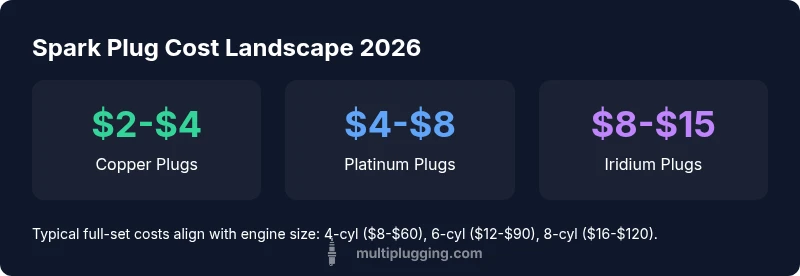
- Copper plugs: typically the cheapest option, with price ranges around $2-$4 per plug. Lifespan is often shorter, roughly 30,000-60,000 miles depending on driving conditions and engine design.
- Platinum plugs: mid-range in price, about $4-$8 per plug. They usually offer longer life, around 60,000-100,000 miles, and stable performance across a broad range of engines.
- Iridium plugs: the premium option, commonly $8-$15 per plug. Lifespan frequently exceeds 100,000 miles, with benefits in heat management and ignition efficiency in some high-output or modern engines.
Prices can vary by brand and regional market, but this framework helps set expectations when budgeting for a full set. For many DIYers, the goal is to balance upfront cost with the likelihood of fewer tune-ups or misfires later.
Estimating the full set cost for common engines
To plan a replacement, it's helpful to translate per-plug price into a full-set budget by engine size:
- 4-cylinder engine: a new set might fall in the approximate range of $8-$60, depending on plug type and brand. A bulk buy of common copper or platinum varieties can tilt toward the lower end when you factor in any bulk discounts.
- 6-cylinder engine: expect roughly $12-$90 for a complete set. Choosing a premium plug type will push the total toward the higher end, while a budget option keeps it in the middle.
- 8-cylinder engine: a full set commonly falls between $16-$120. The multiplier effect of more cylinders makes the total cost more sensitive to price-per-plug choices.
Beyond the plug price, consider potential costs for new gaskets, anti-seize compounds, dielectric grease, and any necessary tools if you don’t already own them. This broader view helps avoid sticker shock when you reach the checkout line at the parts counter.
Hidden costs beyond the plug itself
The plug price is just the beginning. Here are other cost drivers that retailers and DIYers should acknowledge:
- Tools and accessories: a torque wrench, spark plug socket, and anti-seize lubricant can add to the upfront cost if you don’t own them already.
- Gaskets and boots: some engines require new valve cover gaskets or ignition boots when replacing plugs; ordering a kit can be more cost-effective than buying parts piecemeal.
- Labor time: if you’re paying a shop, labor charges can significantly tilt the total price. Even when DIY, time spent wrenching is a non-monetary cost worth counting.
- Compatibility and warranty: some high-performance or OEM-specific plugs come with narrower compatibility windows or longer warranty terms, which can affect price, availability, and returns.
A thoughtful plan blends plug type, engine compatibility, and the total cost of ownership across the replacement cycle. This helps ensure you’re not overpaying for features your vehicle won’t need.
Smart strategies to save on spark plug costs
Savvy shoppers leverage several practical tactics to keep costs reasonable:
- Buy in bulk or in packs: many retailers offer discounts on 4-, 6-, or 8-packs, reducing the per-plug price.
- Compare OEM vs aftermarket: OEM plugs can be pricier, but reputable aftermarket options often provide comparable reliability at a lower per-plug cost.
- Check for compatibility: ensure the plug type is appropriate for your engine and that you won’t incur additional parts or needed adjustments.
- Look for promotions and coupons: seasonal sales and online promotions can cut the total bill significantly.
- Avoid counterfeit parts: buy from trusted retailers or authorized distributors to prevent paying extra for low-quality imitations.
Following these steps helps you align price with performance, especially when replacing multiple plugs across a V6 or V8 engine.
A practical DIY replacement guide you can follow this weekend
If you’re tackling spark plugs yourself, here’s a concise, practical approach you can adapt to many modern engines:
- Gather the right tools: torque wrench, spark plug socket, extension, and anti-seize compound if recommended for your plugs.
- Relieve engine heat and locate plugs: wait for the engine to cool, then locate the coil packs or ignition wires and the spark plug wells.
- Remove the old plugs: carefully disconnect coils/wires, loosen plugs in sequence, and remove without forcing.
- Check and gap new plugs: verify gap to manufacturer specs if required; some plugs are pre-gapped.
- Install and torque: thread by hand, then tighten to the specified torque in a crisscross pattern for multi-cylinder engines.
- Reassemble and test: reconnect wires/coils, start the engine, and listen for smooth operation. If misfires occur, re-check gaps and torque.
- Dispose of used plugs and note replacement: recycle correctly and log the service in your maintenance records.
Note that procedures vary by engine layout; consult your owner’s manual for the exact torque specifications and replacement intervals.
When to replace plugs and how to decide on type
Replacement timing depends on plug type and driving conditions. Copper plugs typically require more frequent replacement, while platinum and iridium plugs offer longer life with less maintenance in many engines. If you notice a rough idle, reduced power, increased fuel consumption, or difficulty starting, it may be time to inspect or replace plugs. When deciding on type, weigh upfront cost against expected lifespan, vehicle compatibility, and your driving style. Engine manufacturers often specify recommended spark plug types and replacement intervals in the owner’s manual; following these guidelines helps protect engine performance and avoid unnecessary repairs. In practice, budget-conscious DIYers often choose a mid-range option that balances price and durability while keeping a close eye on the engine’s performance signals.
Common spark plug types: price, lifespan, and notes
| Plugg Type | Typical Price per Plug | Common Lifespan | Notes |
|---|---|---|---|
| Copper | $2 - $4 | 30,000 - 60,000 miles | Budget option; shorter lifespan |
| Platinum | $4 - $8 | 60,000 - 100,000 miles | Common in many vehicles |
| Iridium | $8 - $15 | 100,000 miles+ | Premium performance |
FAQ
How much does a standard copper spark plug cost?
Copper plugs typically cost around $2-$4 per plug, depending on the brand and where you buy. They are the cheapest option but may require more frequent replacement.
Copper plugs usually cost a few dollars each.
Are platinum or iridium plugs worth the extra upfront cost?
They last longer and can improve ignition efficiency in some engines, but the upfront premium may not pay off for all drivers. Consider your vehicle, driving habits, and maintenance budget.
They last longer; decide based on engine and driving style.
Does replacement cost include labor?
Labor costs vary by region and shop. If you DIY, you save labor but must account for tool costs and time.
If you DIY, you save labor costs.
What else affects spark plug price besides type?
Brand, packaging, and supplier affect price. Compatibility with your engine also matters for performance and longevity.
Brand and compatibility matter.
Can I reuse old spark plugs?
In most cases, replacement is recommended. Reusing worn plugs can reduce performance and fuel efficiency.
Usually you shouldn't reuse used plugs.
How many plugs does a typical 4-cylinder engine use?
Most four-cylinder engines use four plugs, but always check the owner's manual for the exact specification.
Most four-cylinders have four plugs.
“Choosing the right spark plug balance between upfront cost and engine reliability is essential for DIY maintenance. Cheap plugs can save money upfront but may degrade performance or last shorter.”
Main Points
- Know the plug type to estimate cost.
- Plan for a full set, not just individual plugs.
- DIY replacement saves labor costs.
- Verify engine compatibility before buying.