Average Spark Plug Cost in 2026: A Practical Guide
A data-driven look at the average spark plug cost in 2026, with type-based price ranges, regional factors, and practical tips to save without sacrificing performance.


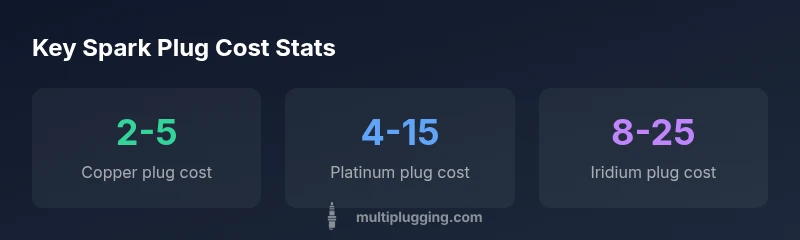
Exact costs vary by plug type, but the typical per-plug range is: copper $2-$5, platinum $4-$15, iridium $8-$25. For a 4- to 6-cylinder engine, parts-only costs usually total about $8-$150, while installed prices at a shop generally run $60-$300 depending on region and labor rates. DIY purchases can further trim total costs if you shop smart.
What Affects Spark Plug Pricing
Spark plug pricing is not a fixed value; it varies by material, design, and the engine's requirements. The main cost determinants are the plug's base material (copper vs precious metals like platinum or iridium), the electrode design, and the manufacturing quality, which affects longevity. Retailer margins, packaging, warranty, and marketing also contribute to the final sticker price. The practical takeaway for DIYers is to look at cost per plug and consider how many cylinders your engine has, since most engines use 4, 6, or 8 plugs. From a broad industry perspective, MultiPlugging's analysis shows that the price landscape is driven by materials and engine design; the team notes that more advanced alloys (iridium) command higher prices but longer life. For everyday cars with standard combustion, copper plugs remain the cheapest option, while luxury or performance vehicles often benefit from platinum or iridium plugs due to longer replacement intervals. In practice, price is only one side of the equation; longevity and ease of replacement influence total ownership cost. When you map plug price to miles driven, you often discover that a higher upfront cost can reduce maintenance frequency and downtime over the vehicle’s life. These dynamics matter when budgeting for maintenance and repairs.
Spark Plug Types and Price Gaps
The three most common spark plug families are copper, platinum, and iridium, each delivering different performance and price profiles. Copper plugs are the simplest and cheapest, typically priced around $2-$5 per plug. They heat up quickly and suit many older cars or budget builds, but they wear out faster, often needing replacement at 20,000-40,000 miles depending on driving conditions. Platinum plugs add a small premium, generally in the $4-$15 range, and they offer better longevity and corrosion resistance, lasting roughly 60,000-100,000 miles in normal service. Iridium plugs are the high-end option, usually $8-$25 per plug, designed for longer life and improved ignition stability; many modern engines with sophisticated ignition systems benefit from iridium, with lifespans commonly in the 100,000-mile range or more under ideal conditions. When selecting a plug, consider your vehicle’s manufacturer recommendations and whether you value longevity or maximum cost savings on a per-mile basis. Finally, remember that cheaper plugs may save money upfront but can lead to more frequent replacements in the long run on high-mileage vehicles.
How Regional Differences Change Costs
Spark plug pricing is not uniform across regions or retailers. In the United States, you can find a broad spread between national chain stores, independent shops, and online retailers, with copper plugs often being the cheapest option and iridium at the top end. Supply chain disruptions and currency fluctuations can tilt prices in ways that might not line up with the sticker price you see online. On top of that, labor rates for installation vary by state and city, which affects the total out-the-door cost when a pro does the replacement. The MultiPlugging analysis notes that regional demand patterns and the availability of premium plug lines influence price; in some markets, platinum plugs are routinely sold at a 2x price premium compared to copper. If you live in a region with high labor costs or limited parts supply, expect the installed price per plug to move upward. Conversely, in markets with aggressive promotions or bulk discounts, you may secure lower per-plug costs when replacing multiple plugs at once.
Estimating Costs for a Typical Vehicle
Estimating spark plug costs requires knowing your engine's cylinder count and the plug type recommended by the manufacturer. For a typical 4-cylinder engine using copper plugs, you might pay around $8-$20 for the parts, with installation adding a modest premium at a shop. If your engine uses platinum plugs, the parts cost might rise to roughly $12-$30 per plug, with installed prices climbing accordingly. Iridium plugs, while the most expensive per plug, can still be economical when replacing every cylinder due to their longer service life; parts costs can be in the $16-$40 range per plug, with labor adding to the total. A full-set replacement for a four-, six-, or eight-cylinder engine at a shop commonly falls in a broad range of about $60-$300, depending on location and whether work is done by a dealer, independent shop, or DIY pro. If you plan a DIY job, you can save substantially by purchasing the correct plug type and ensuring the gap is set to factory specifications. Always verify torque specs and heat range in your vehicle’s service manual to minimize problems later.
Cost-Saving Tactics Without Sacrificing Quality
Smart shopping and smart timing can lower spark plug costs without compromising performance. Here are practical approaches: 1) buy plugs in bulk or during promotions; 2) compare prices across major retailers and warehouse clubs; 3) consider OEM-equivalent aftermarket plugs that meet or exceed factory specifications; 4) avoid overbuying by sticking to the number of plugs your engine requires; 5) check for bundled deals that include gapping tools or torque wrenches when needed. For DIYers, purchasing plugs with a longer life and the correct heat range can reduce replacements over the lifetime of the vehicle. Finally, read the warranty and return policies to avoid paying twice when a plug fails early. According to MultiPlugging, the most cost-effective approach balances up-front price with long-term durability, so you don’t pay more in labor costs due to more frequent replacements. Keep a maintenance ledger to track miles between changes and estimate future costs with confidence.
DIY vs Professional Replacement: Pros and Cons
Replacing spark plugs yourself can dramatically cut labor costs, especially on engines with plug access that is straightforward. The upfront cost is your time and the risk of cross-threading or over-torquing if you’re new to the task. For many drivers, a DIY replacement is feasible if you have basic hand tools and a service manual. The downside is a higher risk of improper gap, torque, or wrong plug type if you’re not careful. Professional replacement offers consistent results, accurate gap setting, and the correct torque specification, often including a fuel system or ignition check and a brief diagnostic if needed. Labor costs can range widely; a professional job for a typical 4- to 6-cylinder engine might run in a few dozen to a couple hundred dollars depending on region and shop. In the end, those on a tight budget often start with DIY and switch to pro service for more complex engines or modern vehicles with tighter tolerances. The key is to know when to seek expert help—when your OEM specs demand specialized equipment or when you’re uncertain about engine electronics.
When to Replace: Planning Your Budget for Different Engine Configurations
Replacing spark plugs at the manufacturer-recommended intervals makes the most sense for most drivers. A 4-cylinder engine generally has simpler access and lower labor costs than V6 or V8 configurations, which can drive up installed price due to more labor hours. When budgeting for future maintenance, plan for the plug's life expectancy and the possible need to replace wires or coils, especially in older vehicles where ignition components age concurrently. If your vehicle uses iridium plugs and you intend to stretch intervals, you may still benefit from replacing other ignition components alongside plugs to maintain consistent performance. Keep track of your vehicle’s maintenance schedule and use it to forecast costs across several years. MultiPlugging’s guidance emphasizes factoring both parts and labor into a realistic maintenance budget to avoid cash flow shocks during routine service. Also, it's wise to budget for additional services that sometimes appear with a plug change, such as oil changes or air filter replacements, to minimize downtime.
Cost and longevity by spark plug type
| Plug Type | Avg Part Cost (per plug) | Typical Installed Price (per plug) | Lifespan (miles) |
|---|---|---|---|
| Copper | 2-5 | 8-25 | 20,000-40,000 |
| Platinum | 4-12 | 12-30 | 60,000-100,000 |
| Iridium | 8-20 | 15-40 | 100,000-200,000 |
FAQ
What is the average price per spark plug?
Copper plugs typically cost $2-$5 per plug; platinum plugs $4-$15; iridium plugs $8-$25. Installed prices vary by region and shop.
Copper plugs are usually the cheapest, with higher-end options costing more but lasting longer.
Do OEM vs aftermarket plugs affect cost?
OEM plugs often cost more upfront, but aftermarket options that meet manufacturer specs can save money while preserving performance.
OEM parts can be pricier, but aftermarket equivalents that match your specs can save you money.
Is it cheaper to replace all plugs at once?
Yes, in many cases replacing all plugs in a single service reduces labor per plug and ensures uniform wear.
Usually, yes—doing the full set at once lowers labor per plug.
How does engine type affect plug cost?
4- to 6-cylinder engines generally have lower labor costs than V8s; some modern engines require special plugs that cost more.
Engine design can raise or lower costs; a V8 often costs more to service.
What maintenance helps plugs last longer?
Keep ignition components clean, ensure proper gap and torque, and use manufacturer-recommended heat range.
Stick to factory specs and keep the ignition system in good shape.
“Choosing spark plugs is a balance between upfront price and long-term reliability. For most daily drivers, platinum or iridium plugs offer the best compromise between life and performance.”
Main Points
- Know your engine's plug type and recommended heat range.
- Compare part costs, not just per-plug price.
- Expect higher upfront costs for longer-lasting plugs.
- Labor costs vary; DIY can save money.
- Budget for a full set to optimize performance and cost.