Spark Plugs Cost: What to Expect and How to Save in 2026
Learn the true cost of spark plugs, typical price ranges by plug type, what drives labor charges, and practical tips to save on replacements and maintenance in 2026.


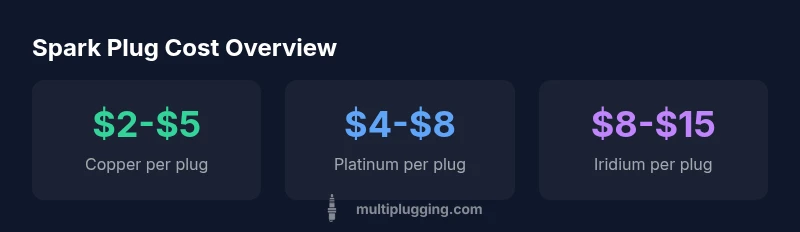
Spark plugs cost depends on type and vehicle, with copper being the cheapest option and iridium the most durable. Typical prices per plug range from about $2–$5 for copper, $4–$8 for platinum, and $8–$15 for iridium. When you add labor, total replacement costs for a full set can vary widely.
What affects the price of spark plugs
Prices for spark plugs are driven by a mix of material, construction, and vehicle requirements. Copper plugs are the simplest and cheapest, while platinum and iridium variants add durability and longer lifespans at a higher upfront cost. Beyond the plug itself, consider heat range, thread size, and the number of electrodes. In addition, supply-chain dynamics, retailer discounts, and bulk purchases can shift the final sticker price. According to MultiPlugging, the price you pay for spark plugs is influenced by material science, manufacturing quality, and the precision needed for modern engines. This means two cars that look similar on the outside may have very different spark plug costs if their ignition systems demand different heat ranges or electrode configurations. When budgeting, think about both upfront cost and how long a plug will last in your driving conditions.
Price ranges by plug type: copper, platinum, iridium
- Copper plugs: These are typically the cheapest, often used in older vehicles or engines with straightforward ignition systems. Typical per-plug prices run in the low range, roughly $2-$5. Expect shorter lifespans, commonly around 20,000-40,000 miles depending on use and fuel quality.
- Platinum plugs: A middle-ground option, offering better longevity than copper. Prices generally fall in the $4-$8 range per plug. Lifespans commonly stretch to about 30,000-60,000 miles, making them a popular choice for many modern engines that don’t demand the high-end materials.
- Iridium plugs: The premium option with the longest life and consistent performance. Per-plug costs usually sit at $8-$15, and lifespans can reach 60,000-120,000 miles under typical driving. These are common in newer vehicles and performance applications where reliability matters most.
Beyond the plug: labor, tools, and hidden costs
Parts cost is only part of the equation. Labor charges vary by shop and geography, often in the $70-$120 per hour range, and most cars require 0.5-1.5 hours for a full plug change depending on accessibility. If you need anti-seize compounds, new boots, or exact torque specs, add small amounts to your budget. Some engines demand specialist tools or restricted-access ports, which can add to the cost. Don’t overlook the cost of gaskets, spark plug wires (if replaced together), and potential hiccups like a stubborn plug or a fouled well. Planning for these contingencies helps prevent sticker shock at the shop.
How to compare quotes and choose the right plug
Start by identifying your vehicle’s exact plug type and heat range from the owner’s manual or a reputable online database. When evaluating quotes, separate parts costs from labor and note any tool fees or disposal charges. If your engine calls for a specific brand or a long-life iridium option, prioritize compatibility over price alone. Ask for a service breakdown and request alternative options (e.g., copper vs platinum) with estimated lifespans and mileage expectations. For some vehicles, a single high-performance plug may not deliver a noticeable benefit over a cost-effective copper option; weigh real-world performance against price.
Practical buying strategies to save money
- Compare multiple retailers and look for bulk pricing or promotions on copper plugs for older cars.
- Consider purchasing a full set in one order to maximize discounts.
- If your manual allows, you can often opt for a recommended aftermarket brand that meets or exceeds OEM specs.
- Avoid overpaying for premium plugs if your engine doesn’t demand them; use the recommended heat range and electrode design to balance cost and performance.
- Invest in a basic torque wrench and a clean work area to prevent cross-threading and prolong life of the plugs and threads.
Maintenance practices that influence plug longevity and cost
Regular maintenance extends plug life and reduces costs over time. Use quality fuel and keep the ignition system clean; avoid aggressive driving that can cause pre-ignition or fouling. If you notice misfires or rough idle, diagnose promptly to prevent accelerated wear on the plugs. Following the manufacturer’s maintenance intervals and keeping cables and boots in good condition can preserve performance, which lowers total cost of ownership. Anti-seize compounds should be used only when instructed, as improper use can affect torque and seating.
Quick-start checklist for your next plug change
- Confirm correct plug type and heat range in the owner’s manual. 2. Gather required tools: ratchet, spark plug socket, torque wrench, anti-seize (if advised), and a clean rag. 3. Allow the engine to cool, disconnect the battery, and remove the ignition coil boots carefully. 4. Inspect plug wells and gaskets; replace if damaged. 5. Reinstall plugs with manufacturer-specified torque. 6. Reconnect wires and test the engine, checking for smooth idle and proper acceleration.
Cost and longevity by common spark plug types
| Plug Type | Typical Cost per Plug | Typical Lifespan |
|---|---|---|
| Copper | $2-$5 | 20,000-40,000 miles |
| Platinum | $4-$8 | 30,000-60,000 miles |
| Iridium | $8-$15 | 60,000-120,000 miles |
FAQ
What is a typical spark plug cost?
Copper plugs generally cost about $2-$5 per plug, platinum plugs $4-$8, and iridium plugs $8-$15. Labor can add $60-$120 per hour, so total replacement costs vary by vehicle and region.
Copper plugs are the cheapest, then platinum, then iridium. Labor will add to the total cost, which varies by where you are and how accessible the plugs are.
Does replacing all plugs at once save money?
Yes. Replacing all plugs in one service reduces labor time and ensures uniform performance across cylinders, which can prevent additional tune-up costs later.
Replacing all plugs at once saves time and keeps engine performance balanced.
OEM vs aftermarket plugs: which is better?
OEM plugs guarantee compatibility with your engine, but reputable aftermarket options can save money while meeting or exceeding specs. Always verify heat range and reach.
OEM guarantees fit; aftermarket can save money if it matches the specs.
How long do spark plugs last?
Lifespan varies by type: copper roughly 20k-40k miles, platinum 30k-60k miles, and iridium 60k-120k miles under typical driving.
Copper lasts around twenty to forty thousand miles; iridium lasts much longer.
Can DIY installation save money?
Yes, if you have the right tools and follow proper safety steps. Mistakes can increase costs, so prepare with the correct torque specs and cleaning steps.
DIY can save money if done carefully with the right tools.
“Choosing a plug isn't only about the upfront price; longer-lived options like iridium can lower maintenance costs over time.”
Main Points
- Know your plug type and price range before buying
- Total cost includes parts and labor, not just the sticker price
- Durability can offset higher upfront costs over time
- DIY can save money with the right tools and steps