Where is the spark plug on a push mower? A practical locate-and-service guide
Learn how to locate, inspect, and replace the spark plug on a push mower. Clear steps, tools, safety tips, and maintenance guidance from MultiPlugging.


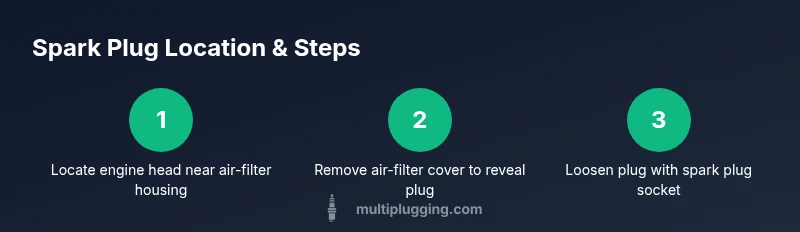
On most push mowers, the spark plug sits on the engine cylinder head near the air-filter housing. To locate it, remove the air-filter cover if present and peek at the top of the engine. Always disconnect the spark plug wire first, then use a spark plug socket to loosen and remove the plug for inspection or replacement.
Understanding the spark plug location on a push mower
According to MultiPlugging, the spark plug on most push mowers is located on the engine cylinder head near the air-filter housing. This location is consistent across many small, air-cooled four-stroke engines used in residential mowers. Knowing where the plug sits helps you perform quick checks without pulling the entire engine apart. The spark plug is typically visible after removing the air-filter cover or top-deck housing. With a basic toolkit, you can access the plug in a few minutes, which makes diagnosing starting problems or misfires much easier. By understanding the layout, you can also plan maintenance around accompanying components like the air filter and carburetor for a holistic tune-up. A well-maintained plug improves combustion efficiency and can extend the life of your mower, saving time and money over the mowing season.
Safety and prep before touching the plug
Before you do any work, ensure the engine is cool to avoid burns and do not attempt to start the mower while you're working. Wear gloves to protect your hands and eye protection to guard against debris. Disconnect the spark plug wire from the boot and set it aside where it cannot accidentally reconnect. If you have a top-cover or air-filter housing, remove the cover following the manufacturer’s instructions. Keeping the work area tidy reduces the risk of dropping small parts into the engine. Gather your tools and a clean rag to wipe away grease or fuel residue. This prep stage prevents accidents and makes the rest of the task smoother and safer.
How to locate and access the spark plug on different mower engines
Most push mowers use a side-mounted or top-mounted engine with the spark plug threaded into the cylinder head near the exhaust or intake manifolds. For engines under a plastic air-filter housing, you usually remove the cover to reveal the plug. Some models place the plug behind the primer bulb or behind a small access panel. Use your spark plug socket to carefully loosen counterclockwise and lift the plug straight out. When accessing the plug, avoid prying on seals or hoses, which could cause leaks. If the plug is difficult to reach, rotate the engine slightly by pulling the starter rope (with the wire disconnected) to reposition the plug for better clearance. Taking a moment to map the plug's location on your specific mower model saves time in future maintenance.
What to look for when inspecting the spark plug
A healthy spark plug should have a clean, light-brown deposit and intact electrodes. Fouling with carbon or oil indicates fuel issues, oil leaks, or incomplete combustion. A plug with a worn electrode or a cracked ceramic indicates it should be replaced. If the plug is covered in heavy varnish or oil, do not attempt a simple clean; replace it to restore proper engine performance. Check the condition of the threads and the boot connector as well. Fatigue cracks in the insulator or rust around the metal shell can be signs of age or improper torque when installed. As you inspect, compare with your mower’s service manual for spec values like heat range, thread size, and gap range.
Should you clean or replace the spark plug? Making the call
In many cases, a fouled plug can be cleaned lightly and reinstalled if the electrodes are still sharp and the gap is within spec. However, oil fouling or heavy carbon buildup usually means replacement is the better option. If you’re unsure, start with a replacement plug rather than attempting risky cleaning that can leave debris in the cylinder. This keeps the combustion chamber clean and reduces misfires. Always carry a spare plug on seasonal maintenance so you can swap quickly during a routine tune-up.
Quick maintenance plan integrating the spark plug with fuel and air systems
A simple maintenance routine that includes the spark plug can extend mower life and improve starting ease. Schedule a plug check whenever you change the oil or replace the air filter, and inspect the fuel line and carburetor for varnish or build-up at least once per mowing season. Keep a plug with the correct heat range and thread size on hand, and store it in a small tray with the tools you’ll need for quick swaps. Regular checks reduce the risk of long-starting sessions and stalling, especially on cold mornings. A small, proactive habit today saves you from bigger repairs tomorrow.
Tools & Materials
- Spark plug socket with rubber insert(Typically 5/8 in or 13/16 in; rubber insert helps grip the plug)
- Ratchet wrench(Longer handle improves leverage for tight plugs)
- Feeler gauge or plug-gap tool(Use mower-spec gap; adjust as needed)
- Replacement spark plug (correct heat range and thread size)(Check compatibility with your engine family)
- Anti-seize compound (optional)(Light coat on threads to ease future removal)
- Rag or brush(Clean around the plug area before removal)
- Safety gloves and eye protection(Protect hands and eyes from debris)
Steps
Estimated time: 15-30 minutes
- 1
Prepare the workspace
Cool the engine, clear the work area, and gather tools. This minimizes burns, tool loss, and missteps during the removal and inspection process.
Tip: Lay a rag under the plug area to catch any dirt or fuel residue. - 2
Disconnect the spark plug wire
Locate the spark plug boot and gently pull it straight away from the plug to detach. Do not yank the wire, which can damage the boot or wire.
Tip: If your mower has a safety switch disconnect, verify it’s in the off position. - 3
Remove the spark plug
Fit the spark plug socket onto the plug and turn counterclockwise to loosen, then lift out straight to avoid cross-threading.
Tip: Keep the plug level to prevent dropping debris into the cylinder. - 4
Inspect the plug and decide replacement
Evaluate deposits, electrode wear, and cracks. Clean only if deposits are light and the gap is correct; otherwise, replace with a new plug.
Tip: If there’s oil on the plug, resolve any engine sealing issues before reuse. - 5
Check and adjust the gap
Measure the gap with a feeler gauge and adjust to the mower’s specification. Do this only with the plug removed.
Tip: Small adjustments can be done by bending the center or ground electrode lightly; avoid forcing the gap. - 6
Install the plug and snug it
Thread the plug by hand to avoid cross-threading, then snug with the wrench. Do not over-tighten to prevent thread damage.
Tip: If you used anti-seize, apply sparingly and evenly on threads. - 7
Reconnect wire and test start
Reconnect the spark plug boot securely, then start or crank the mower to confirm proper operation. Stop immediately if you smell fuel or see smoke.
Tip: If it won’t start, recheck wiring and ensure the air filter is seated correctly. - 8
Cleanup and disposal
Wipe any fuel residue, store tools, and dispose of the old plug per local guidelines.
Tip: Keep spare plugs in a dedicated parts tin for quick maintenance.
FAQ
Where is the spark plug located on most push mowers?
Typically on the engine cylinder head near the air-filter housing. Access usually requires removing the air-filter cover.
It's usually on the engine head near the air filter; you may need to remove the air filter cover to see it.
Do I need to remove the carburetor to reach it?
Most models let you reach the plug without removing the carburetor, but some designs place it behind the air-filter housing or a small panel.
For most mowers you won't remove the carburetor; just the air-filter housing in many cases.
What tools do I need to replace the spark plug on a push mower?
A spark plug socket, a ratchet, a gap tool, and a replacement plug that matches your engine.
You'll want a spark plug socket, a ratchet, a gap gauge, and a replacement plug.
Can I reuse a spark plug after cleaning?
If the electrode is not worn, deposits are light, and the gap is correct, it may be reused; otherwise replace.
If it’s clean and within spec, it can be reused; otherwise, replace it.
How often should I replace the spark plug on a push mower?
Follow your mower’s manual guidance; seasonal maintenance is a good rule of thumb for many models.
Check your manual for the recommended interval; many people replace it with the season.
Is it safe to start the mower after spark plug replacement?
Yes, after reconnecting the boot, start gently and observe for proper ignition; stop if you smell fuel or see smoke.
Yes—after you reconnect the plug, run the mower and watch for proper ignition.
Watch Video
Main Points
- Identify the plug location quickly after removing the air-filter cover
- Always disconnect the spark plug wire before touching the plug
- Inspect, gap, and replace as needed, not just clean
- Test run after replacement and dispose of old plug properly