Difference Between Spark Plug and Ignition Coil: A Clear Comparison
Learn the difference between spark plug and ignition coil, how they work, diagnostic steps, and maintenance guidance for DIY car owners. Clear, practical insights to diagnose misfires and plan replacements.


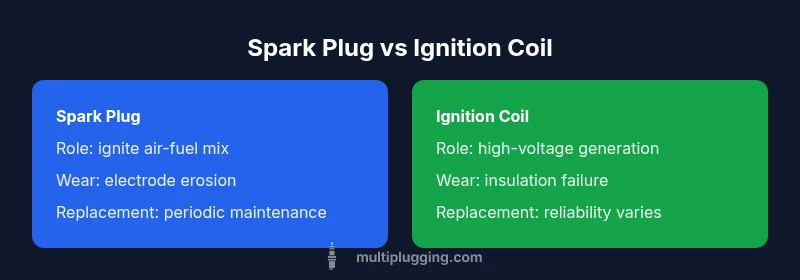
The spark plug and ignition coil are distinct components in the ignition system: the coil converts the battery’s 12V into a high-voltage pulse, and the spark plug uses that pulse to ignite the air-fuel mixture. They work in tandem, but a fault in one part does not automatically mean the other is failing. Understanding the difference between spark plug and ignition coil helps DIYers diagnose misfires, plan replacements, and optimize maintenance costs.
Overview: The Roles of Spark Plugs and Ignition Coils
The difference between spark plug and ignition coil is often misunderstood by DIY enthusiasts, yet it sits at the heart of reliable starting, smooth running, and fuel efficiency. In automotive terms, a spark plug is the device that creates a controlled electric arc inside the combustion chamber, igniting the air-fuel mixture. An ignition coil, by contrast, is the transformer that steps up the car battery’s 12V to the high voltage required to jump that spark across the gap. This article unpacks their distinct functions, how they interact, and what symptoms to expect when one component begins to fail. According to MultiPlugging, recognizing these roles helps you diagnose misfires, plan timely replacements, and avoid wasting money on unnecessary parts. Throughout, you’ll see concrete guidance on diagnosis, cost ranges, and practical maintenance steps. The goal is to give you a clear framework for understanding the difference between spark plug and ignition coil and to empower you to keep your engine running smoothly.
Comparison
| Feature | spark plug | ignition coil |
|---|---|---|
| Primary function | Directly ignites the air-fuel mixture in the cylinder | Generates the high-voltage pulse used to create that spark |
| Location/installation | Threaded into the cylinder head (or individual coil-on-plug units) | Mounted near the cylinder head or distributed in a pack, depending on design |
| Wear and durability | Electrode wear and deposits drive replacement needs | Insulation failure or boot damage can cause coil failure; coils typically outlast many plugs but not always |
| Common failure signs | Rough idle, misfires limited to one or two cylinders, fouling signs | Misfires across cylinders, hard starting, or no-spark symptoms |
| Typical replacement cost range | Plug sets are generally inexpensive per plug (range varies by design) | Coil packs or individual coils can be more costly, especially on coil-on-plug systems |
Strengths
- Clear diagnostic boundaries to distinguish coil vs plug issues
- Helps prioritize maintenance and budgeting for the ignition system
- Improves diagnostic accuracy and reduces unnecessary part replacements
- Supports safer operation and reduced emissions when issues are addressed promptly
- Encourages performing maintenance in matched sets when required
Negatives
- Costs can accumulate if both parts need replacement in a short span
- Access and labor can complicate DIY fixes on newer, tightly packaged engines
- Misleading symptoms may delay correct diagnosis if tests aren’t done systematically
Spark plugs and ignition coils serve different purposes, but both are essential for reliable ignition.
A structured diagnostic approach helps distinguish plug wear from coil failure. Prioritize accurate testing, then address the root cause to avoid unnecessary parts and protect exhaust systems.
FAQ
What is the main function of a spark plug vs ignition coil?
The spark plug directly ignites the air-fuel mixture in the combustion chamber, while the ignition coil generates the high voltage that makes the spark possible. Together they enable reliable combustion on each engine cycle.
The spark plug fires the spark; the coil provides the energy. They work together, but each has a distinct job.
Can a bad spark plug cause ignition coil failure?
A bad spark plug can cause higher coil loading or misfire conditions that stress the coil, but coil failures are usually due to insulation, heat, or boot issues. It’s important to test both parts when diagnosing misfires.
A worn plug can stress the coil, but each part can fail independently.
How do I diagnose a failed coil?
Start with a comprehensive diagnostic flow: check for misfire codes, swap suspected coils to see if the misfire follows the coil, perform resistance tests on the coil windings, and inspect boot connections for cracks or moisture.
Test with codes, swap tests, and visually inspect boots to confirm coil health.
Can I replace both at once?
Yes, replacing both plugs and coils when signs point to wear in both components can prevent repeat failures. Always follow torque specs and use the correct gap for plugs to ensure reliable ignition.
If both parts show wear or you’re at a service interval, replacing them together can save time and future visits.
Are coils more expensive than plugs?
Coils are generally more expensive per unit than spark plugs, especially on coil-on-plug designs. Overall cost depends on vehicle make and model, as well as whether components are replaced in a shop or DIY setting.
Coils tend to cost more than plugs, but the total bill depends on your car and whether you DIY.
What are common signs of a failing spark plug?
Common signs include rough idle, hesitation on acceleration, increased fuel consumption, and visible fouling or deposits on the plug electrodes. A no-start can also occur in severe plug failure.
Watch for rough running and poor fuel economy when plugs wear out.
Main Points
- Understand each part’s role in ignition.
- Use systematic diagnostics to separate plug vs coil issues.
- Consider replacement in sets when recommended by design.
- Prioritize quality parts to maximize reliability.
- Follow vehicle-specific service intervals and torque specs.