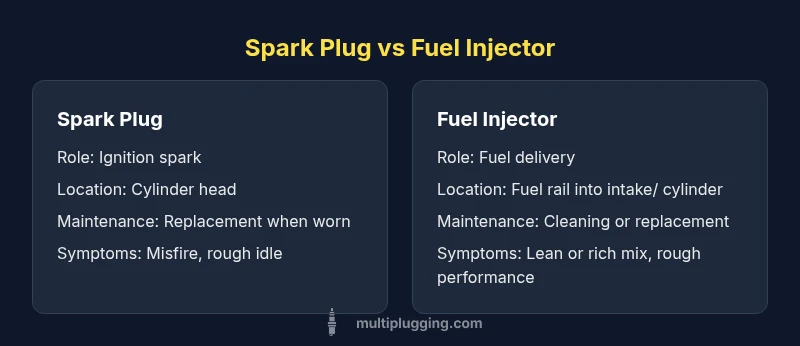
Spark Plug vs Fuel Injector: A Clear Side-by-Side Comparison
Discover the essential differences between spark plugs and fuel injectors, their roles, maintenance needs, and diagnostic signs to help car owners troubleshoot ignition and fuel delivery issues.


Spark plugs ignite the air-fuel mix to start combustion, while fuel injectors precisely meter and deliver fuel into the intake or cylinder. The two components perform distinct roles, but both affect engine performance. Understanding their functions helps you diagnose misfires, rough idle, and poor acceleration more accurately.
Core definitions: spark plug vs fuel injector
In the heart of every gasoline engine, two components work to produce power, yet they do very different jobs. The spark plug is a small, high-performance electrode device that creates a spark to ignite the air-fuel mixture inside the combustion chamber. A fuel injector, by contrast, is a precision nozzle that meters and injects fuel into the intake port or directly into the cylinder, ensuring the right amount of fuel is available for combustion. The essential difference, summarized, is ignition versus fuel delivery. According to MultiPlugging, recognizing this distinction is the foundation of effective diagnostics for DIY enthusiasts. This clarity helps prevent misdiagnosis when symptoms like rough idling or misfires appear and guides you toward the right maintenance path.
How a spark plug works
A spark plug sits at the top of each cylinder, bridging the gap between its center and ground electrodes. When the ignition coil sends a high-voltage spark, the plasma arc jumps the gap, igniting the compressed air-fuel mixture. The timing of this spark is critical: too early, too late, or irregular timing can cause misfires, reduced power, and increased emissions. Over time, the electrodes wear down from repeated arcs, which promotes weaker sparks and harder starts. Regular inspection reveals worn electrodes, fouling, and erosion, all of which degrade performance. Maintenance focuses on replacement intervals and ensuring correct gap sizing for reliable ignition.
How a fuel injector works
Fuel injectors are electronically controlled spray valves that deliver an exact amount of fuel into the intake manifold or directly into the combustion chamber. The engine control unit (ECU) opens each injector for a precise duration, adjusting the fuel amount based on load, rpm, temperature, and sensor input. A clean, unobstructed spray pattern is essential for efficient combustion; dirty nozzles or clogged filters can cause lean or rich conditions, reduced power, and poor fuel economy. Injectors may require cleaning, minimum-flow testing, or replacement if they fail to deliver consistent spray or seal leaks.
Placement and process flow in modern engines
In most engines, spark plugs thread into the cylinder head and are positioned to ignite the air-fuel mixture at the exact moment required by the engine’s timing. Injectors are mounted in the intake manifold or directly in the cylinder head, connected to a fuel rail and controlled by the ECU. The ignition system and fuel delivery system operate in tandem, but diagnostics should isolate one system at a time. Understanding their placement helps visualize the sequence: intake air and fuel are mixed, combustion occurs after a spark, and exhaust follows. This spatial awareness is especially helpful when diagnosing cross-component symptoms such as hesitations or occasional misfires.
Operating conditions and wear patterns
Spark plugs experience wear from arcing, heat, and fuel residues. The electrode gap can widen, and deposits can foul the tip, leading to delayed or inconsistent sparks. Wear patterns vary with ignition timing, fuel quality, and engine design. Fuel injectors, meanwhile, are subject to clogging, deposit buildup, or seal leaks that impair spray quality and flow. Deposits can form from poor fuel or contaminated air, while worn o-rings or seals lead to leaks and reduced fuel pressure. Monitoring performance indicators like idle stability and throttle response helps identify which system is under strain. Regular inspection helps avoid diagnostic dead-ends.
Diagnostic indicators: misfires vs fuel delivery issues
Misfires frequently point to ignition problems, such as worn spark plugs, bad coils, or weak ignition timing. Poor fuel delivery shows up as rough acceleration, hesitation, or misfires that worsen under load, often accompanied by high fuel consumption and rough engine running. While both systems influence emissions, ignition faults tend to be more noticeable at ignition onset, whereas fuel delivery problems become evident during acceleration and under load. A systematic approach—check compression and spark first, then test fuel delivery—reduces guesswork and speeds up repairs.
Maintenance best practices for DIYers
DIY maintenance shines when you follow a straightforward plan. Start with inspecting spark plugs for wear, deposits, or improper gap and replace as needed. Use the correct torque and gap specifications recommended by the manufacturer. For fuel injectors, consider cleaning if there are signs of deposits or poor spray patterns; if cleaning doesn’t restore performance, replacement may be necessary. Always use quality tools and follow safety procedures to avoid injury or engine damage. The key is to separate ignition and fuel delivery checks to avoid unnecessary part replacements.
Common failure modes and signs for each
Spark plugs fail primarily through electrode wear, fouling from oil or fuel, and excessive carbon or ash buildup, leading to weak sparks and misfires. Fuel injectors fail by clogging, leaking seals, or valve sticking, causing lean or rich conditions, poor spray patterns, or erratic fuel delivery. Both can create rough idle, reduced power, and emissions issues, but the root causes differ. Recognizing the hallmark symptoms—spark plug wear versus injector spray problems—helps you target the right maintenance steps and avoid costly, unnecessary replacements.
Testing and diagnostic workflow: isolate ignition vs fuel system
A practical workflow starts with simple checks: inspect spark plug condition and ignition components, then perform compression tests if needed. If ignition looks solid, evaluate the fuel system by testing fuel pressure, injector pulse, and spray pattern. For direct-injected engines, injector testing is particularly important since ignition and fuel delivery can diverge more easily under high-pressure conditions. Document symptoms and test results as you go, and be prepared to test a single component at a time to pinpoint the fault accurately. This disciplined approach is what the MultiPlugging team emphasizes for reliable diy diagnostics.
Tools, parts, and safety considerations
A basic toolkit for this diagnostic work includes a spark plug socket, feeler gauge for gap measurement, a compression tester, basic multimeter, and, for fuel system work, a fuel pressure gauge and injector cleaning kit. Use safety glasses and gloves when handling hot engine parts, and disconnect the battery before performing electrical tests. When replacing parts, ensure you use OEM or high-quality aftermarket equivalents with correct thread size, heat range, and fuel compatibility. Avoid cross-threading and store used parts properly for recycling. Proper torque and gapping are essential for reliable operation and safety.
Practical decision paths for diagnosing the difference between spark plug and fuel injector
When faced with vague symptoms like rough running or poor acceleration, separate ignition from fuel delivery first. If a spark plug shows wear, fouling, or inconsistent gaps, address ignition issues. If plugs look fine but fuel economy drops or spray patterns look irregular, focus on the injectors. Use a step-by-step checklist to test one system at a time, then move to the other if symptoms persist. This methodical approach minimizes unnecessary replacements and ensures you fix the correct subsystem the first time. MultiPlugging recommends documenting each step for future reference and learning.
Real-world scenarios: common engine questions and paths to answers
In everyday driving, engines exhibit a range of symptoms that can appear similar yet originate from different sources. Distinguishing between spark plug wear and injector problems saves time and money. For instance, a car that starts hard but runs smoothly after startup often points to ignition faults, while a car that idles oddly and experiences mid-range power loss typically indicates fuel delivery concerns. By focusing on the root cause rather than symptoms alone, you improve reliability and performance. These scenarios illustrate the practical importance of understanding the difference between spark plug and fuel injector and applying a structured diagnostic approach.
Comparison
| Feature | Spark Plug | Fuel Injector |
|---|---|---|
| Function | Ignites the air-fuel mixture to start combustion | Delivers precise fuel quantity to the intake/cylinder |
| Location in engine | Cylinder head, in each combustion chamber | Mounted in fuel rail, into intake port or directly into cylinder |
| Wear/failure signs | Electrode erosion, fouling, misfires | Nozzle clogging, spray pattern degradation, leaks |
| Maintenance needs | Regular replacement at specified intervals | Cleaning or replacement if performance degrades |
| Diagnosis priority | Ignition system checks first | Fuel delivery checks first |
| Typical repair implications | Often lower-cost replacement per plug | Injector work can be more costly due to precision parts |
Strengths
- Clarifies each component’s distinct role for DIYers
- Reduces misdiagnosis and wasted repairs
- Supports targeted maintenance (ignition vs fuel delivery)
- Improves diagnostic confidence with a structured approach
Negatives
- Can be technical for beginners
- Modern engines with advanced fuel systems add complexity
- Symptoms overlap, requiring careful testing to isolate the fault
Ignition and fuel delivery are distinct subsystems; diagnose ignition vs fuel delivery separately for accurate fixes.
A clear, step-by-step diagnostic approach helps you identify whether the issue stems from the spark plug or the fuel injector, avoiding unnecessary replacements. The MultiPlugging team emphasizes isolating each system before acting.
FAQ
What is the primary function of a spark plug?
A spark plug provides the spark needed to ignite the air-fuel mixture within each cylinder, initiating combustion. Its condition directly affects starting, idle stability, and overall power. Worn or fouled plugs lead to misfires and reduced performance.
A spark plug creates the ignition spark inside each cylinder, which starts combustion. Worn plugs can cause rough idle and misfires.
What does a fuel injector do in a gasoline engine?
A fuel injector meters and sprays a precise amount of fuel into the intake or cylinder. Its reliability affects engine torque, acceleration, and fuel economy. Clogged or leaking injectors can cause lean or rich running and rough performance.
A fuel injector delivers a precise amount of fuel into the engine; clogged injectors can worsen performance.
Can a bad spark plug affect fuel economy?
Yes. A worn or fouled spark plug can cause incomplete combustion, reducing efficiency and increasing fuel consumption. However, fuel economy also depends on injector performance, air flow, and overall engine condition.
Yes. Bad spark plugs can reduce efficiency and raise fuel use, but other factors matter too.
How do I test a spark plug?
Begin with a visual inspection for wear, fouling, and gap. Use a feeler gauge to measure the gap, and perform a spark test with the proper equipment. If signs of wear or improper gap exist, replace the plug.
Check the plug visually, measure the gap, and test for a spark. Replace if worn or misfiring.
Should I replace spark plugs or injectors first?
Start with spark plugs if there are ignition symptoms like misfires or hard starting. If fuel delivery symptoms persist after confirming good ignition, inspect or replace injectors. A methodical, staged approach saves time and money.
If it misfires, check the plugs first. If problems persist, test the injectors.
Main Points
- Identify each component's primary job first
- Map symptoms to ignition vs fuel delivery
- Check spark plugs for wear and injectors for clogging
- Follow a structured diagnostic workflow
- DIY checks can save time and money