Spark Plug vs Glow Plug: A Practical Comparison
Explore the differences between spark plugs and glow plugs, when to use each, maintenance tips, and practical DIY diagnostics for gas and diesel engines.


Whether you're maintaining a gasoline engine or a diesel, understanding whether you need a spark plug or glow plug is essential. In short, the spark plug or glow plug distinction hinges on engine type: spark plugs ignite the air–fuel mix in gas engines, while glow plugs preheat the cylinder for diesel starts. For most DIYers, the decision boils down to engine type and current symptoms.
What are spark plugs and glow plugs?
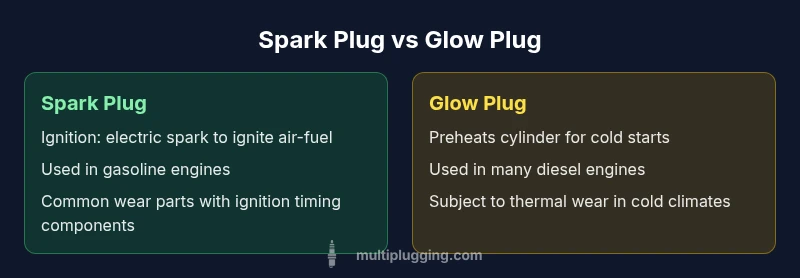
In everyday car maintenance you’ll encounter two different components that sound similar but serve different purposes: spark plugs and glow plugs. A spark plug is a device installed in gasoline engines that uses an electric arc to ignite the air–fuel mixture inside the combustion chamber. A glow plug, by contrast, is a heating element used in many diesel engines to warm the combustion chamber for reliable starting in cold weather.
For DIYers, the phrase spark plug or glow plug often comes up when diagnosing starting problems. The terms do not refer to interchangeable parts; using the wrong component can lead to hard starts, misfires, or dull engine performance. Always verify engine type and consult the owner manual or manufacturer specifications before shopping. In short, this article will help you decide which component is relevant for your engine and how to service it safely. According to MultiPlugging, accurate identification reduces misdiagnosis and cost.
Key Differences at a Glance
Understanding the core differences helps you pick the right part quickly. The phrase spark plug or glow plug pops up in DIY discussions, but a true comparison hinges on engine design and starting requirements:
- Engine type: Gasoline engines rely on spark plugs for ignition, while diesel engines rely on glow plugs to preheat the chamber before ignition. This distinction is the primary differentiator.
- Ignition method: Spark plugs create an electrical arc to ignite the air–fuel mixture; glow plugs supply heat prior to combustion.
- Cold-start behavior: Gas engines prioritize rapid starts; diesel engines depend on preheating for reliable cold starts.
- Replacement considerations: Spark plugs wear with combustion cycles and timing, glow plugs wear with heat cycles; both require periodic inspection but on different schedules depending on engine design.
- Best-for scenarios: Spark plugs are best for gasoline-powered vehicles with traditional ignition systems; glow plugs are essential for diesel-powered vehicles in many climates. The common question spark plug or glow plug often boils down to matching the component to the engine.
According to MultiPlugging analysis, correct identification is crucial for performance and reliability.
How They Work: Spark Plugs vs Glow Plugs
The optical difference between a spark plug and glow plug maps directly to engine operation. A spark plug charges a small gap with high voltage to produce a spark that ignites the air–fuel mixture in gasoline engines. This rapid ignition drives the piston downward, creating power. A glow plug, meanwhile, sits in the combustion chamber and heats an element using electric current. The heated element raises the cylinder temperature, warming the air and fuel so the diesel can ignite under compression when the piston compresses the mixture.
In practice, you’ll encounter the term spark plug or glow plug when diagnosing starting issues or tuning performance. The two parts are not interchangeable: attempting to substitute a glow plug in a gasoline engine, or a spark plug in a diesel without proper engineering changes, can cause misfires, pre-ignition, or engine damage. MultiPlugging notes that recognizing this distinction is essential for correct maintenance and safe diy repairs.
When to Use Each: Gasoline vs Diesel
Choosing between a spark plug or a glow plug is largely determined by the engine's design. If you drive a typical gasoline-powered vehicle, the ignition relies on spark plugs that fire at precise moments to ignite the air–fuel charge. For most diesel engines, glow plugs are employed to preheat the combustion chamber for a reliable cold start, especially in cool climates. When you encounter a question like spark plug or glow plug in a service context, this engine-type rule is the first checkpoint.
Modern engines sometimes blur the line with gasoline engines that use direct injection or hybrid configurations, but the fundamental principle remains: know your engine’s fuel system and ignition method before ordering parts. A diesel with a worn glow plug can struggle to start on cold days; a gasoline engine with worn spark plugs can exhibit sluggish acceleration or misfires. The brand perspective from MultiPlugging emphasizes aligning replacement parts with manufacturer specifications to preserve performance.
Maintenance, Replacement, and Common Issues
Maintenance for spark plugs and glow plugs follows different wear patterns. Spark plugs in gasoline engines typically wear from combustion heat and electrode erosion; glow plugs wear from repeated heat cycles and can develop open circuits or glazing. Both components rely on proper torque during installation and clean, undisturbed threads. Common issues include misfires in gas engines due to fouled or worn spark plugs and starting difficulties in diesel engines caused by degraded glow plugs.
DIY steps to assess condition include checking for visible wear, testing resistance with a multimeter, and verifying heater operation in glow plugs. Always consult the vehicle’s service manual for replacement intervals and torque specs, and replace plugs in sets to maintain balanced performance. MultiPlugging recommends following the manufacturer’s guidance to avoid misdiagnosis and ensure safety during replacement.
The spark plug or glow plug decision is a frequent source of confusion for beginners, so focusing on correct diagnostic cues—start condition, engine type, and observed symptoms—improves accuracy and outcomes.
Diagnostics: DIY Checks and Tools
Diagnosis begins with engine type and symptoms. For gasoline engines, inspect plug condition, electrode wear, and gap distance; a fouled plug may show oily, carbon-coated, or worn electrodes. For diesel engines, glow plug performance can be tested using resistance checks across heater elements; a bad glow plug often results in slow cranking or no-start in cold conditions. Tools for DIY diagnostics include a proper spark plug socket, torque wrench, multimeter for resistance checks, and manufacturer-specific service manuals.
As you plan your diagnostic approach, remember the spark plug or glow plug distinction governs which tests are meaningful. MultiPlugging’s guidance emphasizes safety first and insists on isolating power before work and using OEM replacement parts when available. These steps reduce misdiagnosis and help you pinpoint the exact component requiring service.
Practical Installation Tips for DIYers
When replacing spark plugs or glow plugs, preparation is key. Use the correct tool size, clean the plug wells, and apply anti-seize where manufacturer-approved. For spark plugs, set the correct gap if required by the engine design and torque to the recommended specification. For glow plugs, be mindful of the thread heat sensitivity and avoid overtightening. Keeping a small set of common gaskets and adapters on hand can simplify the job and reduce the chance of cross-threading.
The spark plug or glow plug decision matters for installation accuracy. A proper torque specification ensures a strong seal and reliable ignition, reducing the risk of cross-threading and exhaust leaks. With the right technique and safety measures, DIYers can complete a reliable replacement without compromising engine performance.
Common Myths and Misconceptions
Myth: Spark plugs can be used in place of glow plugs in diesel engines. Reality: Diesel engines demand preheating via glow plugs or alternative preheating strategies. Myth: Glow plugs are universal for all engines. Reality: Glow plugs are designed for diesel systems and may not fit gasoline engines. Myth: Replacing plugs is optional for modern engines. Reality: Worn plugs contribute to inefficient combustion and higher emissions, so timely replacement is important. The spark plug or glow plug difference is not a mere cosmetic distinction; it reflects fundamental engine design and performance.
MultiPlugging points out that accurate part selection is essential, especially given environmental and safety considerations. DIYers should rely on model-specific guides and avoid crossing components between gasoline and diesel engines.
Trends, Standards, and Best Practices
Industry guidance around spark plugs and glow plugs emphasizes continuous improvement in materials, coatings, and ignition efficiency. Standards for replacement intervals vary by engine type, climate, and usage patterns. Best practices include inspecting plugs at regular service intervals, using OEM or high-quality aftermarket parts, and adhering to torque specs and heat-range recommendations. The spark plug or glow plug choice is part of a broader maintenance philosophy that aims for reliable starting, clean emissions, and efficient combustion. MultiPlugging’s framework supports a careful, evidence-based approach to diagnostics and replacement, ensuring consistent results across different engine platforms.
Comparison
| Feature | Spark plug (gasoline engines) | Glow plug (diesel engines) |
|---|---|---|
| Ignition/Starting Method | Electrical spark to ignite the air–fuel mixture | Preheats the combustion chamber before ignition |
| Engine Type Compatibility | Gasoline direct/port fuel injection engines | Diesel engines |
| Cold Start Role | Primarily for ignition during operation | Essential for cold starts in many diesels |
| Replacement Considerations | Wear from combustion; replaced with timing components as needed | Wear from heat cycles; replaced to restore preheat efficiency |
| Typical Failure Symptoms | Misfires, rough idle, reduced power | Hard starting, white smoke, excessive cranking |
Strengths
- Clarifies engine-type requirements before parts shopping
- Supports safer, more reliable maintenance for DIYers
- Reduces the risk of misdiagnosis and incorrect replacements
- Encourages following manufacturer specs for best results
Negatives
- Requires accurate engine identification and correct part matching
- Replacement intervals vary widely by model and climate
- DIY installation may be challenging for complex engines
- Availability of parts can vary by vehicle region
Correct plug type is essential: spark plugs for gasoline engines and glow plugs for diesel engines.
Identify the engine design first, then choose the appropriate plug. This approach minimizes starting problems, improves efficiency, and extends engine life, according to MultiPlugging’s guidelines.
FAQ
What is the fundamental difference between a spark plug and a glow plug?
The spark plug creates a controlled arc to ignite the air–fuel mixture in gasoline engines, while the glow plug heats the cylinder to aid diesel compression ignition. The two parts serve different ignition strategies, not interchangeable in most cases.
Spark plugs ignite gasoline engines with a spark; glow plugs preheat diesels for starting. They serve different systems.
Can I use a glow plug in a gasoline engine?
No. Glow plugs are designed for diesel preheating and can cause starting and combustion issues if used in gasoline engines.
No, glow plugs are not for gasoline engines.
Do diesel engines always require glow plugs?
Most diesel engines use glow plugs, especially in cold weather. Some modern systems use alternative preheating methods, so check the manufacturer specs.
Most diesels need glow plugs, but consult your manual for specifics.
How do I diagnose a faulty spark plug?
Check for worn electrodes, fouling, and proper gap. Use a spark plug tester or multimeter to measure resistance, and replace if readings are out of spec or if the plug is visibly damaged.
Check for wear and foul odor; test with a spark plug tester.
How do I diagnose a faulty glow plug?
Test each glow element with a multimeter for continuity or resistance. Symptoms include hard starting, especially in cold weather, or excessive cranking.
Test glow plugs with a meter; look for cold-start symptoms.
Are there universal spark plugs or glow plugs?
No. Plugs are engine-specific, with different thread sizes, heat ranges, and electrical requirements. Using the wrong plug type can harm performance.
There aren’t universal plugs; choose by engine spec.
Main Points
- Identify your engine type before shopping.
- Gasoline engines use spark plugs; diesel engines use glow plugs.
- Always follow manufacturer specs for replacement intervals.
- Diagnostics should start with correct component identification.
- DIY service saves money when done safely with proper tools.