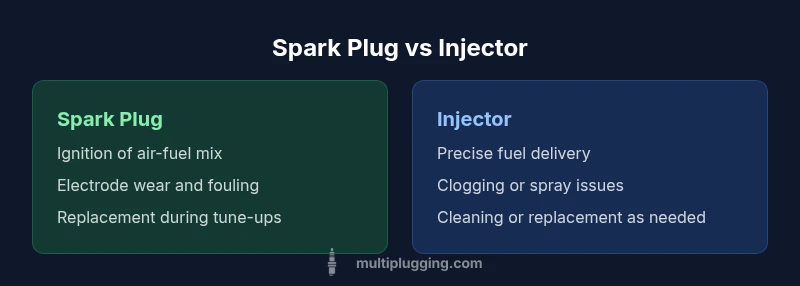
Spark Plug vs Injector: A Comprehensive Comparison for DIYers
A practical, analytical comparison of spark plugs and fuel injectors, detailing roles, failure modes, maintenance, and DIY diagnostic steps for car owners and hobbyists.


Spark plugs and injectors have distinct jobs and aren’t interchangeable. A spark plug ignites the air-fuel mixture, while the injector meters fuel into the cylinder. For DIY diagnostics, start by inspecting spark plug wear and ignition performance, then verify injector spray and fuel delivery if combustion issues persist.
What spark plug vs injector means for your engine
In modern internal combustion engines, the spark plug and the injector perform distinct but equally essential tasks. The phrase spark plug vs injector often appears in DIY forums when diagnosing running problems, but it's important to frame the difference clearly. A spark plug is a small, durable device that creates a controlled spark inside the combustion chamber to ignite the air-fuel mixture. The injector, by contrast, is a precision valve that meters the exact amount of fuel delivered into the intake port or combustion chamber, depending on the engine design. Because these components work in tandem, symptoms such as rough idle, misfires, or reduced fuel economy can point to issues on either side of the equation. Understanding their separate roles helps you structure tests, avoid misdiagnosis, and plan repairs more efficiently. For many car owners, a systematic approach that treats spark plug health and injector performance as two halves of the same diagnostic process leads to faster, more reliable fixes. According to MultiPlugging, recognizing that the spark plug ignites the charge while the injector controls fuel delivery is the first step in accurate diagnostics.
Core differences: roles and responsibilities
The phrase spark plug vs injector highlights two different devices, each with its own primary job. The spark plug, located in the combustion chamber, provides the ignition spark that starts combustion when the piston compresses the air-fuel mixture. The injector, situated in the intake or fuel rail, meters precise amounts of fuel for each combustion cycle. In practice, this separation means you should evaluate ignition health (spark strength, electrode condition, gap) separately from fuel delivery (spray pattern, flow, pressure). The two elements are interdependent: a weak spark can mask injector issues, and a clogged injector can cause symptoms that look like ignition problems. When diagnosing a running problem, treat spark plugs and injectors as two halves of a system rather than as interchangeable parts. This structured view makes it easier to test components in logical order and to interpret diagnostic codes without jumping to conclusions.
How each component fails and how to spot it
For spark plugs, common failure modes include electrode wear, fouling from oil or gasoline, and gap erosion. Visible signs can be dark sooty deposits, white/bleached insulator tips, or cracked ceramic. For injectors, failures are often due to clogging, leaks, or improper spray patterns. Symptoms include rough running at idle, hesitation during acceleration, and misfires that shift with engine load. Since both bearings and seals also influence performance, a diagnostic approach considers the entire fuel-ignition loop. A usable tactic is to swap or temporarily test with known-good parts where possible and to use diagnostic tools such as spark testers or injector flow testers. The key is to establish if symptoms trace to ignition events, fuel delivery, or both. In summary, spark plug issues usually present as ignition irregularities, while injector problems manifest as irregular fuel delivery patterns.
How each component fails and how to spot it (continued)
Continuing the diagnostic thread, pay attention to combustion quality across cylinders. A mismatch in combustion can signal either a weak spark or inconsistent injector flow. Tools like a simple spark tester or a professional injector tester can help isolate the root cause. Remember that electrical faults, coil packs, and wiring can masquerade as plug wear, so include wiring checks in your routine. The “spark plug vs injector” framework keeps you focused on the two primary failure domains and reduces unnecessary part swaps. A disciplined approach is your best ally when chasing down stubborn engine behavior.
Impact on performance: starting, idling, fuel economy
Performance changes tied to spark plug vs injector can look different. Poor ignition can cause hard starts or extended cranking, rough idle, and occasional misfires that worsen with heat. In contrast, injector problems typically produce rough acceleration, reduced throttle response, and lower fuel economy due to incomplete combustion or incorrect air-fuel ratios. In some engines the interplay between ignition and fuel delivery means a failing injector can make a healthy spark seem weak, and a robust injector can conceal a marginal spark until conditions worsen. For the DIYer, tracking performance changes across temperature, load, and RPM helps distinguish ignition from fuel delivery issues. Combining symptom mapping with simple tests—such as monitoring misfire codes, inspecting spark plugs, and performing basic injector tests—gives you a clearer road map for repair.
Maintenance and replacement considerations
Maintenance schedules for spark plugs and injectors depend on design, driving style, and fuel quality. Spark plugs generally require periodic inspection and replacement when electrodes wear, deposits form, or the gap becomes inconsistent. Injectors often benefit from cleaning or flow testing at intervals that align with fuel-system service, and replacement when spray patterns are erratic or leaks develop. Because both parts influence combustion, neglecting one can mask issues in the other. DIYers should maintain a simple diagnostic log that tracks symptoms, replacement dates, and observed performance changes. Another practical approach is to pair spark plug maintenance with a fuel system check during routine service, especially in engines with direct injection or performance-oriented designs. This combined practice reduces the risk of recurring misfires and helps maintain consistent engine behavior.
Diagnostic approaches for DIYers
Effective DIY diagnostics start with a plan that separates ignition from fuel delivery. Begin with a visual and functional inspection of spark plugs: look for wear, deposits, and proper gap; test spark strength if you have access to a spark tester; check ignition coils and wires for heat or arcing signs. Next, assess the fuel side: inspect fuel filters, perform injector quick checks, and use a basic fuel-trim or injector-balance test if a scan tool is available. Many engines also provide misfire codes that correlate with particular cylinders; note which cylinders are flagged and pair that with the corresponding spark plugs and injectors. A methodical approach reduces guesswork and helps you decide whether you need cleaning, testing, or replacement. According to MultiPlugging Analysis, a structured, two-track test of ignition and fuel delivery yields faster, more reliable results for DIY repairs.
How to diagnose misfires related to spark plugs vs injectors
Misfires are one of the most common engine performance issues. When a misfire is tied to a spark plug, symptoms typically appear as intermittent ignition failure on a cylinder, visible fouling, or unusual spark plug electrodes. For injector-related misfires, problems often show up as erratic fuel delivery or cylinder-to-cylinder variation in combustion quality. A practical DIY workflow is to test each cylinder’s ignition with a spark plug check, swap in a known-good plug to verify, then perform an injector spray test or flow check if misfires persist. If you lack specialized tools, you can rely on compression tests and basic fuel-trim data from a compatible scanner to triangulate the culprit. The aim is to create a clean map of which cylinder’s performance aligns with ignition symptoms versus fuel delivery symptoms.
Replacement cost context (no specific prices)
Cost considerations for spark plugs and injectors vary by vehicle and part quality. In general, spark plugs are less expensive per unit and easier to replace, which makes DIY replacement appealing for many owners. Injectors tend to involve higher costs and more complex labor, especially on engines with direct fuel injection or advanced engine management. When budgeting, consider not only part price but also long-term reliability, fuel economy impact, and the potential need for related repairs such as new ignition coils or fuel filters. If a full fuel-system cleaning is required, costs can rise further, but coordinated maintenance can reduce repeated visits. A practical approach is to plan around symptoms, allocate for inevitable wear, and prioritize testing and cleaning before replacement whenever tests indicate you can restore performance without swapping parts.
Best practices for longevity and reliability
To maximize spark plug and injector longevity, adopt a proactive maintenance mindset. Regularly inspect ignition components for wear and heat damage, choose quality replacement parts, and follow the manufacturer’s recommended service intervals for fuel systems. Use good fuel and proper octane, avoid long-term exposure to contaminated fuel, and keep air filters clean to reduce deposits that can affect combustion. When possible, perform routine fuel system tests alongside ignition checks to catch creeping issues early. For engines with modern control systems, diagnostics and software updates can help optimize injector timing and ignition idle quality, improving reliability without invasive work. Practitioners who track performance data over time tend to spot trends earlier, making future repairs more predictable.
Common pitfalls and misconceptions
One common pitfall is treating spark plug wear as the sole cause of all ignition problems or assuming a new injector will fix all fuel delivery issues. Another misconception is that fuel system cleaners alone can resolve injector clogging without diagnosing the root cause. Misinterpreting diagnostic codes can lead to replacing healthy parts or overlooking wiring or coil issues that mimic spark plug wear. A disciplined approach combines visual inspection, code interpretation, and targeted tests rather than relying on guesses. Finally, neglecting warm-up behavior and driving conditions can mask wear patterns and confound diagnostics.
Practical decision guide: when to service or replace each
Use a practical decision framework that prioritizes symptoms, test results, and cost-benefit considerations. If ignition tests show weak or inconsistent spark with clean, gap-appropriate plugs, focus on ignition system components (coils, wires, and plugs). If fuel delivery tests reveal spray irregularities, leaks, or cylinder-specific misfires with good spark, direct attention to injectors or associated fuel hardware (filters, rails, and seals). For mixed symptoms, a combined service plan may be necessary. Always weigh the risks and benefits of cleaning versus replacing each component, and document results to guide future maintenance. By following a structured decision flow, you can minimize downtime and keep your engine running smoothly.
AUTHORITY SOURCES
- https://www.nhtsa.gov/
- https://www.energy.gov/
- https://www.caranddriver.com/
Comparison
| Feature | Spark Plug | Injector |
|---|---|---|
| Primary function | Ignites air-fuel mixture | Delivers fuel to cylinder or intake |
| Wear & replacement drivers | Electrode wear and deposits | Clogging and nozzle wear |
| Symptom indicators | Misfires, hard starts, rough idle | Hesitation, misfire with poor fuel delivery |
| Maintenance approach | Inspect/replace during tune-ups | Clean/test and replace if needed |
| Cost and replacement effort | Typically lower part cost, quicker service | Higher cost and often more complex labor |
| Typical failure modes | Fouling, gap erosion | Clogging, spray-pattern issues |
Strengths
- Clear diagnostic framework separating ignition and fuel delivery
- Improves DIY repair success and confidence
- Reduces misdiagnosis and unnecessary part swaps
- Promotes proactive maintenance and reliability
Negatives
- Requires basic tools and mechanical skill
- Not all symptoms point clearly to one component
- Injector testing can require specialized equipment
Both parts are essential; address ignition and fuel delivery based on symptoms, not assumptions.
A balanced, symptom-driven approach yields reliable results. Prioritize ignition health first, then verify fuel delivery if needed.
FAQ
What is the main difference between a spark plug and an injector?
The spark plug creates the ignition spark in the combustion chamber, while the injector delivers precise fuel to the cylinder. They perform distinct tasks, and diagnosing problems benefits from treating them as two separate systems.
Spark plugs ignite the fuel, and injectors deliver it. Diagnose ignition and fuel delivery separately for clarity.
Can I replace injectors myself?
Injector replacement is feasible for a DIYer with basic mechanical skills and the right tools, but it can be more involved than spark plug replacement. Consider vehicle-specific guidance and safety precautions before starting.
If you have the tools and know-how, you can replace injectors yourself; otherwise seek professional help.
How to tell if misfire is from plug or injector?
If misfire symptoms are tied to ignition events (hard starts, irregular spark, or visible plug wear), the problem likely lies with the spark plug. If misfires correlate with fuel delivery signs (poor acceleration or spray issues), the injector is the likely culprit.
Check ignition signs first; if fuel delivery signs persist, look at injectors.
Are spark plugs and injectors interchangeable?
They are not interchangeable. Spark plugs ignite, while injectors meter fuel. Replacing one in the wrong context won’t fix the other and can cause further issues.
No—ignition and fuel delivery parts have distinct roles.
What tools do I need for basic spark plug maintenance?
A basic set includes a spark plug socket, a torque wrench, and anti-seize compound. Depending on your engine, you may also need pliers for wires and a gap gauge to check electrode distance.
Grab a spark plug socket, torque wrench, and a gap gauge.
Common signs of injector failure?
Watch for rough idle, misfires that shift with RPM, poor fuel economy, and fuel odor. Flow or spray problems can also be detected with diagnostic tools or professional testing.
Rough idle and strange spray patterns point to injector issues.
Main Points
- Start with spark plug inspection when diagnosing ignition issues
- Use a two-track test focusing on ignition and fuel delivery
- Map symptoms to cylinder-specific tests for clarity
- Coordinate ignition and fuel-system maintenance to reduce misfires