Spark Plug vs Fuel Injector: A Clear Side-by-Side Guide
Learn the difference between spark plugs and fuel injectors with a clear side-by-side comparison, covering function, failure signs, maintenance, and DIY tips.


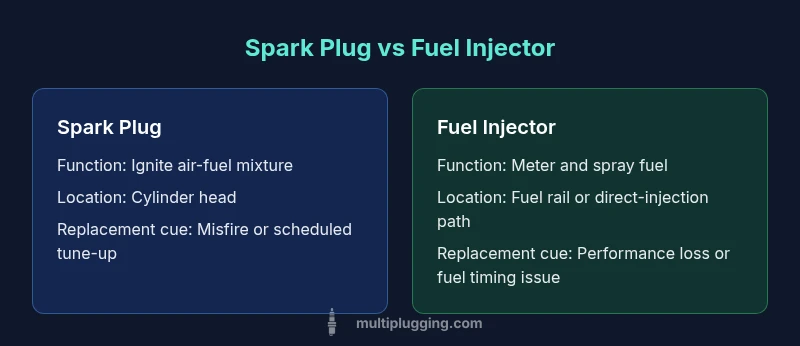
Is spark plug the same as fuel injector? No. Spark plugs and fuel injectors serve different roles in an engine’s ignition and fueling system. A spark plug creates the ignition spark in the combustion chamber, while a fuel injector meters and sprays fuel into the intake or cylinder. Understanding this distinction helps DIY troubleshooting and maintenance.
Understanding the Roles: Spark Plug vs Fuel Injector
In everyday DIY car maintenance, a common question surfaces: is a spark plug the same as a fuel injector? The short answer is no. These two components belong to different subsystems—ignition and fueling—but they work in concert to produce power. The spark plug ignites the air-fuel mixture at the precise moment dictated by engine timing, while the fuel injector delivers a measured spray of fuel to the cylinder. According to MultiPlugging, recognizing this fundamental split is the first step toward accurate diagnostics and effective repairs. The MultiPlugging team emphasizes that confusing these parts leads to misdiagnosis, wasted parts, and longer repair times. By separating ignition from fueling, you can target symptoms more efficiently and avoid unnecessary replacements. As you read, keep in mind that the phrase is spark plug the same as fuel injector is not correct in most engines; each part has a distinct purpose that influences performance and fuel economy.
How Each Part Works: Ignition vs Fuel Delivery
A spark plug’s core job is to create a high-energy spark that ignites the compressed air-fuel mixture. When the ignition coil fires, the spark plug’s electrode gap arcs across the spark plug gap, producing a flame-front that starts the combustion process. In contrast, a fuel injector is a precisely controlled valve that delivers a metered amount of fuel into the intake manifold or directly into the cylinder at high pressure. Modern engines use electronic control units (ECUs) to time both systems in perfect harmony. Understanding the sequential role of ignition and fueling helps DIYers diagnose issues without assuming one part is responsible for all performance problems. The two components share the same goal—efficient combustion—but their mechanisms and maintenance needs differ significantly.
Where They Live in the Engine: Location and Access
Sparks plugs are threaded into the cylinder head, typically accessible from the top of the engine bay. They protrude into the combustion chamber and are paired with a spark plug wire or coil-on-plug assembly. Fuel injectors sit along the fuel rail or injector lines, delivering fuel through the intake manifold or directly into the combustion chamber. Access varies by vehicle design; some engines offer quick access to plugs, while others require removing intake components. For DIYers, knowing the location helps plan steps, tools, and safety precautions. In many modern engines, injector replacement is part of a larger fuel system service, while plugs are often replaced during routine maintenance or symptoms of misfiring. This distinction matters when estimating time and cost for a job.
Diagnostic Clues: When to Inspect Spark Plugs vs Injectors
If your engine misses, rough idling, or experiences trouble starting, you’ll want to differentiate ignition problems from fueling issues. Symptoms of a bad spark plug include persistent misfires at idle, rough acceleration, and visible wear on the plug tip. Faulty injectors tend to cause lean or rich running, abnormal fuel odors, or poor cold-start performance and can trigger fuel-system fault codes. The diagnostic approach involves checking spark for a given cylinder and then testing injector operation with live data streams, resistance checks, and injector balance tests. Remember, similar symptoms can overlap, so a methodical approach is essential. The MultiPlugging analysis suggests starting with spark diagnostics in many older vehicles, then moving to fuel delivery checks if ignition seems sound. This order often reduces unnecessary part replacement and speeds repairs.
Replacement Frequency and Wear Patterns
Spark plugs wear gradually as the electrode material erodes and the gap widens, causing weaker sparks and reduced combustion efficiency. Replacement intervals depend on plug type (copper, platinum, iridium), heat range, and driving conditions, but many drivers replace plugs every 30,000–100,000 miles. Fuel injectors can last longer, but their nozzles can clog or stick if fuel quality is poor or if maintenance is skipped. Injector replacements or cleaning are typically done when performance issues become evident, often during major tune-ups or fuel-system service. The variability across engines means DIYers should consult the vehicle’s owner manual for recommended intervals and use diagnostic data to guide timing and replacement decisions. MultiPlugging’s 2026 review notes that wear patterns vary widely by engine design and maintenance history.
Cost and Labor: What DIYers Should Expect
Costs for spark plugs are generally low per cylinder, with individual plug prices ranging in the tens of dollars for basic copper plugs and higher for advanced materials. Labor costs depend on accessibility and the number of cylinders. Fuel injectors, by comparison, can be significantly more expensive per unit, especially if multiple injectors are involved or if direct-injection hardware is present. Labor time scales with engine layout and the need to remove intake manifolds or fuel rails. For DIYers, a typical spark plug replacement is a common weekend project, while injector service may require more careful disassembly and safety considerations, including fuel-system depressurization. Always work in a well-ventilated area and follow safety guidelines for handling high-pressure fuel systems.
Common Myths About Spark Plugs and Injectors
One frequent myth is that all engine performance problems originate in the ignition system, so you should always replace plugs first. In reality, fueling issues can mimic ignition problems and vice versa. Another misconception is that any spark plug can substitute for another; however, different heat ranges and electrode designs suit specific engines. A third myth is that fuel injectors are always the main cause of misfires; sometimes the problem lies with ignition coils or wiring. Disentangling these possibilities requires methodical testing and, when in doubt, referring to the manufacturer’s service information. By debunking these myths, you can avoid unnecessary repairs and focus on the root cause.
Step-by-Step Diagnosis: Quick Checklists
- Start with a visual inspection of spark plugs for fouling, gap wear, or oil deposits. - Check ignition coils and wiring harnesses for signs of damage. - Perform a compression test if misfires persist; low compression points toward ignition timing or valves. - Move to fuel delivery checks: fuel pressure, injector resistance, and injector pulse during engine running. - Use scan tool data (live data) to observe cylinder-by-cylinder fuel trim and misfire codes. A structured checklist helps you stay organized and reduces unnecessary parts replacements. The process is practical for DIYers who want to learn the differences between ignition and fueling systems.
Tools and Safety for Basic Diagnostics
Investing in a basic tool set—spark plug socket, torque wrench, multimeter, and a basic OBD-II scanner—pays off for DIYers. Always relieve fuel-system pressure before removing fuel lines and follow proper PPE: eye protection and gloves. Work on a cool engine, and disconnect the battery before electrical work. Safety cannot be overstated when dealing with high-voltage ignition components and pressurized fuel rails. Document torque specs from the manufacturer to avoid over-tightening spark plugs or injuring fuel-system components. This approach protects you and your vehicle from preventable damage.
Why Misdiagnosis Matters: Real-World Scenarios
A common scenario is misattributing a misfire to a bad injector when the culprit is a worn spark plug. In other cases, a clogged injector may look like a general fuel-system issue, leading to unnecessary replacement of parts that actually don’t fix the problem. The key is to separate symptoms by system and confirm each component’s function with simple tests. Even minor maintenance on spark plugs and injectors can impact fuel economy, throttle response, and emissions. Following a disciplined diagnostic process reduces downtime and helps you achieve reliable engine performance on a budget.
How to Cross-Reference with Vehicle Manuals
Vehicle manuals provide the exact heat range, gap specifications, and torque values for spark plugs. For fuel injectors, manuals specify fuel pressure, injector impedance, and service intervals. Always compare your findings against OEM specifications rather than generalized advice. Cross-referencing ensures you’re using the correct parts and procedures for your specific engine family. When in doubt, contact the manufacturer or a qualified technician before proceeding with costly substitutions. This approach aligns with best practices for reliable maintenance and avoids speculative repairs.
Practical Tips for Ongoing Maintenance
Routine checks on ignition coils, spark plug wires, and fuel rails help catch issues early. Consider replacing plugs at manufacturer-recommended intervals and cleaning or replacing fuel injectors if you notice symptoms such as rough idle or reduced power. Use fuel system cleaners sparingly and only when recommended for your engine type. Keeping a maintenance log with service dates, part numbers, and observed symptoms helps you track wear patterns and anticipate upcoming maintenance tasks. This proactive approach is essential for DIYers who want to keep engines running smoothly over many miles.
Comparison
| Feature | Spark Plug | Fuel Injector |
|---|---|---|
| Primary function | Ignition spark in the combustion chamber | Meters and sprays fuel into intake manifold or cylinder |
| Location/Access | Cylinder head, accessible from top in many engines | Along the fuel rail or directly into the cylinder, depending on design |
| Replacement interval (typical) | 30,000–100,000 miles (varies by type) | Often part of fuel-system service; intervals vary by engine and fuel quality |
| DIY ease | Relatively easy in accessible engines | Moderate to advanced; may require fuel-system depressurization |
| Typical replacement cost per unit | $2–$15 (plug) | $50–$350 (injector) |
| Common failure signs | Misfire, rough idle, poor acceleration | Poor fuel economy, hard starting, rough running |
Strengths
- Clarifies where problems originate, improving diagnosis
- Supports targeted maintenance and reduces wasted parts
- Benches practical DIY diagnostics for ignition vs fueling
Negatives
- Requires basic mechanical skill to perform tests safely
- Costs can rise for injectors in modern engines
- Complex engines may require professional diagnosis for accurate fixes
Spark plugs and fuel injectors are not interchangeable; treat them as distinct components with separate maintenance paths
Use ignition-focused checks to diagnose spark plug issues and fuel-delivery tests for injection problems. The right sequence speeds repairs and prevents wasted parts.
FAQ
Are spark plugs interchangeable with fuel injectors?
No. Spark plugs ignite the air-fuel mix, while injectors deliver fuel. They serve different purposes and aren’t interchangeable. Verify diagnosis by testing ignition and fueling separately.
No. Spark plugs ignite the fuel mixture, while injectors control fuel delivery. They’re not interchangeable; test ignition and fueling separately to diagnose.
What are common signs of a bad spark plug?
Common signs include misfires, rough idle, decreased acceleration, and increased fuel consumption. Visual inspection may reveal worn electrodes or oil fouling on the plug tips.
Look for misfires, rough idle, and reduced power. Inspect the plug tips for wear or fouling.
What are common fuel-injector symptoms?
Symptoms include rough running, poor fuel economy, hard starting, and occasional misfires not tied to ignition components. Fuel pressure and injector pulse testing helps confirm issues.
If the engine runs poorly or uses more fuel, the injectors could be at fault; test fuel pressure and injector pulses.
Can a bad spark plug affect fuel economy?
Yes. Worn or dirty plugs can cause incomplete combustion, reducing efficiency and increasing fuel use. Replacing plugs as recommended can restore efficiency.
Worn plugs can waste fuel by causing incomplete combustion; replacing them often helps mileage.
How do I identify which part is failing?
Start with the ignition system (plugs, coils) and observe misfire patterns. Use OBD data to correlate cylinder-specific faults, then test the fuel system if ignition checks out.
Check for misfires and check wiring first, then test fuel delivery if ignition parts look good.
Main Points
- Identify each part’s role before testing
- Follow OEM specs for gaps, heat ranges, and torque
- Use a systematic diagnostic flow to avoid misdiagnosis
- DIY maintenance is feasible for plugs; injectors may require professional service