Platinum Spark Plugs: Platinum vs Copper vs Iridium — A Practical Comparison
An analytical comparison of platinum spark plugs against copper and iridium options, focusing on longevity, performance, and cost for DIY enthusiasts. Learn when platinum shines and when alternatives may be preferable.


Platinum spark plugs typically offer longer life and more stable ignition than copper plugs, with better corrosion resistance and consistent performance across temperature changes. They usually cost more upfront, but extended replacement intervals can lower total ownership costs in many modern engines. This quick comparison highlights when platinum plugs shine and when copper or iridium options might be more suitable.
Why Platinum Spark Plugs Are Worth Considering
If you're wondering why are platinum spark plugs better, the answer matters for DIYers weighing durability against cost. According to MultiPlugging, platinum plugs offer several practical advantages that can matter in daily driving and performance-driven applications. They use a platinum alloy in the electrode, which reduces wear at the spark gap and helps the plug maintain a sharp gap longer than copper equivalents. For many engines, this translates into more consistent ignition, smoother idle, and fewer misfires across a wide range of temperatures. The goal of this guide is to lay out core differences, explain where platinum truly shines, and help you decide whether platinum is the right choice for your vehicle and your maintenance plan.
Platinum vs Copper vs Iridium: Core Differences
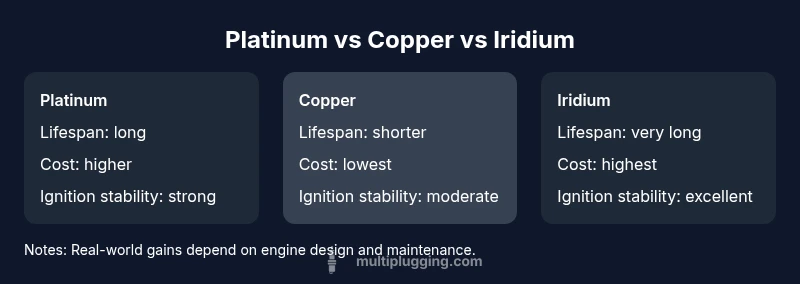
When you start comparing spark plug options, the first question is how platinum stacks up against copper and iridium. Copper plugs have historically been the baseline: they are inexpensive and easy to find, but they wear faster and degrade gap quality. Iridium plugs offer very high wear resistance and a finer center electrode, which can improve high-RPM performance but at a higher cost. Platinum plugs sit in between in terms of longevity and price, delivering good wear resistance with a respectable spark capability. The practical takeaway is: choose based on your engine requirements, maintenance tolerance, and how you drive. For many modern engines, platinum provides a dependable balance of life and performance without the premium price of iridium.
Longevity and Wear Characteristics
A central advantage of platinum is reduced electrode wear. In practice, that means the spark gap stays within spec longer, which helps maintain consistent ignition timing and hard fuel-air mixture combustion. Platinum is more resistant to chemical wear from exhaust and fuel impurities, translating into fewer plug fouling issues in some engines. While real-world lifespan depends on engine design, driving style, and maintenance, platinum plugs are commonly chosen for vehicles that see high mileage or frequent starts in varied environments. MultiPlugging's observation is that the investment pays off in fewer replacement events for many drivers, particularly those who value reliability over the lowest upfront price.
Performance Across Engine Conditions
Platinum plugs typically deliver stable ignition across a broad temperature range, including cold starts and hot engine operation. The electrode design resists fouling in many common fuels and lubricants, which helps prevent intermittent firing. For drivers who warm up slowly or repeatedly operate at different RPMs, platinum can provide smoother transitions and more consistent idle quality. However, the exact gains depend on engine design, ignition coil quality, and maintenance history. The practical conclusion is that platinum plugs are often a reliable upgrade when you notice erratic starting or rough idle, especially in mid- to high-mileage engines as part of routine maintenance.
Cost, Value, and Replacement Intervals
A practical consideration is the total cost of ownership. Platinum plugs cost more upfront than copper options, but their longer life can offset this over time if replacement intervals align with your driving patterns and maintenance schedule. In many modern vehicles, the manufacturer may spec platinum to balance performance and longevity, reducing the likelihood of misfires and uneven combustion. DIY enthusiasts who plan to perform routine maintenance can benefit from the longer service intervals, even if the initial outlay is higher. The key is to compare the replacement interval and fuel economy trends you are aiming for rather than price alone.
Compatibility and Engine Types
Not every engine benefits equally from platinum electrodes. Platinum plugs are widely compatible with many gasoline engines, particularly those with distributor-less ignition or coil-on-plug systems. For engines that require iridium or copper variants due to heat range or build constraints, a platinum substitute may not deliver the intended gains. Always refer to the owner's manual and consult the manufacturer's recommended heat range and gap specification. By aligning with the OEM guidance, you ensure you leverage platinum advantages without risking ignition issues or warranty concerns.
Installation Tips and Best Practices
When installing any spark plug, follow the manufacturer's torque specification and use clean threads to avoid cross-threading. For platinum plugs, ensure the gap is within spec and avoid heavy-handed tools that could damage the electrode. Anti-seize on aluminum cylinder heads is generally not recommended by many manufacturers today, so check the manual before applying compound. Keep a clean, organized workspace and replace spark plug wires or coils only when you have fully access to the related components. A careful approach ensures that the platinum plug's wear characteristics are preserved for as long as possible.
Common Myths and Misconceptions
A frequent myth is that platinum plugs automatically deliver dramatic fuel economy gains. While they can contribute to efficient combustion, the improvements are usually modest and highly dependent on overall engine condition and tuning. Another misconception is that platinum plugs never need replacement; in reality, every plug wears and eventually requires maintenance based on engine design and operating conditions. Finally, some drivers assume platinum equals the best option for every engine; the truth is that many engines are optimized for copper or iridium variants depending on the heat range and service intervals.
Real-World Scenarios and Decision Factors
Consider a high-mileage daily driver versus a performance-oriented hobby car. For the daily driver with long service intervals and varied temperatures, platinum often provides consistent starts and longer intervals. For a budget-focused project or an older engine with simple ignition, copper plugs may suffice. If a vehicle is tuned for optimal spark energy or high RPM operation, iridium might be the preferred premium option. The decision hinges on durability needs, maintenance habits, and the engine's original specifications.
Maintenance Planning and Choosing a Plan
Set up a predictable maintenance plan that accounts for your driving style. If you tend to drive long distances and rarely idle in traffic, platinum spark plugs may require fewer service events. If you drive in severe conditions or have a high-compression engine, verify the heat range and ensure the gap remains correct. Document the service intervals and keep a record of any misfires or rough starts. This increases your ability to adjust future replacement windows and ensures you never extend service too far beyond OEM recommendations.
How to Read Spark Plug Service Intervals
Interpreting service intervals can be confusing if you don't have a clear baseline. Look for spark plug wear indicators such as gradual gap widening, eroded electrode edges, or deposits on the plug itself. For platinum plugs, the absence of misfires and smooth running during acceleration are signs the plug is performing as designed. Always pair plug inspection with a diagnostic scan to check engine conditions, as problems beyond spark plugs can also affect performance. Keeping a careful log of inspection results helps you determine when to move to a new plug type if necessary.
Final Guidance for DIY Enthusiasts
In summary, platinum spark plugs offer a valuable balance of longevity and performance for many drivers. The choice depends on your engine's design, your maintenance tolerance, and your willingness to invest upfront for longer intervals. If you want to minimize maintenance and maximize reliability, platinum can be a sound choice, especially for modern engines. If you're constrained by budget or driving conditions favor lower-cost options, copper or iridium might be suitable alternatives. The decision should align with OEM recommendations, your driving patterns, and your maintenance readiness.
Feature Comparison
| Feature | Platinum spark plug | Copper spark plug | Iridium spark plug |
|---|---|---|---|
| Lifespan relative to copper | longer life | shorter | comparable |
| Upfront cost | higher | lower | higher |
| Ignition stability at hot/cold starts | strong | moderate | excellent |
| Fouling resistance | good | average | excellent |
| Compatibility with modern engines | high | high | very high |
Strengths
- Longer replacement intervals reduce maintenance frequency
- Better wear resistance translates to more consistent performance
- Improved ignition stability across a wide range of conditions
Negatives
- Higher upfront cost compared to copper plugs
- Not all engines benefit equally from platinum electrodes
- Availability may vary by region and model
Platinum spark plugs offer a compelling balance of longevity and reliability for most modern engines, with higher upfront cost offset by fewer replacements.
If your goal is fewer maintenance events and steady ignition, platinum is often the better choice. For strict budget constraints or older engines, consider alternatives.
FAQ
Are platinum spark plugs worth the extra cost?
In most modern engines, platinum plugs last longer and provide stable ignition, which can offset the higher upfront price over time. Always compare replacement intervals and manufacturer recommendations.
Platinum plugs last longer and keep ignition stable, which often offsets the upfront price. Check your engine's guidelines to be sure.
Do platinum plugs last longer than copper plugs?
Yes, platinum electrodes resist wear better than copper, leading to longer service life and more consistent performance under varied conditions.
Yes, platinum typically lasts longer than copper due to wear resistance.
Can platinum plugs be used in any engine?
Platinum plugs are widely compatible with many gasoline engines, but you should always follow the vehicle manufacturer's specification and recommended heat range.
They’re compatible with most engines, but verify heat range with the owner’s manual.
Do platinum plugs improve fuel economy?
They can contribute to stable combustion, which may help maintain efficiency, but gains are usually modest and engine condition matters more.
They can help modestly, but don’t expect big MPG jumps.
What maintenance is needed with platinum plugs?
Follow the replacement intervals recommended by the vehicle manufacturer; inspect for fouling or wear during service and avoid overtightening during installation.
Follow the maker's intervals and inspect for wear during service.
Main Points
- Opt for platinum for longevity and reliability in modern engines
- Weigh total cost of ownership, not just upfront price
- Check engine manufacturer recommendations before buying
- Consider replacement intervals and maintenance plan
- A well-chosen plug type can improve idle and throttle response