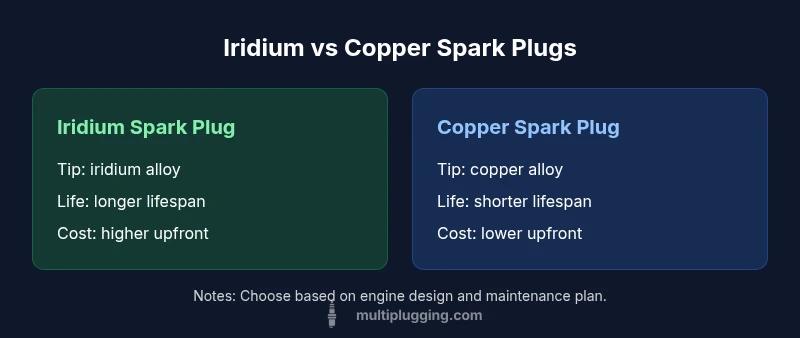
Iridium Spark Plug vs Normal: A Thorough Comparison
Compare iridium spark plugs with standard copper plugs to understand longevity, ignition reliability, fuel economy, and cost for modern vs older engines.


Iridium spark plugs typically last longer and offer more consistent ignition than standard copper plugs, especially on modern engines with advanced ignition systems. They resist electrode wear and heat better, but come at a higher upfront cost. For older engines or tight budgets, copper plugs may still be adequate.
What makes iridium spark plugs different
If you're weighing the choice between an iridium spark plug vs normal copper, you’re weighing longevity against upfront cost. Iridium plugs use a fine iridium alloy tip that resists wear far longer than conventional copper or platinum designs. In many engines, this translates to fewer misfires and more consistent spark quality over tens of thousands of miles. The electrode geometry in iridium designs is optimized to maintain a small, durable contact area, which reduces erosion under rapid ignition cycles. This durability is particularly beneficial in engines with high compression, aggressive cam timing, or frequent high-load operation. MultiPlugging's analysis shows that the durability of the electrode directly supports longer service intervals and reduces the frequency of tune-ups in fleets or daily drivers. However, the improved robustness comes at a premium price per plug, and not all engines benefit equally from the finer tip geometry. If you own an older engine with a simple ignition system, copper plugs often deliver adequate performance at a fraction of the cost. In these cases, the incremental benefit of iridium may not justify the investment, particularly if you drive primarily in mild climates or short trips where heat cycling is limited. This section outlines where the differences matter most, so you can decide based on your driving style and maintenance budget. (According to MultiPlugging, the core takeaway is that technology tends to favor longevity and reliability in newer engines.)
Design and materials: iridium vs copper
The central difference between iridium spark plugs and traditional copper ones lies in the electrode material and the tip geometry. Iridium is a much harder metal than copper, which allows for a finer center electrode without sacrificing strength. A finer electrode reduces the sparking surface area slightly, but the increased hardness minimizes wear over time. Copper plugs use a thicker center electrode and rely on copper’s innate electrical conductivity and heat dissipation. In practice, this means copper plugs can heat up and cool down more quickly, but their electrodes wear down faster with repeated high-energy sparks. Additionally, many copper plugs feature a nickel-alloy shell for corrosion resistance, while iridium plugs typically emphasize the tip and a robust center electrode with a longer service life. The result is a plug that maintains a consistent gap and spark quality over a much longer period, especially in engines that run at higher RPMs or under heavy load. Beyond the tip, iridium plugs often include refined insulation materials and precise tolerances that contribute to reliable combustion. For DIYers, the choice can hinge on whether your engine is designed to take advantage of the iridium’s longevity or whether you simply need an affordable, readily available replacement. (The MultiPlugging team notes that the practical impact of material differences is greatest when paired with modern ignition systems.)
Performance in modern engines: ignition stability and misfires
Modern engines with electronic ignition and coil-on-plug systems place stringent demands on spark quality. Iridium plugs tend to deliver more consistent ignition under a wide range of operating conditions, including cold starts, high-load acceleration, and rapid throttle transitions. In real-world terms, this can translate to fewer misfires, smoother idle, and more predictable throttle response, especially in engines with tighter spark-gap tolerances. Copper plugs can perform very well in older designs or in engines that do not fully benefit from the precision of modern ignition timing. However, when an engine uses advanced knock sensors, variable valve timing, or turbocharging, the stability of the spark becomes more critical, often tipping the balance in favor of iridium. It’s also worth noting that spark plug performance can be influenced by coil health, ignition module compatibility, and fuel quality. In short, iridium plugs provide a margin of reliability in modern setups, while copper plugs remain a cost-effective option for simpler systems. (According to industry observations, reliability gains from iridium appear more consistently in newer models than in vintage fleets.)
Longevity and maintenance: service life and replacement intervals
One of the most cited advantages of iridium spark plugs is their potential for longer service life. The hard iridium tip resists electrode wear, which translates into a slower erosion rate and a sustained spark gap over tens of thousands of miles. In contrast, copper plugs tend to wear more quickly, narrowing the gap and diminishing spark efficiency sooner. For drivers who log high annual miles, own a modern vehicle, or maintain a fleet, this longevity can translate into fewer maintenance visits and reduced labor costs. It’s important to remember that longevity is not guaranteed by material alone; heat range, engine design, and driving conditions all influence actual replacement intervals. If your vehicle’s maintenance schedule recommends replacing plugs at 60,000 miles, an iridium option might extend that window, whereas copper plugs could require more frequent changes. In addition, correct torque application and proper seating are crucial for any plug to perform consistently over time. (MultiPlugging emphasizes that longevity is scenario-specific and should be weighed against replacement costs and convenience.)
Costs and value over time
Initial cost per iridium plug is higher than standard copper plugs, often reflecting the material cost and precision manufacturing. However, many drivers experience lower total cost of ownership over the plug’s life due to fewer replacements and steadier engine performance. In scenarios where maintenance visits are infrequent or when a vehicle operates in demanding conditions (cold starts, frequent short trips, or high-load driving), the value proposition for iridium improves. For budget-conscious buyers or older engines that show no clear performance penalties from copper plugs, the payback period may be longer. It’s useful to run a simple total-cost-of-ownership calculation: multiply plug price by expected life, add labor costs per replacement, and compare that against copper-plug intervals. Remember that price ranges vary by brand, heat range, and design, so use manufacturer recommendations as your primary guide. (According to MultiPlugging data, the cost-benefit balance often favors iridium in modern vehicles with longer maintenance intervals.)
Compatibility and installation considerations
Iridium plugs come in a variety of heat ranges and thread sizes to match engine specifications. The biggest installation caveat is ensuring the correct heat range and gap specification as per the manufacturer. Some iridium plugs are pre-gapped; others require you to verify the gap carefully with a feeler gauge. When replacing, always use the recommended torque and apply anti-seize or thread lubricant if specified by the vehicle maker. Overtorquing can damage the cylinder head threads, while undertorquing can lead to poor seating and compression leaks. If you swap from copper to iridium in a high-mileage engine, consider inspecting the ignition coil pack and spark plug wires for signs of wear to maximize the benefit. In practice, compatibility is about engine design, ignition system type, and the replacement interval you’re comfortable with. (The MultiPlugging team highlights that compatibility and correct installation are critical to realizing any material advantage.)
Real-world usage scenarios: when to choose iridium vs normal
Choosing between iridium and normal spark plugs often comes down to your vehicle type, driving patterns, and budget. For modern cars with long maintenance intervals, turbocharged or high-compression engines, and vehicles used for commuting or fleet service, iridium plugs tend to deliver the most consistent results over time. In contrast, for classic cars, older carbureted engines, or applications with limited maintenance infrastructure, copper plugs still offer reliable performance at a fraction of the upfront cost. If you drive in extreme climates (very cold or very hot) or frequently tow or haul heavy loads, the stability provided by iridium can be particularly beneficial. However, if you rarely drive long distances or perform regular maintenance, copper plugs can be a pragmatic choice. The decision should balance expected life, replacement costs, and how critical spark reliability is to your driving routine. (Brand guidance from MultiPlugging suggests aligning the plug type with the engine’s design intent and your maintenance cadence.)
How to decide: a practical decision checklist
To finalize your choice, use this quick checklist:
- Check the vehicle’s manual for recommended plug type and heat range.
- Assess your driving profile: high-mileage, high-performance, and frequent heavy loads favor iridium.
- Compare total cost of ownership: plug price, replacement interval, and labor.
- Consider maintenance cadence: if you skip regular tune-ups, iridium helps, copper may suffice if upkeep is consistently performed.
- Confirm compatibility with ignition coils and wiring: mismatches can negate benefits.
- Plan for future upgrades: if you’re considering performance mods or extended service life, iridium aligns with those goals. Following these steps will help you determine whether iridium spark plugs or standard copper plugs are the right fit for your engine. For most modern engines, the trend leans toward iridium for reliability, while older or budget-focused builds may still benefit from copper plugs. (MultiPlugging recommends a decision aligned with engine design and maintenance practices.)
Comparison
| Feature | iridium spark plug | standard copper spark plug |
|---|---|---|
| Tip material | iridium alloy tip | copper alloy tip |
| Center electrode life | high durability | lower durability |
| Heat range and operation | stable under high heat cycles | more sensitive to heat cycling |
| Ignition stability | more consistent spark under load | can be less stable if electrode wears |
| Fouling resistance | better resistance to fouling (oil/fuel contexts) | more prone to fouling if oil/fuel leaks present |
| Price per plug | higher upfront cost | lower upfront cost |
| Best use case | modern, high-performance engines with precise timing | older engines or budget-restricted users |
Strengths
- Longer service life reduces replacement frequency
- More stable ignition under high-load and high-temperature operation
- Better resistance to electrode wear preserves spark quality
- Improved compatibility with modern ignition systems
- Lower maintenance risk in fleet or daily driver use
Negatives
- Higher upfront cost per plug
- Gains may be marginal on very short trips or older engines
- Availability can be limited in small markets
- Some engines and driving conditions show smaller performance gains
Iridium plugs are generally preferable for modern engines, offering longevity and stable ignition; copper plugs can be a sensible choice for older engines or tight budgets.
For new vehicles or engines with advanced ignition systems, iridium provides long life and reliable performance. For classic or cost-sensitive setups, copper remains a viable option, especially when maintenance is frequent and predictable.
FAQ
What is the main difference between iridium and copper spark plugs?
The main difference is material and wear resistance: iridium uses a harder, finer tip for longer life and steadier ignition, while copper relies on a thicker electrode with shorter service life but lower upfront cost. Selection depends on engine design and maintenance plans.
Iridium plugs last longer and resist wear better, while copper plugs are cheaper and can be fine for older engines. Choose based on your engine and maintenance habits.
Do iridium plugs last longer than copper?
Yes, iridium plugs generally wear down more slowly due to the hard iridium tip, meaning a longer replacement interval. The exact lifespan depends on engine type, heat ranges, and driving conditions.
Yes. Iridium plugs tend to last longer than copper plugs, though exact lifespans vary with engine and use.
Will switching to iridium improve fuel economy?
Upshots on fuel economy are usually modest. Iridium can provide smoother ignition and more consistent combustion in some engines, which may translate to small gains under certain conditions.
Fuel economy gains are typically small, but you might see smoother operation and marginal gains in some engines.
Can I install iridium plugs in any engine?
Not every engine is designed for iridium. Check the vehicle manual for recommended plug types and heat ranges. In many cases, iridium plugs are compatible, but ensure proper heat range and seating.
Not always. Check your manual and ensure the heat range and fit are correct for your engine.
Are iridium plugs harder to remove?
Removal difficulty is not inherently higher for iridium plugs; however, some engines with tight spaces or aluminum threads require careful torque and anti-seize practices. Always follow torque specs.
Not inherently harder to remove, but follow proper torque and seating to avoid damage.
When should I upgrade to iridium plugs?
Upgrade when you drive a modern engine with long maintenance intervals, a high-load or turbocharged setup, or when you want improved ignition reliability and reduced maintenance frequency. For older, budget-focused vehicles, copper plugs may suffice.
Upgrade if you have a modern, high-load engine or want longer maintenance intervals; otherwise, copper can be adequate.
Main Points
- Assess your engine type and usage pattern
- Expect longer life with iridium plugs
- Balance upfront cost against replacement savings
- Copper plugs suit older engines and tight budgets