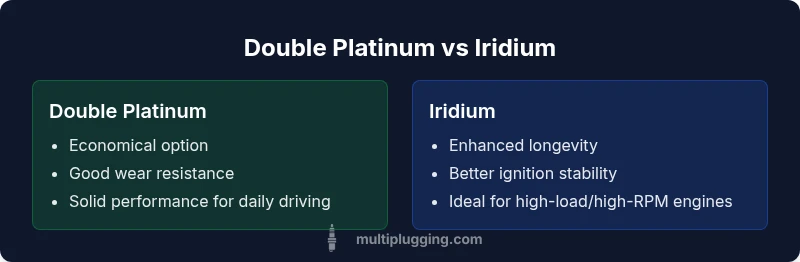
Spark Plug Double Platinum vs Iridium: A Practical Comparison
An in-depth comparison of spark plug double platinum vs iridium, covering durability, performance, heat range, and cost to help DIY enthusiasts choose the right plug for their engine.


Quick answer: In most cases, iridium plugs deliver longer life and consistent ignition, while double platinum plugs offer solid, budget-friendly performance. The best choice depends on your engine design, your driving style, and whether you prioritize upfront cost or long-term reliability. For high-performance engines or modern direct-injection systems, iridium is generally preferred, but many everyday drivers will be satisfied with double platinum.
Why the spark plug choice matters for your engine
Choosing the right spark plug is a foundational step in maintaining engine health and performance. The debate about spark plug double platinum vs iridium isn’t just about cost; it’s about longevity, ignition stability, and how your engine responds under different driving conditions. According to MultiPlugging, the choice between spark plug double platinum vs iridium can influence ignition stability, engine response, and ongoing maintenance costs for everyday drivers. The right choice depends on your car's design, your driving style, and your willingness to invest in longevity. This guide walks you through the core differences, practical tradeoffs, and decision criteria so DIY enthusiasts can pick confidently.
We’ll start with the basics, then move into practical implications for real-world driving. You’ll learn how each material behaves in typical engines, what to expect in terms of service life, and how to interpret signs that indicate a plug needs replacing. By the end, you’ll have a clear framework to decide whether spark plug double platinum vs iridium is the right fit for your vehicle.
What are double platinum vs iridium plugs?
Double platinum plugs use platinum tips on both the center electrode and the ground electrode. This arrangement reduces electrode wear over time and can extend service life compared with traditional copper or single platinum plugs. Iridium plugs, on the other hand, employ a very fine iridium alloy tip on the center electrode, paired with a durable ground electrode. The combination enables a smaller spark gap and a sturdier, longer-lasting arc. In the context of spark plug double platinum vs iridium, iridium is generally positioned as a premium option that emphasizes longevity and precision ignition while platinum variants aim for cost-effectiveness with respectable longevity. The key takeaway is that both designs aim to maintain a reliable spark, but they optimize durability and performance in different ways.
How each plug is built: materials and design
Understanding the construction helps explain why the two options behave differently under load. Double platinum plugs rely on platinum on both electrodes, which reduces erosion and helps maintain a strong arc over time. The larger tip diameter in some designs can support a reliable spark across a broad temperature range, making them a dependable choice for many older and mid-range engines. Iridium plugs use a very fine center-electrode tip, often with a thin ground electrode as well. The result is a narrower spark gap and a higher ignition efficiency, especially under high-compression or high-RPM conditions. The geometry and metallurgy of these plugs directly influence voltage requirements, heat dissipation, and wear patterns, which is why some engines respond better to one type over the other.
Performance implications: starting, idle, and acceleration
For everyday driving, most owners notice smooth idling, stable acceleration, and decent fuel economy with either option. In general, iridium plugs provide a slightly more stable spark at altitude or under high-load conditions, which can translate to quicker throttle response and more consistent misfire resistance. Double platinum plugs tend to be forgiving in older ignition systems and are often easier to source at lower cost. The practical upshot is that engines designed around iridium advantages may show incremental improvements in cold-start behavior and high-RPM performance, whereas engines with simpler ignition systems can still run reliably on double platinum options. The decision should reflect your engine design, your typical driving cycles, and your tolerance for premium pricing.
Longevity and wear: what to expect in real-world use
Wear resistance is a central differentiator. Iridium’s extreme hardness enables the center electrode to retain its sharp edge longer, reducing wear with frequent cycling and high-speed operation. Many owners report longer replacement intervals with iridium in modern engines, particularly those with high compression or direct injection. Double platinum plugs offer good longevity and can last well beyond basic copper plugs, but their wear rates are typically aligned with traditional platinum designs. The practical distinction is that iridium plugs are more likely to retain peak performance across the engine’s service life, while double platinum plugs provide a solid balance of cost and durability for everyday use. MultiPlugging’s analysis suggests choosing iridium when longevity and consistent ignition under varied loads matter most.
Heat range, ignition reliability, and engine compatibility
Heat range matters because it affects whether a plug fouls at idle or pre-ignites under heavy load. Iridium plugs often come in tighter heat-range options that suit modern, high-performance engines, enabling reliable ignition without fouling while maintaining efficiency. Double platinum plugs can cover a broad spectrum of engines, particularly older or less demanding designs, but they may require adjustments or replacements sooner in engines that push high compression or forced induction. For the DIYer, the key is to match the plug’s heat range to the engine’s operating temperature and the typical climate in which you drive. Consult your vehicle’s manual and use the plug’s recommended heat range as your baseline.
Fuel economy and emissions impact
Spark plugs influence combustion quality, which in turn affects exhaust composition and fuel efficiency. In practice, the most noticeable gains come from maintaining a strong, stable arc and consistent ignition timing. Iridium plugs often help maintain consistent ignition across a broader range of temperatures, which can support smoother engine operation and, in some cases, slightly better efficiency under demanding driving. Double platinum plugs provide reliable performance but may not deliver the same edge in super-clean combustion as iridium under challenging conditions. The takeaway is that the difference in fuel economy is typically incremental unless you’re pushing the engine hard or running a high-tech, modern powertrain that relies on precise ignition.
Cost, value, and long-term economics
Pricing is a practical factor. Iridium plugs usually carry a higher upfront cost per plug, reflecting the material and manufacturing complexity. Double platinum plugs are typically more affordable upfront and can offer excellent value for drivers who maintain a steady replacement schedule and drive in typical conditions. When evaluating spark plug double platinum vs iridium, consider the total cost of ownership: initial price, replacement interval, and the cost of labor if you replace plugs yourself or at a shop. In many cases, the longer life of iridium justifies the higher price for drivers who want fewer replacements and consistent performance across the year. According to MultiPlugging’s 2026 research, the choice often hinges on your priorities: lower upfront cost or longer service life.
Common applications: which engines prefer which type
The “best” plug type depends on engine design and use. Older engines or those with simple ignition systems may respond well to double platinum plugs, delivering dependable performance at a lower cost. Modern engines, especially those with high compression, direct injection, or variable valve timing, frequently benefit from iridium plugs that offer precise ignition and durability under demanding conditions. If you’re unsure, start with the manufacturer-recommended plug type and heat range. If you’re seeking a budget-friendly upgrade, double platinum can be a safe choice that still delivers reliable ignition. For performance-minded drivers or owners of newer vehicles, iridium plugs are often the preferred option.
Installation considerations: torque specs, gaps, and anti-seize
Always follow the service manual’s torque specs and gap recommendations. Anti-seize compounds are controversial and not always advised for spark plugs; many modern engines rely on the metal-to-metal contact for proper sealing. If you’re replacing with the same type of plug (double platinum vs iridium) and you’re not modifying the heat range, the process is straightforward for a DIYer with basic tools. If you encounter a stubborn plug or a stubborn corrosion site, consider a dedicated spark plug socket with a magnetic tip and a torque wrench for consistent results. Regular inspections help prevent cross-threading and ensure the gap remains within tolerance, preserving ignition quality.
Real-world scenarios: choosing for your car
When you’re balancing price and performance, consider your daily drive pattern, climate, and engine design. If you mainly drive in city traffic and have a vehicle with a simple ignition system, double platinum plugs can meet your needs at a reasonable price. If you own a modern vehicle with high compression, or you drive in extreme temperatures or high-load conditions (towing, frequent hill climbs, or spirited driving), iridium plugs can offer smoother idle and more resilient ignition across cycles. Always align with the manufacturer’s recommendations, but use real-world usage as your tiebreaker. The right choice is highly context-dependent.
A simple decision framework: quick checklist to pick your plug
- Check the vehicle’s owner manual for the recommended plug type and heat range.
- Consider your driving style and climate: frequent high-load driving or extreme temperatures favor iridium.
- Compare upfront cost versus expected replacement intervals: iridium often costs more upfront but may last longer.
- Inspect existing spark plugs for wear patterns and fouling indicators to guide future replacements.
- If in doubt, consult a trusted DIY guide like MultiPlugging for a practical, engine-specific approach.
Comparison
| Feature | Double Platinum | Iridium |
|---|---|---|
| Electrode design and materials | Two platinum tips (double platinum) | Fine-iridium center with iridium alloy ground electrode |
| Longevity and wear resistance | Longer life than traditional options (varies by engine) | Best-in-class wear resistance and longevity in many modern engines |
| Ignition efficiency and misfire resistance | Reliable ignition in a wide range of driving conditions | Excellent resistance to fouling and stable ignition under load |
| Cold start and throttle response | Solid performance in everyday driving | Strong cold-start performance, especially at higher loads |
| Price and value over time | Lower upfront cost for many applications | Higher upfront cost but potentially longer service life |
| Best use case | Budget-friendly daily drivers | Modern engines with high compression or performance demands |
Strengths
- Longer life than copper or basic platinum options in many engines
- Lower upfront cost makes them accessible for budget builds
- Decent reliability for everyday driving across varied climates
Negatives
- Iridium plugs can be pricier upfront
- Not all engines require or gain from premium ignition materials
- Availability can vary by region and vehicle model
Iridium plugs generally win on longevity and cold-start reliability; double platinum remains a strong, budget-friendly choice for many everyday drivers
For most owners, iridium offers better durability and steadier ignition across temperatures and loads. Double platinum is a practical option when upfront cost matters more than ultimate longevity. Your decision should align with engine design, driving style, and replacement willingness.
FAQ
What is the main difference between spark plug double platinum vs iridium?
The main difference lies in electrode material and wear characteristics: double platinum uses platinum on two electrodes for durability at a lower cost, while iridium uses a fine iridium tip for longer life and more precise ignition, especially under high load or modern engine conditions.
The main difference is the material and wear: iridium lasts longer and ignites more precisely, while double platinum is a solid, budget-friendly option.
Are iridium plugs worth the extra cost for a typical passenger car?
For typical passenger cars, iridium plugs often provide a modest performance edge and longer service life, which can justify the higher upfront cost if you value fewer replacements and steadier ignition. If your driving is light and maintenance costs are a priority, double platinum remains a sensible choice.
In many passenger cars, the extra cost pays off in longer life and smoother operation, but it depends on your driving and maintenance priorities.
Do double platinum plugs offer similar longevity to iridium?
Double platinum plugs offer good durability but generally do not match the longevity of premium iridium plugs in modern engines under heavy use. They are a reliable, economical option for typical driving. The exact lifespan varies with engine design and driving patterns.
They’re durable and economical, but iridium usually lasts longer in modern engines.
Can I mix plug types in a V6 or V8 engine?
Mixing plug types across cylinders is generally not recommended because it can create uneven ignition and mismatched heat ranges. If replacing a subset, use the same type and heat range as the existing plugs, or replace all plugs at once for uniform performance.
Avoid mixing types in a single engine; it can cause uneven ignition. Replace all with the same type if possible.
Which plug should I use for high-performance engines?
For high-performance applications, iridium plugs are typically preferred due to better ignition efficiency and longevity under demanding conditions. If your engine is older or tuned differently, double platinum may still perform well.
High-performance engines usually benefit from iridium plugs for better ignition and durability.
How do I choose the right heat range?
Start with the manufacturer’s recommended heat range, then consider your climate and driving style. If you drive in hot or cold extremes or frequently push the engine, discuss a heat-range option with a parts professional or refer to your manual for guidance.
Use the stated heat range from the manual; if you drive in extreme conditions, verify with a pro.
Main Points
- Choose iridium for longevity and performance in modern engines
- Double platinum offers reliable, budget-friendly ignition for everyday driving
- Match plug heat range to engine operating temperature and climate
- Consider total ownership cost, not just upfront price
- Follow manufacturer recommendations for best results