Can You Use Platinum Spark Plugs Instead of Iridium? A Practical Guide
Explore whether platinum spark plugs can replace iridium, how material differences affect durability and performance, and practical steps for a safe DIY swap. Includes a side-by-side comparison and expert guidance from MultiPlugging.


Can you use platinum spark plugs instead of iridium? In many cases you can, but it depends on OEM specs, heat range, and engine design. Iridium plugs typically offer longer life and slightly sharper ignition, while platinum plugs provide a cost-effective option. Always consult the owner's manual or a trusted parts guide before swapping, and ensure the correct gap and torque for your engine. For DIYers, a cautious, spec-driven approach is best.
Can you use platinum spark plugs instead of iridium in common engine types?
When people ask, can you use platinum spark plugs instead of iridium, the answer hinges on the vehicle’s original equipment specifications. Modern engines designed around iridium electrodes often benefit from their longevity and consistent performance, but some engines will tolerate platinum replacements without noticeable downsides for daily driving. According to MultiPlugging, swapping between these materials is not a universal green light—it's a spec-by-spec decision. Always verify with the factory service manual, or a parts guide that cites your exact engine and model year. If your manual permits platinum as an equivalent for the OEM iridium, you’ll typically see a modest price advantage and similar combustion stability for routine use. Even if a substitution is technically possible, guarantee that heat range, electrode geometry, and the gap are aligned with the original design. The MultiPlugging team emphasizes that the safest swaps respect the engineering intent of the ignition system.
How material choices impact spark plug performance
Spark plug material influences how a plug handles heat, wear, and fouling across engine cycles. Iridium is harder and more resistant to electrode wear, which translates into longer life and stable performance under high-load conditions. Platinum, while softer, still offers good resilience and reliable light-load performance, but it may wear faster in engines subjected to aggressive driving or high compression. The takeaway is not a universal downgrade for platinum; rather, it’s about matching the material to the engine’s heat range and duty cycle. The MultiPlugging analysis highlights that many everyday vehicles operate just fine with platinum if the heat range and gap are tuned to the manufacturer’s specifications. For tuning enthusiasts, iridium often remains preferred for high-performance or modern engines, while platinum shines in budget-friendly, lower-stress use cases.
Platinum spark plugs: What they do well
Platinum plugs are typically cost-effective and widely available, making them attractive for routine maintenance and older vehicles. They offer solid ignition performance, consistent fuel combustion, and predictable heat response in mild driving scenarios. For drivers with older engines or vehicles where OEMs did not mandate ultra-high wear resistance, platinum can be a sensible substitute when iridium is not strictly required by the period-correct design. The benefit is lower upfront cost and simpler substitution paths in many markets. However, the caveat remains that some modern engines intentionally leverage the longevity and stability of iridium electrodes, so be mindful of engine-specific recommendations.
Iridium spark plugs: Why they're popular in modern engines
Iridium plugs dominate many newer vehicles due to their long life and robust performance under a wide range of operating conditions. The very hard iridium alloy resists electrode wear, which helps maintain consistent spark quality over a longer service interval. In engines with high compression, turbocharging, or aggressive timing, iridium often preserves good cold-start behavior and stable idle across longer miles. The trade-off is typically higher unit cost and, in some cases, limited compatibility with non-OEM heat ranges. The MultiPlugging team notes that for most drivers who prioritize reliability and minimum maintenance, iridium remains the safer, more durable option. Still, platinum can be an acceptable substitute in engines not explicitly requiring iridium, provided the heat range matches the OEM specification.
OEM specifications and compatibility: reading the manual
Before attempting any swap, locate the exact OEM specification for your engine. Some manufacturers explicitly state that platinum is an acceptable substitute for iridium, while others require the original material. If a substitution is permitted, confirm the heat range, electrode geometry, and recommended gap with the manual or a trusted parts catalog. Warranty considerations are another factor: many warranties hinge on OEM-specified parts, and substituting materials can affect coverage. The MultiPlugging team recommends contacting the dealership or service advisor if you are unsure. A careful check ensures you aren’t compromising performance or warranty coverage for a marginal saving.
Heat range, gap, and torque: key setup considerations
The heat range describes how quickly a plug transfers heat from the tip to the end of the thread. When substituting platinum for iridium, verify that the heat range remains within the engine’s designed window. Gapping must be set precisely; a misaligned gap can cause misfires or reduced efficiency. Tightening torque should follow the manufacturer’s specification to avoid damaging the cylinder head threads or compromising sealing. Even if a platinum replacement is allowed, incorrect heat alignment or improper torque can negate any perceived cost savings. The best practice is to use the same gap specification as the original plug and, where possible, fit the correct recommended heat range from the manual.
Cost and longevity: comparing lifetime value
Cost per plug often correlates with plug lifespan and performance persistence. Iridium plugs generally command a higher price but offer longer replacement intervals in many engines, reducing maintenance downtime. Platinum plugs usually cost less upfront and can be a quick fix for older engines or mild driving patterns. The total cost of ownership should consider replacement intervals, labor, and the risk of fouling or misfires if heat range alignment isn’t ideal. In many everyday scenarios, platinum substitutions balance cost and reliability, whereas iridium is favored for engines designed to take maximum advantage of long-life electrodes. Keep in mind that engine type and climate can shift this balance.
When platinum might be appropriate: real-world scenarios
For older vehicles or engines where the OEM specification supports platinum substitutes, platinum plugs can be a pragmatic choice. They deliver solid performance for daily commuting, city driving, and stop-and-go use where the engine doesn’t routinely push into high-load conditions. In such cases, the cost savings and simpler replacement can be compelling. For engines built around higher-performance ignition, or vehicles that endure frequent high-load operation, sticking with iridium is often the safer bet. MultiPlugging’s guidance highlights that the decision should be engine-specific and guided by the official service manual.
When iridium remains the better choice
In most modern, high-efficiency engines, iridium remains the preferred material because of its superior wear resistance and stable ignition at a variety of operating conditions. If your vehicle is under warranty, or if you rely on consistent performance across a broad temperature and load range, iridium provides a resilient, long-life option. If you perform frequent high-speed driving, towing, or performance tuning, the durability of iridium and its compatibility with modern heat ranges tend to outperform platinum. The MultiPlugging analysis reinforces this conclusion for a wide range of vehicles, though exceptions exist for certain OEM-approved substitutions.
Safety, installation steps for DIY swaps
If you choose to swap, follow a careful, step-by-step process to minimize the risk of thread damage or misfires. First, verify the recommended torque with a calibrated torque wrench and apply anti-seize if applicable per the manufacturer’s guidelines. Then, adjust the gap to the OEM specification, and inspect the ignition system for signs of arc wear or fouling. After installation, perform a careful vacuum-test and a slow idle to observe for any misfires or rough running. Always use a high-quality gapping tool and the correct spark plug socket to avoid nicking the electrode. MultiPlugging’s practical tips emphasize cleanliness and correct torque as the foundation of a successful swap.
Common myths and misperceptions
A common myth is that platinum universally lasts longer than iridium in every engine; reality varies with heat range, ignition timing, and driving conditions. Another misconception is that platinum will always reduce fuel economy. In practice, fuel economy is more strongly affected by overall engine tuning and maintenance than by spark plug material alone. A third myth is that all engines can interchange spark plug materials without check; the OEM heat range and electrode geometry often dictate compatibility. Finally, some drivers assume platinum means low-cost performance with no trade-offs; the truth is that the balance of cost, longevity, and performance depends on the engine and use case.
Real-world testing tips and troubleshooting after swap
After a swap, run the engine through a full warm-up cycle and monitor for smooth idle, consistent acceleration, and steady ignition behavior. If misfires or rough running appear, recheck the gap and torque, ensuring no cross-threading occurred. Use a basic diagnostic scan if available to verify no misfire codes are present, and inspect ignition cables and coils for wear. Inconsistent performance can often be traced back to incorrect heat-range selection, gap misalignment, or a weak ignition system rather than the plug material itself. The goal is reliable, repeatable performance with minimal maintenance.
Comparison
| Feature | Platinum spark plugs | Iridium spark plugs |
|---|---|---|
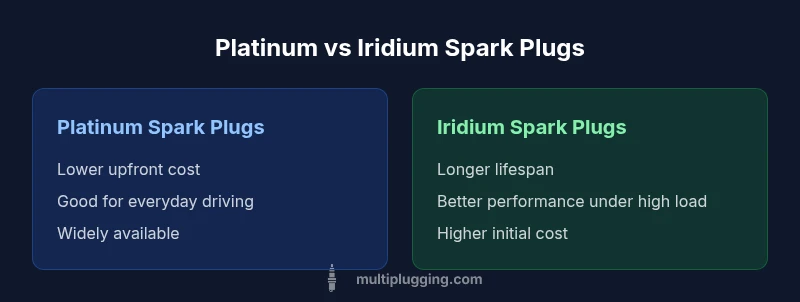
| Longevity / Durability | Moderate lifespan; may wear faster than iridium in modern engines | Longer lifespan; high wear resistance in typical modern designs |
| Cost per plug | Lower upfront cost per plug | Higher upfront cost per plug but potential long intervals |
| Heat range stability | Good stability for many engines, but depends on design | Excellent stability and heat resistance in most modern engines |
| Starting performance | Reliable starting for everyday driving | Sharper ignition can improve cold starts in some engines |
| Recommended applications | Older vehicles or budget builds with compatible heat range | Modern high-performance or high-compression engines |
| Warranty considerations | Possible OEM-aligned substitutions; check warranty terms | Typically aligned with OEM iridium recommendations when required |
Strengths
- Lower upfront cost per plug
- Widely available and easy to source
- Good all-around performance for typical daily driving
- Sufficient for engines not strictly requiring iridium
Negatives
- Shorter service life in many modern engines
- May offer less resistance to wear under high-load conditions
- Some OEMs restrict material substitutions, potentially affecting warranty
Iridium remains the safer default for most modern engines; platinum is a viable, cost-friendly substitute for older or non-critical applications.
Choose iridium if your engine OEM specifies it or you demand maximum longevity. Opt for platinum when you need a budget-friendly option and the OEM allows substitution, keeping heat range and gap aligned.
FAQ
Can platinum plugs be used in engines designed for iridium?
In some cases, platinum substitutes are permitted by the manufacturer, but always confirm with the manual or parts guide. Not all engines tolerate material changes, and improper substitutions may affect performance or warranty.
Platinum can be used in some cases where the manual allows it, but always confirm with the manual to avoid warranty or performance issues.
Do platinum plugs last as long as iridium?
Iridium generally offers longer electrode life, especially in demanding driving conditions. Platinum can wear faster in high-load or modern engines, though it may be adequate for light-duty use.
Iridium usually lasts longer; platinum can wear faster, but may be fine for everyday, light use.
Will using platinum affect fuel economy or starting performance?
Fuel economy and cold-start performance are influenced by many factors, including heat range and ignition timing. Material alone is not usually the sole determinant, but mismatches can affect efficiency in some engines.
Fuel economy depends on several factors; plug material can play a role if heat range or gap is off.
Are there engines that require iridium plugs?
Yes, some modern engines are designed specifically for iridium and rely on its longevity and ignition stability. Check the owner's manual or dealership guidance for confirmation.
Some engines require iridium by design; always check the manual or with the dealer.
Does substituting affect warranty coverage?
Substituting spark plug materials can affect warranty in some cases. Always verify warranty terms and consult the manufacturer if in doubt before swapping.
Substituting can impact warranty; check terms and ask the manufacturer if unsure.
How can I tell which type my engine needs?
Consult the vehicle’s service manual or OEM documentation. Look for the exact part number and heat range. If in doubt, contact a dealership or qualified technician.
Check the manual or parts catalog for the exact type and heat range, or ask a dealer.
Main Points
- Check OEM specs before swapping
- Match heat range and gap precisely
- Weigh upfront cost against potential longevity
- Engine compatibility determines substitution viability
- Warranty implications matter