Which Spark Plug Is Better: Iridium vs Platinum — A Practical Guide
A data-driven comparison of iridium and platinum spark plugs to help DIYers choose longevity, performance, and value for their engines.


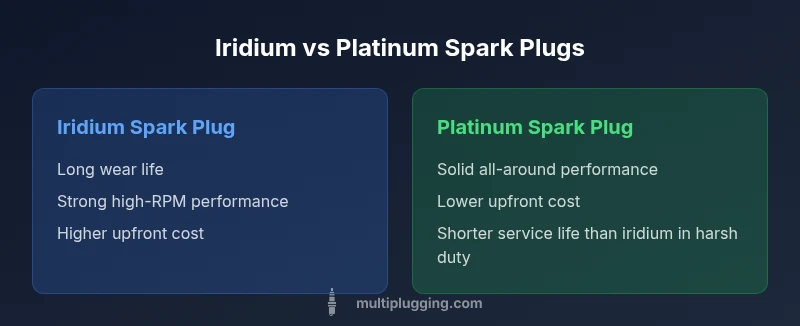
Which spark plug is better depends on your engine and priorities. In most everyday driving, platinum plugs offer solid performance at a lower upfront cost, while iridium plugs deliver longer life and stronger high-RPM performance. For harsh conditions or high-mileage engines, iridium often wins on longevity, while platinum remains a strong all-around choice for budget-focused users.
Why the question 'which spark plug is better' matters for engine performance
Choosing the right spark plug is not merely about price or brand. For most car owners, the ultimate measure of 'better' hinges on compatibility with your engine design, driving conditions, maintenance schedule, and how you value longevity versus upfront cost. The phrase 'which spark plug is better' invites a comparison of materials (copper-core vs platinum vs iridium), electrode design, heat range, and construction quality. The decision also depends on whether your engine is modern with precise ignition timing or an older design that tolerates wider tolerances. As you evaluate options, consider how often you drive, whether you push the engine hard in gears or keep a relaxed cruise, and whether you perform maintenance yourself or rely on a shop. Throughout this article, we’ll use clear criteria to judge spark plugs on durability, performance, and value. By the end, you’ll be equipped to pick the plug that aligns with your priorities without overpaying or sacrificing reliability. This discussion will reference typical OEM guidance and general field experience, not cherry-picked anecdotes.
Understanding spark plug types: copper-core, platinum, iridium
Spark plugs are built around a core conductor and a ceramic insulator that isolates the electrode. Copper-core plugs deliver fast heat transfer and strong price-performance, which makes them common in older vehicles. Platinum plugs improve longevity slightly and are common as a midrange option. Iridium plugs use an extremely hard alloy for the center electrode, reducing wear and enabling finer firing tips; this often translates into longer life and stable performance at high RPM. When evaluating which spark plug is better for your car, note that newer engines often specify iridium or platinum due to improved firing stability and longer service intervals. The best choice depends on engine design, heat range, ignition system, and your willingness to invest in maintenance.
How heat range and projection affect performance
Heat range is about how quickly a plug releases heat from the tip. A plug that runs too hot can pre-ignite or cause knocking, while a plug that runs too cold can foul or misfire in regular driving. The center electrode material—copper, platinum, or iridium—affects wear and heat tolerance. Iridium tips allow a thinner, more precise center electrode, which reduces electrode wear and can improve ignition stability at higher RPMs. Platinum plugs offer good wear resistance with a thicker electrode than iridium, delivering decent longevity at a lower cost. Copper-core plugs, while cheaper, heat up and wear faster but can dissipate heat efficiently in certain engines. In short, hotter or colder engines will prefer different heat ranges and materials; always align to the OEM specification for your vehicle.
Durability and longevity: what actually lasts
Durability is not just about the electrode material. It’s a function of heat range, engine design, driving style, and maintenance cadence. In many modern engines, iridium plugs provide the longest service life due to their tiny center electrode and robust wear resistance, which helps sustain consistent ignition over years of use. Platinum plugs typically offer solid longevity with a more affordable price tag, making them a compelling choice for budget-conscious daily drivers. Copper-core plugs tend to wear faster, especially under aggressive driving or high-heat conditions. When deciding which spark plug is better, consider not only the raw longevity but also the replacement cost and your vehicle’s official service interval.
Practical takeaway: if you rack up lots of miles quickly or routinely push the engine hard, iridium is often worth the premium; for many commuters, platinum provides a favorable balance of performance and price.
Cold starting, fuel efficiency, and emissions considerations
Spark plugs contribute to cold start reliability and fuel efficiency by ensuring a clean, stable spark at the right timing. Iridium and platinum plugs typically improve ignition stability and reduce misfire risk compared with older copper-core designs, particularly in modern engines with precise ignition control. The impact on fuel economy is usually modest, but a well-matched plug can shave a few percent off fuel use in some engines, especially during cold starts or city driving. Emissions tend to improve slightly with better combustion stability, though the biggest gains come from proper maintenance, correct gap, and regular replacement. If your engine is under warranty or designed around a specific electrode material, deviating from the OEM specification can affect performance and service intervals.
Price vs. value: cost considerations
Upfront cost varies by material and brand, with iridium plugs typically commanding a premium over platinum and copper-core options. Longevity translates into fewer plug changes over the life of your vehicle, but the total cost of ownership depends on replacement frequency, labor, and how often you service the ignition system. In value-focused terms, platinum plugs often strike a compelling balance for many drivers, offering reliable performance without the premium price tag of iridium. If you drive aggressively or operate in heat-intensive conditions, the extended life of iridium plugs can offset the initial investment over time. Always compare the total cost of ownership, not just sticker price.
Real-world use cases: when to choose iridium vs platinum
For high-performance or high-mileage engines, iridium plugs tend to deliver longer life and stable ignition at elevated RPMs, which can matter for enthusiasts and long-distance drivers. Platinum plugs excellent all-rounders, offering dependable performance with reasonable longevity and lower upfront cost, making them attractive for most daily drivers. Copper-core plugs may still have a place in very old or budget-oriented vehicles where OEM specifications tolerate or require a traditional design. The best choice aligns with your engine’s specifications, typical driving conditions, and how often you’re willing to replace plugs.
Guiding question: Is your engine designed for premium longevity or broad compatibility at lower cost?
Installation and gap setting basics
Basic installation requires the right socket, torque wrench, and a clean environment. Check the OEM gap specification before installation; some spark plugs arrive pre-gapped, but many require a precise gap adjustment for optimal performance. When setting the gap, use a dedicated gap tool and avoid bending the electrodes. Tightening torque should follow the manufacturer’s specification to avoid thread damage or compression loss. Replacing spark plugs also means inspecting the ignition wires or coils for wear and ensuring the ignition system remains in good condition. Finally, replace the gasket or seal if needed and use anti-seize lubricant only where recommended by the manufacturer.
Common myths vs reality
Myth: More expensive plugs always equal more power. Reality: Power gains depend on engine design and calibration; a plug that matches OEM specs often yields the best overall performance. Myth: Iridium means never needing replacement. Reality: Longevity is higher, but iridium plugs still need periodic checks and replacement at intervals defined by the OEM or driving conditions. Myth: Copper-core is universally inferior. Reality: Copper-core plugs may be ideal for certain older engines or applications where heat transfer and cost are decisive factors. Myths can cloud judgment, so always verify with OEM specs and hands-on experience.
Maintenance tips to maximize spark plug life
- Follow the vehicle’s maintenance schedule and replace plugs at recommended intervals.
- Use the correct heat range and gap for your engine.
- Inspect ignition wires and coils for wear during plug replacement.
- Keep the engine clean and avoid oil or fuel leaks that foul plugs.
- Use high-quality ignition parts: wires, coils, and seals, to support consistent ignition.
How to pick for your engine: a decision framework
- Check OEM specifications: start with the exact spark plug type and gap recommended by the manufacturer. 2) Evaluate your driving profile: daily commuting, performance driving, or harsh conditions all shift the cost-benefit equation. 3) Compare total cost: upfront price plus replacement interval versus labor costs. 4) Consider climate and fuel quality: hotter climates or poorer fuel can affect plug wear. 5) Test and document results: if you switch, note changes in idle, low-end torque, and fuel economy. A clear framework helps you avoid the trap of buying the loudest or most advertised plug without evidence of benefit for your engine.
Summary checklist before buying
- Confirm OEM spec and recommended gap
- Identify driving style and climate factors
- Compare total cost of ownership over the expected service life
- Assess maintenance capabilities and replacement interval
- Schedule a quick test after installation to verify performance
Comparison
| Feature | Iridium Spark Plug | Platinum Spark Plug |
|---|---|---|
| Durability/Longevity | Typically longer life due to wear resistance and finer electrode | Solid longevity with a good balance of cost and lifespan |
| Heat Range & RPM Performance | Optimized for high-demand/high-RPM operation and consistent ignition | Broad compatibility with many engines and reliable everyday performance |
| Initial Cost | Higher upfront price | Lower upfront price, better short-term value |
| Best Use Case | Performance-minded, long-life, or harsh-duty engines | Budget-conscious daily drivers seeking dependable performance |
Strengths
- Iridium plugs generally offer longer life and better wear resistance
- Platinum plugs provide strong performance at lower cost
- Widely compatible with a broad range of modern engines
- Maintenance-friendly when matched to OEM specs
Negatives
- Iridium plugs have higher upfront cost
- Platinum plugs may wear faster in extreme duty conditions
- Mismatching heat range or gap can negate benefits
Iridium plugs win on longevity; platinum plugs win on upfront value
Choose iridium when you need longer life and robust performance at high RPM. Opt for platinum if you want dependable performance at a lower upfront cost and your engine accepts the spec.
FAQ
Are iridium spark plugs really better than platinum plugs?
Iridium plugs typically offer longer life and improved resistance to wear, which helps under high-mileage or high-performance use. Platinum plugs provide solid, reliable performance at a lower upfront cost. The
Iridium plugs last longer and resist wear better, especially under hard use, while platinum plugs give solid performance at a lower upfront price.
Can I use copper-core plugs in a modern engine?
Many modern engines specify platinum or iridium due to longer service intervals and ignition stability. Copper-core plugs may be suitable for older designs, but they often require more frequent replacement. Always check the OEM spec before switching material.
Copper-core plugs can be fine for older engines, but newer engines usually require platinum or iridium.
Do spark plugs affect fuel economy?
Yes, but the impact is typically modest. A misfiring, dirty, or incorrect-gap plug can reduce efficiency, while a properly selected plug and gap can maintain optimal combustion and improve efficiency slightly in some driving conditions.
A properly chosen plug helps maintain efficiency; a misfiring plug can hurt fuel economy.
How do I know what gap size to set for my plugs?
Refer to your vehicle’s OEM service manual for the recommended electrode gap. If the plugs arrive pre-gapped, verify the measurement with a gap tool. Do not guess or force an incorrect gap.
Check the OEM gap spec and verify with a gap tool before installation.
What maintenance schedule should I follow for spark plugs?
Follow the manufacturer’s replacement interval, which depends on engine design and driving conditions. Regular inspection during service appointments helps catch fouling or wear early and prevents unexpected failures.
Stick to the OEM interval and inspect plugs during regular service.
Are there engine types that require platinum or iridium specifically?
Some modern engines specify iridium or platinum due to precise ignition timing and longer service intervals. Always follow the OEM specification to avoid compatibility issues and warranty concerns.
Always follow the engine’s specification; many modern engines call for iridium or platinum.
Main Points
- Assess OEM specs before choosing a plug material
- Iridium offers longevity; platinum balances cost and performance
- Drivers in harsh conditions may benefit from iridium
- Always verify heat range and gap to maximize life
- Consider total cost of ownership, not just sticker price