What spark plugs for Jeep 4.0: A practical guide
Discover the best spark plugs for the Jeep 4.0 inline-6, including plug types, heat ranges, gaps, and DIY maintenance tips to keep your Jeep running smoothly.


The Jeep 4.0 inline-6 typically uses standard copper-core spark plugs that match the factory heat range. For most DIY replacements, copper or premium platinum options aligned with OEM specs offer a good balance of cost, reliability, and longevity. Always confirm the exact plug type and gap in your owner's manual or service bulletin.
Why the Jeep 4.0 needs the right spark plugs
The Jeep 4.0-liter inline-6 is a renowned column of torque and reliability, but its ignition system still relies on choosing the right spark plugs. A properly matched plug can improve cold starts, throttle response, and fuel efficiency while reducing misfires and fouling. According to MultiPlugging, sticking with plugs that fit the OEM heat range and electrode design generally delivers consistent performance across varying climates and miles. This is especially important for high-mileage Jeeps or vehicles used for towing, where plug life can be challenged by heat and load. In this section we’ll map plug choices to your driving environment and explain why a thoughtful selection matters beyond the sticker price.
- Consider your climate: hotter climates demand plugs that resist coking, while colder climates benefit quicker heat-up.
- Evaluate maintenance habits: a predictable replacement interval reduces the risk of misfires and poor fuel economy.
- Balance cost and longevity: copper-core plugs are economical, while iridium/platinum variants offer longer life with a higher upfront cost.
The core message is simple: choose a plug type that aligns with the Jeep 4.0’s heat range, and maintain a regular replacement schedule for consistent performance. The MultiPlugging approach weighs practical maintenance against the allure of exotic alternatives, ensuring readers get real-world value from their DIY efforts.
Spark plug types explained for the 4.0 inline-6
Understanding the options helps you decide what makes sense for your Jeep 4.0. Copper-core plugs are widely available, affordable, and deliver solid performance for typical daily driving. They heat up quickly, promote reliable starting, and are easy to find at most auto parts stores. Premium copper-core or heat-range-appropriate variants provide a good balance of reliability and cost.
Iridium and platinum plugs offer longer life and improved wear resistance, particularly in vehicles with high mileage, frequent short trips, or demanding driving conditions. The extra cost is offset by fewer replacements over time and potential slight improvements in firing stability. For many Jeep 4.0 owners, copper-core remains the default due to compatibility and budget, but if you regularly drive in extreme temperatures or tow heavy loads, evaluating iridium/platinum options could be worthwhile.
Compatibility is key: ensure the plug’s thread size, heat range, and electrode design align with the Jeep service manual and your vehicle’s electrical system. Always verify compatibility before purchase, and remember that the right heat range is often more impactful than a change in electrode material for everyday use. Brand-agnostic guidance from MultiPlugging emphasizes matching the OEM spec for a worry-free maintenance cycle.
Heat range and gap management for Jeep 4.0
Heat range describes a plug’s tendency to run hot or cold in operation. The Jeep 4.0 typically benefits from a mid-range heat option that tolerates both daily driving and occasional heavy load without fouling. Selecting a plug with an appropriate heat range reduces the risk of carbon buildup and pre-ignition under heavy use. Gap is another practical lever: most replacements are pre-gapped to a common standard, but it’s wise to recheck the gap after installation.
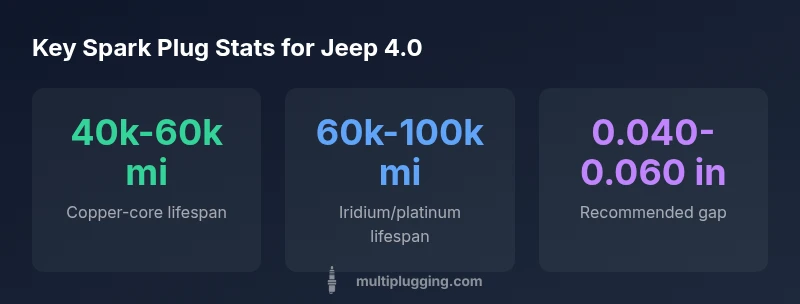
A typical gap range to consider, when not pre-gapped, is around 0.040-0.060 inches. Wider gaps can improve burn efficiency in some engines but may increase misfire risk if the ignition system or fuel delivery is marginal. Narrow gaps reduce starting voltage requirements but may erode thermal efficiency in some conditions. The safest approach is to verify the gap against the installed plug or the Jeep service manual and avoid aggressive gap changes unless you have a formal reason (tiperated performance or aftermarket ignition upgrades).
For DIYers, the procedure is simple: measure the gap with an accurate gauge, adjust in small increments if necessary, and re-check after installation once the engine is run to thermal stability. This reduces the chance of a misfit that could cause misfires or uneven combustion.
OEM vs aftermarket plugs: pros and cons
OEM plugs are designed to match the factory calibration, ensuring compatibility with the engine’s ignition timing, fuel control, and warranty expectations. They are a reliable baseline and often the simplest choice for routine maintenance. Aftermarket plugs can offer longer life (in some cases) or cost advantages, but the perceived benefits vary with your driving style and environment.
- If you primarily drive in normal conditions, OEM or OEM-equivalent copper-core plugs offer reliable performance at a lower price.
- If you tow frequently, operate in extreme heat, or accumulate high mileage, premium iridium or platinum plugs may reduce the number of replacements and provide steadier performance.
- Warranty considerations: using plugs that deviate from manufacturer recommendations can complicate warranty claims if an ignition-related fault occurs.
The takeaway is pragmatic: start with OEM specs, then consider durability-focused options if your driving pattern or maintenance history justifies the additional cost. MultiPlugging’s guidance prioritizes dependable operation and predictable maintenance over hype around exotic materials.
How to choose by driving style and maintenance schedule
Your Jeep 4.0’s plug choice should reflect how you drive and how often you service the vehicle. Daily commuting and moderate terrain benefit from standard copper-core plugs with recommended gaps and a conservative maintenance interval. If you frequently drive in cold climates or do a lot of towing/haul work, you may value longer-life options that resist fouling and wear.
Maintenance frequency matters: a consistent replacement interval helps prevent misfires and ensures the engine maintains optimal fuel economy. If you have high mileage, consider inspecting the plugs sooner; even if a plug appears to be in good condition, slight wear can indicate other ignition issues or oil seals that may be leaking.
Finally, fuel quality and oil condition influence plug life. Both can cause accelerated fouling or deposits that degrade performance. The MultiPlugging approach emphasizes a holistic maintenance plan: regular inspection, adherence to OEM specs, and thoughtful consideration of your driving profile when upgrading plug materials or heat range.
Installation basics: steps and tips
Follow these practical steps to install Jeep 4.0 spark plugs correctly and minimize common mistakes:
- Gather the right tools: a torque wrench, spark plug socket with rubber insert, anti-seize compound (if recommended by the manufacturer), dielectric grease, and a clean work area.
- Disconnect the negative battery terminal to avoid any accidental short circuits during handling.
- Remove the coil packs or ignition wires one at a time, labeling them to preserve firing order.
- Clean the spark plug wells gently to remove debris that could fall into the cylinders.
- Check the gap on the new plugs if they aren’t pre-gapped; set to the OEM specification using a precise gauge.
- Thread plugs by hand first to avoid cross-threading, then snug with a torque wrench according to the manual (don’t overtighten).
- Reinstall ignition components, apply small amounts of anti-seize or dielectric grease only where recommended, and confirm a proper seal.
- Reconnect the battery and start the engine; listen for smooth ignition and check for any misfires via scan tools or a quick data log.
Common mistakes include over-tightening, mixing plug types between cylinders, and neglecting gap verification. Following the steps carefully reduces risks and supports a reliable, smooth-running engine.
Troubleshooting: signs you need new plugs
Even with proper installation, wear can creep in from heat, deposits, or poor maintenance. Typical symptoms of worn spark plugs in a Jeep 4.0 include rough idle, occasional misfires, reduced power under load, and a noticeable drop in fuel economy. If you notice a Check Engine light, a misfire code, or rough cold starts, inspect the plugs first before pursuing more complex ignition issues.
A proactive approach combines a visual inspection and a gap check. Look for carbon buildup, oil fouling, or worn electrodes. If any plug shows significant wear or deposits, replace them all to maintain consistent ignition timing and combustion across all cylinders. Remember that consistent maintenance reduces the likelihood of ignition-related problems and helps protect engine performance over the long term.
Quick reference table for Jeep 4.0 spark plug guidance
| Aspect | Recommendation | Notes |
|---|---|---|
| Plug Type | Copper-core or iridium/platinum options | Choose based on budget and longevity goals |
| Heat Range | Match OEM specification | Consult Jeep service manual for exact spec |
| Gap (inches) | 0.040-0.060 | Refer to installed plug or service manual |
| Installation Torque | Follow manufacturer torque guide | Use torque wrench to avoid thread damage |
FAQ
What spark plugs should I use for a Jeep 4.0?
Use the OEM-recommended type and heat range. Copper-core plugs are common and affordable, while iridium or platinum variants can extend life in demanding use. Always verify compatibility with the owner’s manual.
For the 4.0, stick with the factory-recommended plug type and heat range. Copper is usually enough, but consider iridium or platinum if you drive hard or have high mileage.
Do I need to gap the plugs for a Jeep 4.0?
Most plugs come pre-gapped. If yours don’t, set the gap to the OEM specification using a precise gauge and re-check after installation.
Most plugs arrive pre-gapped. If not, adjust to the recommended gap with a gauge and double-check after installing.
Can I use iridium plugs on the Jeep 4.0?
Yes, iridium plugs are compatible and offer longer life. The benefit is often costlier upfront; for many daily drivers, copper-core remains sufficient.
Iridium plugs work in the 4.0, but they cost more upfront and may not provide dramatic daily-use benefits.
How often should I replace spark plugs on a Jeep 4.0?
Copper-core plugs typically last about 40,000-60,000 miles; iridium/platinum can extend to roughly 60,000-100,000 miles depending on use. Always follow the Jeep service manual for intervals.
Most copper plugs last 40k to 60k miles; longer-life plugs can go farther, but check your manual for intervals.
Is anti-seize recommended for Jeep spark plugs?
Many modern engines don’t require anti-seize on spark plugs and some manufacturers discourage it. Follow the Jeep service manual to avoid over-torquing or thread damage.
Check the manual—some newer engines don’t need anti-seize on plugs and could be damaged by it.
What are the signs of worn spark plugs in a Jeep 4.0?
Rough idle, misfires, reduced power, and worse fuel economy point to worn plugs. If you see a check engine light, inspect or test the plugs first before pursuing other ignition issues.
Watch for rough idle, misfires, or poor fuel economy. If in doubt, inspect the plugs.
“Choosing the right spark plugs for the 4.0 engine isn’t about chasing exotic materials; it’s about matching heat range and design to your driving pattern.”
Main Points
- Start with OEM plug type and gap.
- Copper-core is cost-effective; iridium/platinum lasts longer.
- Re-check gap after installation.
- Torque to specification to protect threads.
- Replace plugs on a regular, planned schedule.