Jeep Wrangler Spark Plug Change: Step-by-Step DIY Guide
Step-by-step guide to a jeep wrangler spark plug change, with safety tips, the right tools, gap verification, torque guidance, and post-install testing for reliable engine performance.


Learn to perform a jeep wrangler spark plug change safely and efficiently. This quick guide covers tools, removal, gap checks, and proper installation with safe testing. Expect about 60–90 minutes for most Wrangler models, plus a quick post-check to ensure smooth running. It also hints at common mistakes to avoid.
Overview of the Jeep Wrangler Spark Plug Change
According to MultiPlugging, a jeep wrangler spark plug change is a routine maintenance task that can significantly improve starting reliability and fuel efficiency when done with care. The Wrangler's engines—whether the common inline configurations or V-shaped layouts—share core plug designs, but model-year variations matter for accessibility, heat range, and torque specs. This section sets the stage for a careful, methodical approach: why plugs wear, what symptoms point to replacement, and how a well-executed change translates into smoother running. By understanding the goal, you’ll approach each step with confidence and a clear sense of purpose. Expect a careful, deliberate pace rather than a rushed rush job. Safety considerations and workspace organization are as important as the mechanical steps, and the following sections translate that philosophy into practical actions.
The Jeep Wrangler environment is typically crowded around the engine bay, with several ignition components occupying the same general area as spark plugs. That makes access both the main challenge and the key skill you’ll practice here. You’ll learn how to identify the correct plugs for your specific model, how to handle coil packs or wires, and how to reseal the system so dirt and debris don’t contaminate the combustion chambers. This is a hands-on procedure, but with a structured plan, you’ll minimize frustration and maximize reliability.
Why You Might Replace Spark Plugs Now
Worn plugs can cause misfires, rough idle, reduced power, and worse fuel economy. If you notice slow throttle response, hesitation during acceleration, or trouble starting in damp conditions, a plug change is a prudent next step. A Jeep Wrangler with higher mileage often benefits from replacing all plugs at once to achieve consistent performance across cylinders. Early-stage signs—like small fuel economy dips or occasional fine misfires—may be resolved by replacing only the most worn plug, but symmetry across the ignition system is usually the best long-term approach.
In addition, this job provides an opportunity to inspect the ignition system—coil boots, wires, and connectors—for wear or damage. Addressing related issues now can prevent repeated misfires or unexpected breakdowns. From a maintenance perspective, treating spark plugs as a regular-service item aligns with prudent DIY practices and supports the vehicle’s overall reliability, a point MultiPlugging often emphasizes in their spark plug guides.
Engine Variants and Access Considerations
Different Wrangler generations (JK, JL, JT etc.) place plugs in varying locations and under different hot zones of the engine bay. Some layouts give easier access to front plugs but tuck others behind coil packs and manifolds. Understanding your exact engine layout helps you plan the tool sequence, the amount of disassembly required, and whether you’ll rely on removing ignition coils or wire harness connectors to reach the plugs. This section helps you map your concrete model to the broad steps outlined here, so you minimize trial and error in the garage. If you’re unsure about access points, consult the factory service manual for your year and engine code. In all cases, working with the engine cooled and the hood open provides better visibility and safety.
Safety First: Prepare a clean, well-lit workspace
Begin with a clean, well-lit workspace. Disconnect the negative battery terminal to prevent accidental short circuits while handling ignition components. Wear eye protection and gloves to shield against sharp edges and hot metal. Use a headlamp or a focused flashlight to clearly see plug wells, especially if a second person can help by peering under the hood. Keep a tray or magnetic mat to collect old plugs and fasteners so you don’t lose track of parts. A well-organized workspace reduces frustration and the risk of dropping heavy tools into the engine bay. Finally, never work on a hot engine; give it time to cool to avoid burns or warping nearby components.
Choosing the Right Spark Plugs for Your Wrangler
Your Wrangler may use iridium, platinum, or copper-core plugs depending on the engine and year. Iridium and platinum plugs typically last longer and tolerate heat well, while copper-core plugs can be cheaper but wear faster. The key is compatibility with your engine’s heat range and the manufacturer’s recommended gap. When shopping, verify the exact part number for your model year and engine code; cross-check with the owner’s manual and any documentation from credible sources. If you’re unsure about the best type, start with OEM-recommended options from a reputable supplier. A note on pre-gap: many plugs come pre-gapped, but it’s still prudent to verify the gap with a feeler gauge before installation to avoid misfires.
Tools and Workspace Optimization
Organizing your tools ahead of time speeds up work and reduces the chance of dropping hardware into the engine bay. Arrange a dedicated toolbox or tray for spark plugs, sockets, and extensions. A magnetic parts tray can hold small fasteners and prevent loss. If you have deep-well access, a swivel joint and a light-length extension can dramatically improve accessibility. For electric components, a multimeter or continuity tester can be helpful if you’re diagnosing related wiring issues. Finally, keep brake-cleaner or contact cleaner handy to wipe surfaces clean before reassembly. With tools laid out, you’ll follow each step with precision rather than hunting for a missing piece at the worst moment.
Step-By-Step: Removing the Old Plugs (High-Level Plan)
This section provides a high-level map of the process without repeating the step-by-step details, which are covered in the dedicated STEP-BY-STEP block. Begin by disabling power and locating the spark plug wells. Remove any coil packs or ignition cables that block access to the plugs. Carefully loosen and extract the worn plugs, paying attention to thread alignment and not dropping debris into the wells. Inspect the wells for oil or grime and clean as needed. This preparatory stage sets you up for precise reassembly with new plugs.
Step-By-Step: Installing New Plugs and Reassembly (High-Level Plan)
With clean wells and new plugs in hand, ensure they are correctly gapped if needed and oriented for seating. Thread by hand first to avoid cross-threading, then tighten to the manufacturer’s recommended torque using a torque wrench. Reconnect coil packs and ignition wires, ensuring all connectors click securely. Reassemble any removed covers or brackets, reconnect the battery, and perform a careful start-up test to confirm idle stability and smooth acceleration. If you hear ticking, misfires, or rough running, diagnose ignition components and revisit connections.
Post-Installation Testing and Initial Drive
After the installation, start the engine and listen for smooth idle and consistent boot-up. A short test drive will reveal any hesitation or misfires that may indicate improper seating or a gap issue. Check for the absence of exhaust smoke or oil leaks around the plug wells, which would signal improper sealing. If available, read the onboard diagnostics to confirm no fault codes related to ignition. Make a note of any abnormal behavior and address it promptly, as delayed attention can lead to reduced efficiency and power.
Maintenance Tips to Extend Spark Plug Life
To maximize the life of your plugs, keep air and fuel filters in good condition, and use quality fuel. Regular maintenance, including oil changes and inspection of ignition components, helps prevent rich or lean conditions that shorten plug life. When you service your Wrangler, consider replacing spark plugs at the manufacturer-recommended interval or sooner if you drive in harsh conditions. Document the replacement date and plug type to simplify future maintenance and ensure consistent performance across cylinders.
Tools & Materials
- 5/8-inch spark plug socket (16mm)(Magnetic with rubber insert; helps hold plugs securely during removal.)
- Ratchet, extension, and adapters(Include a 6–12 inch extension for deep-set plugs.)
- Torque wrench(Use to achieve the vehicle-specific torque spec; avoid guessing.)
- Replacement spark plugs (iridium or platinum)(Choose plugs compatible with your engine; verify pre-gap if applicable.)
- Gap gauge(Check and adjust gap if plugs aren’t pre-gapped.)
- Dielectric grease(Optional for coil boots to improve seal and ease future removal.)
- Anti-seize compound(Only use if recommended by the plug manufacturer; otherwise skip.)
- Shop towels or rags(Keep the workspace clean; wipe spills and oil before reassembly.)
Steps
Estimated time: 60-90 minutes
- 1
Prepare and safety check
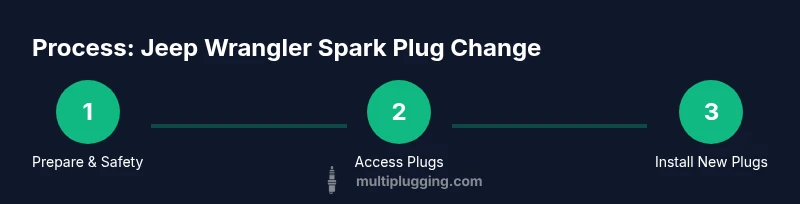
Cool the engine completely and disconnect the negative battery to prevent shorts while handling ignition components. Gather all tools and parts in a single workstation, and wear eye protection and gloves. This step reduces risk and keeps parts organized for the remainder of the procedure.
Tip: Label any coil packs or wires so they go back exactly where they came from. - 2
Locate plugs and inspect wiring
Open the hood and locate the spark plug wells. Gently inspect coil packs and wires for signs of wear or damage. If you notice cracked boots or oil leaks, address those issues before proceeding to avoid contaminating new plugs.
Tip: Use a light to improve visibility; irrigation-friendly lighting helps reveal hidden debris. - 3
Remove ignition components blocking access
Carefully detach coil packs or spark plug wires from the wells. Keep each component in its corresponding location; any misplacement can cause misfires after reassembly. If you feel resistance, stop and recheck alignment rather than forcing connections.
Tip: If a connector feels stuck, wiggle gently while pulling straight out to avoid pinching wires. - 4
Remove the old plugs
Carefully thread the worn plugs out using the spark plug socket and extension. Use a steady, controlled motion to prevent cross-threading. If a plug is stubborn, apply a small amount of penetrating oil and wait a few minutes before retrying.
Tip: Do not twist plugs out with excessive force; misalignment can damage threads at the cylinder head. - 5
Gap and prepare new plugs
If your plugs aren’t pre-gapped, use a gauge to set the correct gap according to the vehicle manual. Apply a small amount of dielectric grease to the inside of the boot for a clean seal and easier removal next time. Keep the plugs in their protective sleeves until you’re ready to install.
Tip: Handle plugs by the nut end to avoid bending the center electrode. - 6
Install new plugs and torque them
Thread the new plugs by hand to avoid cross-threading, then tighten with a torque wrench to the recommended spec. Reconnect coil packs or spark plug wires, ensuring you hear a clear click or seating feel. Reassemble any covers or brackets removed earlier.
Tip: Torque is critical—under-tightening can cause poor sealing, while over-tightening can strip threads. - 7
Final checks and test drive
Reconnect the battery, start the engine, and listen for a smooth idle. A short test drive helps verify acceleration is clean and free from misfires. If you notice rough running, re-check plug seating, gaps, and connections.
Tip: If misfires persist, scan for codes or re-check each plug's connection and gap.
FAQ
Should I replace all spark plugs at once on a Jeep Wrangler?
If one plug shows wear, others are often near the end of their life. Replacing all plugs at once provides balanced ignition performance and avoids a future misfire. Consider your mileage and maintenance history.
If one plug wears, others are likely near the end of their life, so replacing all plugs at once is usually best for balanced performance.
What are signs that a Jeep Wrangler spark plug needs replacement?
Common signs include rough idle, hesitations on acceleration, reduced fuel economy, and occasional misfires. If the check engine light flickers or codes point to ignition, inspect plugs first.
Rough idle, hesitation, and misfires are typical signs to check spark plugs.
Do plugs need to be gap-checked for modern Wranglers?
Many modern plugs come pre-gapped, but it’s wise to verify the gap with a gauge against the manufacturer’s spec. If a plug is pre-gapped, double-check before installation.
Most plugs are pre-gapped, but checking the gap ensures optimal performance.
Is anti-seize or dielectric grease necessary during a Jeep spark plug change?
Anti-seize is rarely required for modern plugs and some manufacturers advise against it. Dielectric grease on the boot contact surface can help seal and ease future removal.
Anti-seize is often unnecessary; dielectric grease can help seal the boot.
What can go wrong during a spark plug change on a Wrangler?
Cross-threading, over-tightening, dropping debris into the well, or misplacing ignition components are common issues. Take your time, label parts, and use the correct torque when tightening.
Common mistakes include cross-threading and over-tightening; label parts to avoid mix-ups.
How long does a DIY spark plug change typically take in a Wrangler?
For a careful, well-prepared job, plan for about 60 to 90 minutes. First-timers may take longer, but a tidy workspace and the right tools speed things up.
Usually about an hour to an hour and a half with good preparation.
Watch Video
Main Points
- Inspect ignition system while replacing plugs to catch related wear.
- Verify plug gap and torque to prevent misfires and head damage.
- Organize parts and label connections to speed reassembly.
- Test engine after installation to confirm performance.
- Document plug type and replacement date for future maintenance.