Jeep Grand Cherokee Spark Plugs Replacement Guide
A comprehensive, step-by-step guide to diagnose, select, and replace spark plugs on Jeep Grand Cherokee engines, with practical tips for maintenance and avoiding misfires.


By following this how-to, you'll safely inspect and replace spark plugs on a Jeep Grand Cherokee, ensuring optimal performance and fuel efficiency. You'll need basic hand tools, a torque wrench, and the right plugs for your engine; the steps below apply to most 3.6L and V6/V8 variants. This guide emphasizes safety, torque specs, and correct plug type to avoid misfires. According to MultiPlugging, proper spark plug maintenance is essential for keeping your Jeep running smoothly.
Why Jeep Grand Cherokee Spark Plugs Matter
Spark plugs play a crucial role in starting and sustaining combustion inside each cylinder. For Jeep Grand Cherokee owners, healthy plugs ensure strong throttle response, smooth idling, and consistent fuel economy. Worn or fouled plugs can cause misfires, rough running, and increased exhaust emissions, which may trigger a check-engine light. The MultiPlugging team emphasizes that timely plug replacement is a foundational maintenance step that supports engine performance across model years and engine variants. This section will help you recognize symptoms, understand wear patterns, and plan a proactive replacement schedule tailored to your Grand Cherokee's engine family.
Common symptoms signaling worn plugs include detonation-like noises, reduced power on acceleration, higher fuel consumption, and occasional roughness at idle. If you notice any of these, start with a visual inspection and a spark-spark test. This content draws on MultiPlugging Analysis, 2026 and reflects practical, hands-on procedures you can perform in a standard home garage.
Spark Plug Types for Jeep Grand Cherokee Engines
Jeep Grand Cherokee models use a variety of spark plug types depending on the engine family and generation. In many modern Grand Cherokees, iridium or platinum plugs are common due to their longer life and stable performance. Copper plugs are less common in newer models but may still appear in older configurations or budget-oriented trims. The choice between iridium, platinum, and copper affects how long the plug lasts, how reliably it fires under load, and how easy it is to gap and torque during installation. For engines with coil-on-plug configurations, access to each plug is tied to the ignition coil and boot; removing the coil must be done carefully to avoid damaging the coil connector.
When selecting plugs, prioritize the recommended heat range and terminal type for your specific engine. Using the wrong type can lead to misfires, poor fuel economy, or fouling. The key takeaway is to consult the owner's manual or the plug packaging for the exact spec rather than guessing. This ensures compatibility with your Jeep Grand Cherokee and helps maintain peak performance across miles. According to MultiPlugging, sticking with recommended plug materials and designs provides a balanced blend of longevity and reliability across common Grand Cherokee engines.
How to Identify the Right Gap and Heat Range
Plug gap and heat range areengine-specific decisions that influence combustion efficiency and misfire resistance. For many Jeep Grand Cherokee engines, the correct gap and heat range are specified by the plug manufacturer and the engine OEM data. Always verify these specs from reliable sources such as the owner's manual, the vehicle service data bulletin, or the packaging of the selected plugs. If your vehicle uses pre-gapped plugs, avoid re-gapping unless the manufacturer explicitly allows it and you have precise tooling. When gaps are off, you can experience misfires, rough idle, and reduced throttle response. The overarching rule is: match the plug to the engine's design and the plug's own engineering data, and avoid improvising without verification.
Heat range is particularly important for transient loads and high engine temperatures. Using a plug with the wrong heat range can cause fouling on cold starts or pre-ignition under heavy loads. In short, always align the gap and heat range with the official specification for your Jeep Grand Cherokee's engine family.
Tools and Workspace Prep
Before you touch any components, set up a clean, well-lit workspace with a stable surface for parts. Disconnect the negative battery to prevent accidental electric shocks while you work around ignition components. Wear eye protection and gloves to guard against sharp edges and hot parts. Keep a magnetic parts tray handy to hold screws, coils, and plugs, and use a spark plug socket with a rubber insert to prevent dropping plugs. If your Grand Cherokee has coils mounted above each plug, you’ll need a small torque wrench, a feeler/gap gauge, and a torque specification reference to reinstall plugs to the correct depth. A labeled wiring diagram can help you avoid misconnecting ignition coils during reinstallation. This careful prep minimizes risk and protects the engine bay from debris.
As you plan, note that many Grand Cherokee engines require different access approaches depending on engine layout and generation. The MultiPlugging team highlights that thorough prep reduces the chance of damaging ignition components during removal and installation.
Step-by-Step Overview of Replacement Strategy
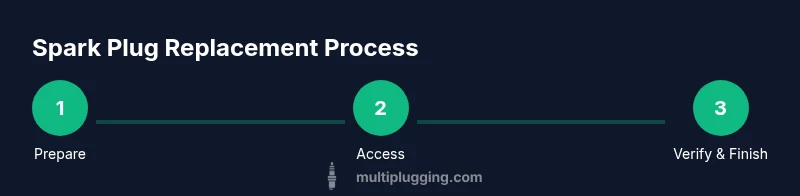
A structured replacement plan keeps you organized and minimizes time under the hood. Start by safely isolating the battery, then access each spark plug, remove the coil boot, and extract the old plug with the appropriate socket. Inspect the plug well for debris before inserting a new plug. Check the new plug’s gap (if required) and apply a light amount of anti-seize only if recommended by the plug manufacturer. Thread the plug by hand to avoid cross-threading, then tighten to the specified torque with a torque wrench. Refit the coil boot and reconnect any wiring harnesses, repeating for each cylinder. Finally, restore power and perform a basic engine test to verify smooth operation.
This methodical approach helps prevent common mistakes such as cross-threading, overtightening, or damaging ignition coils. The goal is consistent, reliable combustion across all cylinders and a clean ignition event for each firing cycle.
Common Mistakes and How to Avoid Them
Rushing the process is a frequent source of error. Always work in a cool engine bay and avoid forcing plugs into a tight seat. Using the wrong torque value is another common pitfall; under-tightening can lead to compression loss and misfires, while over-tightening risks damaging the cylinder head threads. Neglecting to inspect ignition coils after removal can hide hidden wear that undermines plug performance. For best results, organize your replacements by cylinder, verify that you have the correct plug type for each bank, and use a torque wrench to reach the manufacturer-approved torque specification. Keeping a clean workspace and labeling removed parts helps prevent misassembly in the long run.
Maintenance Tips to Extend Plug Life
To maximize the life of Jeep Grand Cherokee spark plugs, adhere to the manufacturer's maintenance intervals and use plugs matched to the engine's heat range and firing requirements. Keep ignition coils and boots in good condition; replace worn boots that could cause misfires or poor seating. Regularly check for oil leaks around the plug wells, as oil contamination can foul plugs quickly. When replacing plugs, consider replacing the coil boots if you notice cracking or stiffness, especially in older models. A clean, debris-free plug well improves heat dissipation and reduces fouling risk, while a correct gap and tightened torque ensure reliable ignition and optimal combustion efficiency.
Finally, always reset or adapt the ECU after a plug replacement if the engine management system requires adaptation for new sensor inputs. This helps the vehicle re-learn optimal ignition timing and fuel mapping for your current plug configuration.
Troubleshooting After Replacement
If you notice rough idle, misfires, or a check-engine light after replacement, start with a quick diagnostic check. Recheck the torque on each plug to ensure they’re within spec, verify the gap on any plugs that were gapped manually, and inspect the ignition coils for proper seating and integrity. Misfires often point to a loose coil boot, a damaged coil, or a cross-threaded plug; reseating the coil and reseating the plug can resolve most issues. If problems persist, use an OBD-II scanner to read error codes and cross-reference them with the ignition system. Finally, consider inspecting the spark plug wires (where applicable) for damage or moisture intrusion and replace as necessary.
Special Considerations by Gen/Model
Jeep Grand Cherokee generations vary in ignition architecture. Some models use coil-on-plug configurations; others may have coil packs with individual boots. Access to plugs may be straightforward on earlier generations but can require more disassembly on later variants. Always verify the engine family and consult the service manual for the exact procedure and torque values. If you’re unsure, start with a general approach—disconnect power, work cleanly, and replace plugs one by one to avoid misalignment of ignition components. The MultiPlugging team recommends checking for service bulletins specific to your VIN when available, as these documents often include updated torque specs or coil-boot considerations.
Tools & Materials
- Spark plug socket with rubber insert(Magnetic or rubber insert helps hold the plug securely)
- 5/8 inch or 16 mm extension bar(Access in tight wells may require an extension)
- Torque wrench(Set to the manufacturer-specified torque for the plug)
- Spark plug gap tool(Only if plugs are not pre-gapped)
- Anti-seize compound (optional)(Only use if recommended by plug manufacturer)
- Dielectric grease (optional)(Use on coil boots to ease future removal)
- Ratchet and assorted sockets(For removing coil bolts and related hardware)
- Magnetic tray or labeled containers(Keep hardware organized by bank)
- Safety gloves and eye protection(Protect hands and eyes from debris)
- Shop rags or microfiber towels(Clean spills and wipe surfaces)
Steps
Estimated time: 60-120 minutes
- 1
Prepare workspace and safety
Power down the vehicle and disconnect the negative battery cable to prevent accidental shocks while working around ignition components. Clean the engine bay area to reduce the risk of dropping debris into plug wells. Gather all tools and organize parts by cylinder for efficient replacement.
Tip: Label the order of coils if you remove them; reinstall in the same order to avoid confusion. - 2
Access spark plugs
Identify the spark plug wells corresponding to each cylinder. If your Grand Cherokee uses coil-on-plug coils, gently disconnect the coil boot from the plug without pulling on the wire. Remove any components that block access to the plug wells and ensure the area is clear and visible.
Tip: Take a photo of the coil arrangement before touching anything to help wire reassembly. - 3
Remove old plugs
Fit the spark plug socket onto a ratchet with the extension and carefully turn counterclockwise to loosen the plug. Lift the coil and boot away once the plug is free; set the old plug in a labeled tray. Inspect the plug for wear patterns to assess engine health.
Tip: If a plug is stubborn, apply a small amount of penetrating oil and wait a few minutes before retrying. - 4
Inspect wells and gaps
Look into each plug well for oil or carbon buildup. If the well is dirty, clean it before installing a new plug. Check the gap on new plugs only if they are not pre-gapped; use a gap tool to adjust to manufacturer spec. Wipe the threads clean to ensure clean seating.
Tip: Do not force a new plug into a tight seat; misalignment can damage threads. - 5
Install new plugs
Thread the new plug in by hand first to avoid cross-threading, then snug with the spark plug socket. Use a torque wrench to reach the specified torque; over-tightening can strip threads, while under-tightening may cause combustion leaks. Refit the coil boot or connector securely.
Tip: Apply a light coat of dielectric grease on the boot connector to ease future removal. - 6
Reassemble ignition components
Replace any components you removed to reach the plugs, ensuring each coil/wiring harness is properly seated. Reconnect the battery terminal and double-check electrical connections. Ensure no tools or rags are left in the engine bay before starting the engine.
Tip: Gently press each coil boot to confirm a secure seat and listen for a click when connected. - 7
Test engine and verify
Start the engine and listen for a smooth idle. A rough idle or misfire could indicate a loose plug or coil boot. If needed, clear any diagnostic trouble codes with a scan tool and perform a brief drive test to confirm stable performance.
Tip: If misfires occur, recheck spark plug seating and coil connections before replacing parts. - 8
Clean up and record
Return tools to their storage, wipe down any spills, and document the date and mileage of the plug replacement for your maintenance log. Note any observations about engine performance that could be useful for future service or dealer visits.
Tip: Keep receipts or packaging for future reference in case of warranty concerns.
FAQ
Can I replace spark plugs myself on a Jeep Grand Cherokee?
Yes, many owners can replace spark plugs with basic tools if they follow safety steps, use the correct plug type, and torque specs. However, some configurations are access-limited, so consult your manual or a service guide for model-specific details.
Yes, you can replace them yourself if you have the right tools and follow safety steps. For model specifics, check your manual.
What tools do I need to change spark plugs on a Jeep Grand Cherokee?
You’ll typically need a spark plug socket with a rubber insert, a ratchet and extension, a torque wrench, a gap tool if needed, and basic hand tools to access coils. Safety equipment like gloves and eye protection is also important.
You’ll need a spark plug socket, ratchet and extension, torque wrench, and gap tool if required, plus safety gear.
How often should you change Jeep Grand Cherokee spark plugs?
Replacement intervals vary by engine family and plug type. Check the owner’s manual or service bulletin for the recommended miles or time frame and adjust based on driving conditions and fuel quality.
The interval depends on your engine and plug type—check the manual and adjust for driving conditions.
Are there risks using the wrong spark plug on a Grand Cherokee?
Using an incorrect heat range or incompatible plug can cause misfires, fouling, reduced performance, and potential engine damage. Always match plugs to the official spec for your engine.
Yes. The wrong plug can cause misfires and damage, so match the spec exactly.
Should I gap iridium plugs before installation?
If the plugs are pre-gapped by the manufacturer, do not adjust unless the packaging specifies. For non-pre-gapped plugs, use a gap tool to the recommended specification.
Only gap if the plugs aren’t pre-gapped and the packaging allows it.
Watch Video
Main Points
- Verify the correct plug type and heat range for your engine.
- Torque plugs to spec to prevent thread damage.
- Inspect coils for wear after removal and replacement.
- Test drive and monitor for misfires after replacement.