What Spark Plugs Are OEM for Nissan: A Practical Guide
Learn which spark plugs Nissan designates as OEM for your model, how to identify them, and why sticking to factory specs matters for reliability, efficiency, and warranty.


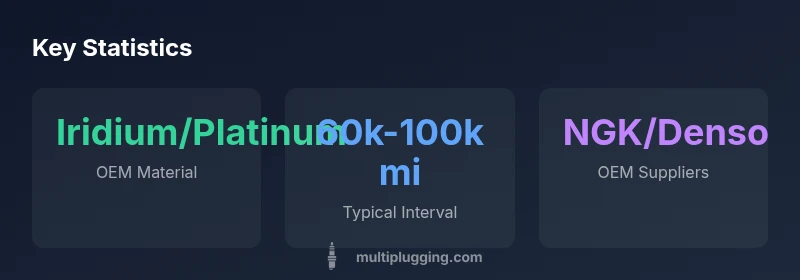
OEM Nissan spark plugs are selected by engine family and typically include iridium or platinum types designed to meet Nissan’s emissions, efficiency, and reliability targets. The exact plug is specified by Nissan service literature and VIN-based parts lookups, not generic copper plugs. Always verify the specific OEM plug for your model using the VIN and owner's manual.
What OEM spark plugs mean for Nissan engines
Understanding what the term OEM means in practice helps you pick the right plugs for your Nissan. OEM plugs are selected by Nissan for each engine family to match heat range, electrode geometry, and lifespan. In modern Nissan designs, iridium or platinum plugs are common, chosen for longevity and reliable ignition under varied driving conditions. According to MultiPlugging, the aim of OEM selection is to balance emissions, fuel economy, and power delivery while maintaining reliability across the vehicle’s life. This is particularly important for turbocharged and high-compression engines, where the wrong plug can cause misfires or overheating. The takeaway is simple: OEM plugs are not a generic upgrade; they are engineered for your exact engine family and production year.
- The choice is engine-family specific, not merely model-year dependent.
- OEM plugs align with Nissan’s calibration for ignition timing and emissions controls.
- Warranty considerations often favor sticking with Nissan-recommended parts.
From a practical perspective, the most important takeaway is to confirm the exact OEM plug for your VIN before purchasing or installing parts. VIN-based lookup, dealer literature, and service bulletins are your most reliable sources for this confirmation.
Nissan engine families and their OEM spark plug specs
Nissan engines span several major families, each with its own spark plug design to manage heat transfer, ignition stability, and combustion efficiency. The QR and MR inline-4 family uses a compact, long-life electrode geometry in iridium or platinum plugs to preserve efficiency across a wide temperature range. V6 engines in the VQ family have a different heat-range and thread design to suit larger combustion chambers and higher compression, with the OEM choice reflecting those needs. In most cases, the OEM plug is supplied by established manufacturers such as NGK or Denso, often in collaboration with Nissan’s engineering teams. Proper plug selection supports reliable ignition, steady fuel economy, and emissions compliance across the model’s lifecycle.
Engine-family-based plug selection means a plug that fits a different Nissan model or era may not be optimal for your current vehicle. Always verify the exact part using your engine code, VIN, or the Nissan service portal. If you drive a modern turbocharged Nissan, the OEM plug is specifically tuned to handle higher boost and fuel mapping without sacrificing durability. In short, the engine family dictates the plug type, and the service literature confirms the precise choice for your car.
How to identify OEM vs aftermarket spark plugs
Distinguishing OEM plugs from aftermarket equivalents protects performance and warranty coverage. The quickest checks start with packaging and branding; look for Nissan Genuine Parts, the Nissan logo, or a Nissan part number on the box. Genuine plugs usually feature a consistent finish and proper labeling on the electrode tips. If you’re unsure, VIN-based lookup at a Nissan dealer or a trusted parts retailer can confirm the exact OEM plug for your vehicle.
Beyond branding, compare the electrical specs and physical dimensions: heat range, thread size, reach, and pre-gap status. OEM plugs are typically pre-gapped to the factory specification. If the numbers don’t align with the service manual, you’re likely looking at an aftermarket substitute. Cross-reference service bulletins or recalls—Nissan occasionally updates recommended parts for safety or emissions reasons. When in doubt, rely on official Nissan documentation or dealership confirmation before finalizing the purchase.
Why using OEM plugs matters for Nissan reliability and performance
Using OEM spark plugs helps preserve engine reliability and peak efficiency. The electrode geometry and seal design are calibrated to maintain proper combustion and consistent coil performance, while the heat range prevents fouling or pre-ignition under typical driving and seasonal variations. This alignment can improve idle smoothness, throttle response, and fuel economy, and it supports the emissions-control system’s integrity. For owners, sticking with Nissan’s recommended plugs supports warranty terms and long-term durability, especially in high-mileage or turbocharged applications.
From a diagnostic perspective, OEM plugs give you a stable baseline. When misfires or rough running appear, you have a known reference for wear and performance. If you switch to aftermarket plugs, be prepared to reassess ignition timing, sensor feedback, and fuel mapping to avoid unexpected performance shifts. In short, OEM plugs are a proven starting point for reliable Nissan operation across a vehicle’s life.
How to determine the correct OEM-grade replacement for your Nissan
Start by consulting the owner’s manual or the Nissan service portal. Use the VIN to pull the exact engine code and identify the precise OEM plug specification. If you shop through a dealer, request Nissan Genuine Parts that match your engine family. When using third-party retailers, ensure the plug matches the OEM heat range, thread size, and reach for your VIN; cross-reference with service bulletins if available.
Keep in mind that some service bulletins update plug recommendations due to emissions or reliability concerns. A cross-reference chart can help compare aftermarket options to the OEM specification, but avoid substitutes that deviate from the official heat range or electrode design. If you experience misfires, rough running, or unusual fuel economy after replacement, verify the plug type again with the VIN and consult a Nissan technician if the symptom persists.
Maintenance practices around OEM spark plugs
Maintenance starts with adherence to the replacement interval. For many Nissan models equipped with iridium or platinum plugs, the recommended interval ranges from 60,000 to 100,000 miles, depending on engine family and operating conditions. Copper-core plugs, by contrast, typically require earlier replacement. Always follow the owner’s manual for the exact interval. When replacing, use the correct torque specification and ensure the washer seal seats evenly to prevent leaks and misfires. If the vehicle is still under warranty, use OEM or Nissan-approved plugs as specified in the warranty terms.
A thorough maintenance plan also includes checking the ignition coils and plug wires, since worn coils or deteriorated boots can mimic plug problems. Keep the plug wells clean, as dirt and oil can foul a new plug. Store new plugs in a clean, dry space and handle them carefully to avoid electrode damage. Finally, after installation, perform a brief diagnostic run and a test drive to verify proper operation before concluding the service.
Installation cautions and common mistakes to avoid
Even skilled DIYers can slip on plug installations. Begin with a clean engine bay and ensure the engine is cold. Thread plugs by hand to avoid cross-threading, then snug to the manufacturer’s torque specification—never overtighten. If you’re replacing coils along with plugs, inspect the coil boots and connectors for wear. Don’t mix brands or plug types within the same engine family unless the service manual permits it. Avoid using anti-seize on modern threads; most OEM plugs are pre-coated to seal properly, and anti-seize can alter torque readings.
After installation, clear any fault codes and run the engine to verify ignition system performance. A short test drive can reveal subtle misfires that static checks miss. If problems persist, consult a Nissan technician to confirm the plug selection against the VIN and engine code.
Cost considerations and practical tips
OEM plugs carry a higher per-unit price compared with copper variants, but they typically deliver longer service life and steadier ignition across temperature and load. Prices vary with material (iridium vs platinum), the number of cylinders, and where you buy them. DIY replacement saves labor, while professional installation adds a service fee. When calculating total cost, weigh the longer replacement interval against the upfront price.
Practical tips include validating the exact plug for your VIN, using official Nissan service literature as a reference, and avoiding rushed torque steps. If you’re unsure, request the official Nissan plug specification for your model from the dealer’s parts desk. For many drivers, the reassurance of using the factory-recommended plug—particularly on high-mileage or turbocharged engines—outweighs a small difference in per-plug price."],
dataTable({
headers
rows
caption
}],
caption
Nissan engine families and their OEM spark plug considerations
keyTakeaways
expertQuote
faqSection
mainTopicQuery
Nissan engine families and their OEM spark plug considerations
| Engine family | OEM plug type | Notes |
|---|---|---|
| 4-cylinder Nissan (QR/MR family) | Iridium or Platinum | OEM selections balance efficiency and longevity; vary by model. |
| V6 Nissan (VQ family) | Iridium long-life | Engine-specific heat range; check VIN. |
| Older inline-4 (KA/GA/G-series) | Copper core or Platinum | Cross-check for availability; older designs. |
FAQ
Are OEM Nissan spark plugs always platinum or iridium?
Not always; Nissan selects iridium or platinum for newer engines and copper for older, depending on engine family and year. Always verify with VIN lookup or Nissan service literature.
OEM choices vary by engine; check your VIN to confirm the exact plug type.
Can I use aftermarket plugs in a Nissan?
You can, but it may affect performance, emissions compliance, and warranty. Use an aftermarket plug only if it matches the OEM heat range and characteristics for your engine.
Only if it matches the original heat range and specs.
What happens if I install the wrong heat range?
Using a heat range that’s too hot or too cold can cause fouling, pre-ignition, or accelerated wear. Always use the OEM heat range specified for your engine.
Using the wrong heat range can cause misfires or damage.
How do I find the exact OEM plug for my Nissan?
Use the VIN to look up the engine code and the Nissan service portal or dealer parts catalog to confirm the exact OEM plug for your model. Service bulletins can also help.
VIN lookup will tell you the exact OEM plug.
Do OEM plugs affect warranty?
Using non-OEM plugs can complicate warranty claims if a failure is tied to the ignition system. Stick with Nissan-recommended plugs to maintain warranty integrity.
Sticking with OEM plugs helps preserve warranty.
How often should I replace OEM plugs?
Intervals depend on engine family and driving conditions, but many modern Nissan engines with iridium/platinum plugs target 60,000–100,000 miles. Check the owner’s manual for your model.
Follow your manual; many Nissan plugs last 60k–100k miles.
“The factory-recommended spark plugs are chosen to balance performance, emissions, and durability; using OEM helps avoid misfires and warranty concerns.”
Main Points
- Verify OEM plug for your VIN before replacement.
- OEM plugs use iridium or platinum for longevity.
- Follow the owner's manual for replacement intervals.
- Avoid using copper plugs on modern turbo or high‑compression engines.
- Torque to spec and inspect ignition coils during service.