What Spark Plugs Are OEM for Honda: A Practical Guide
Discover which spark plugs Honda uses as OEM, how to verify part numbers, and when to choose OEM vs aftermarket. Learn heat range, torque, and installation tips for Honda engines.


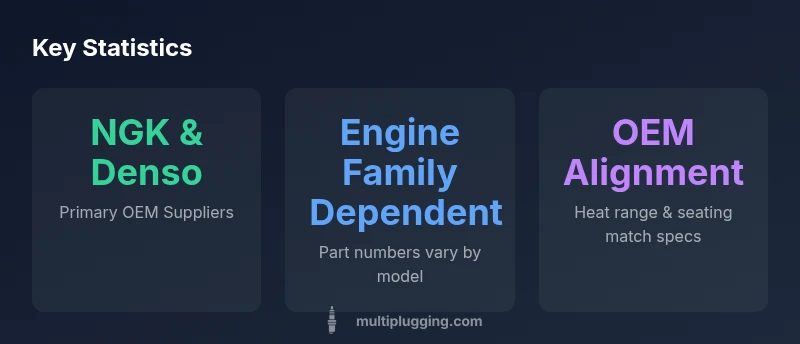
Honda generally relies on NGK and Denso as the OEM spark plug suppliers, with the exact partner and part number varying by model, engine family, and market. To confirm the correct plug, check the owner's manual or the Honda service diagrams for the factory part number. In practice, using the OEM plug ensures the correct heat range, seating style, and gap as designed by Honda engineers.
What Honda Means by OEM Spark Plugs
In the automotive context, OEM means Original Equipment Manufacturer—the parts that left the factory installed in your car. When people ask, "what spark plugs are oem for honda?", the short answer is that Honda relies on two primary partners for spark plugs: NGK and Denso. The exact supplier and part number depend on the model, engine family, and the regional market. For many Honda engines, NGK plugs are common in North American vehicles, while Denso plugs appear on other variants or regions; however, both brands are aligned with Honda’s engineering standards. The critical point is that OEM plugs are designed to meet Honda’s heat range, thread size, seating style, and electrode configuration. Always verify the precise OEM part number from your owner’s manual or the official service diagrams before purchasing. Using the exact OEM plug minimizes misfires, poor cold starts, and fouling caused by mismatched heat ranges. This distinction—what spark plugs are oem for honda—helps you avoid guesswork and ensures longevity of coils, ignition, and overall efficiency.
How Honda Decides OEM Spark Plug Suppliers
Honda’s decision to use NGK or Denso as OEM plug suppliers is driven by a combination of engine design, market strategy, and manufacturing partnerships. Engine families such as 戸 (K-series, J-series, and newer lines) are evaluated for heat range, electrode material, and longevity requirements. Regional considerations also play a role: certain markets prefer one partner due to distribution or fleet testing. The result is a practical system where both brands can deliver plugs that satisfy Honda’s performance and emissions targets. When replacing, the goal is to restore the factory ignition characteristics, not just to install a plug that “fits.” Always cross-check the OEM part number in official diagrams to ensure you preserve factory dynamics such as misfire resistance, acceleration feel, and fuel economy.
Differences Between OEM and Aftermarket Honda Plugs
OEM plugs are selected to complement Honda’s engine tuning, which includes ignition timing and fuel injection strategies. Aftermarket plugs offer many options, but they may not perfectly match Honda’s intended heat range, electrode design, or sealing method. The primary differences you’ll encounter include heat range selection, electrode material (copper vs platinum vs iridium), and seating style (gasket seat vs tapered seat). For most drivers, sticking to the OEM choice provides reliable cold starts, smoother idle, and consistent gap performance. If you opt for aftermarket plugs, ensure they specify compatibility with Honda’s engine family and verify the exact part number against the service diagram.
Heat Range, Gap, and Seating: The Honda OEM Formula
The Honda OEM formula hinges on three core parameters: heat range, electrode design, and seating style. Heat range determines how quickly the plug creates and dissipates heat, which affects fouling resistance and combustion stability. The electrode design (copper, platinum, or iridium) influences durability and spark energy, while seating style impacts sealing and thread integrity. OEM plugs are selected to balance these factors for each engine family, delivering dependable starts across weather and driving conditions. When replacing, use the recommended gap value from the manual and avoid aftermarket plugs that deviate from Honda’s intended configuration.
How to Identify the Exact OEM Part Number for Your Honda
Locating the precise OEM part number is essential. Start with the owner’s manual or the service diagram on Honda’s official site. If you have access to the VIN, a dealership or certified parts retailer can pull the exact plug specification used on your vehicle. You can also inspect the existing plug’s stamping for the OEM part number, though some models hide it under the boot or near the base. When in doubt, confirm with a Honda dealer or authorized service center before ordering. This ensures you receive the correct heat range, seating, and thread size for your engine family.
OEM vs Genuine Honda vs Aftermarket: Pros and Best Practices
OEM plugs guarantee consistency with Honda’s design tolerances, but genuine Honda-branded plugs are not the only viable option; NGK and Denso plugs that carry Honda’s factory specifications are often cross-listed as OEM equivalents. The decision hinges on model compatibility and regional availability. If you choose aftermarket options, select only products explicitly listed as compatible with your Honda engine family, and verify the exact part number in the service diagrams. Best practice is to use the factory-recommended plug from the official parts catalog to maintain emissions performance and warranty coverage.
Model-Family Considerations: K-Series, J-Series, and Beyond
Honda’s engine-family approach means some plug numbers apply across multiple families, while others are engine-specific. For example, newer K-series and J-series engines may share heat-range recommendations, but the plug shape and seating might differ between two- and three-stage ignition systems. The safer approach is always to reference the service manual’s engine family chart for the exact OEM number. If your vehicle has been serviced abroad or driven under unique conditions, reconfirm with a dealer to ensure no regional substitutions were made.
Maintenance and Replacement Intervals for Honda Spark Plugs
Honda typically recommends replacement intervals based on the engine, driving conditions, and the spark plug design. OEM plugs are designed to maintain performance across the service window defined by Honda, but heavy-load driving, idling, or short trips can shorten life. Use the owner’s manual’s interval as a baseline, and account for climate, fuel quality, and maintenance habits. If you notice misfires, rough idling, or reduced fuel economy, inspect the plug condition and gap, and consider replacing with the OEM part number rather than a generic alternative. Regular inspection during routine maintenance helps prevent unexpected failures and keeps emissions in check.
Honda engine families and their typical OEM plug partners
| Engine Family | Typical OEM Brand | Notes |
|---|---|---|
| K-Series & newer 4-cyl | NGK or Denso | Refer to engine-specific service diagram |
| J-Series V6 & larger | NGK or Denso | Model-dependent; confirm exact part number |
| Older 4-cyl designs | NGK or Denso | Check the manual for the correct heat range |
| Hybrid/Performance variants | NGK or Denso | OEM alignment essential for emissions |
FAQ
Which spark plugs are OEM for Honda?
Honda typically uses NGK or Denso as OEM spark plug suppliers, with the exact part number varying by model and market. Always check the official diagrams or the owner’s manual to confirm the correct plug for your vehicle.
Honda uses NGK or Denso for OEM plugs; check your manual or diagrams to confirm the exact part.
Can I use aftermarket plugs instead of OEM for Honda?
You can, but you risk issues with heat range, gap, and seating that Honda designed for. If you choose aftermarket, pick plugs that explicitly match Honda’s engine family and part number.
Yes, but make sure the plugs match Honda's specs and the engine family.
How do I find the exact OEM part number for my Honda?
Look in the owner’s manual, service diagrams, or ask a dealer with your VIN. The exact OEM number is the safest route to take for replacements.
Check the manual or ask your dealer with your VIN to get the exact number.
Are NGK and Denso plugs interchangeable for all Honda engines?
Not universally. Both brands can be used where Honda approves them, but the heat range and seating are engine-specific. Always verify the recommended part number.
They’re not interchangeable for every engine; verify the recommended part number.
Do OEM plugs last longer than aftermarket ones?
OEM plugs are designed to Honda specifications and typically deliver reliable performance within the factory maintenance window. Some aftermarket plugs may last just as long if they meet the same specs, but you risk variance in heat range and emission performance.
OEM plugs match Honda specs and usually last as expected; always confirm specs if using aftermarket.
Where can I buy genuine Honda OEM spark plugs?
Official Honda parts distributors, authorized dealers, and certified parts retailers carry genuine OEM plugs. Cross-reference the exact part number with your model year and VIN.
Buy from Honda dealers or authorized parts retailers and verify the part number.
“Honda OEM spark plugs are chosen to match heat range and thread size for each engine family. NGK and Denso are the primary suppliers used by Honda across models.”
Main Points
- Verify OEM part numbers in the owner's manual.
- NGK and Denso are the two primary Honda OEM suppliers.
- OEM plugs match Honda heat range, gap, and seating specs.
- Always confirm part numbers with official diagrams before buying.
- Consider OEM-recommended plugs for reliability and warranty compatibility.