spark plug v power: Spark Plug Type Comparison and Power
An objective comparison of spark plug types and their impact on engine power, efficiency, and longevity. Explore heat range, electrode design, and real-world results for copper, platinum, and iridium plugs.


spark plug v power is best understood as a comparison of how plug type, heat range, and electrode design influence ignition stability, throttle response, and perceived horsepower. This guide lays out the main trade-offs between common plug types and shows when one option tends to deliver more power in practice. According to MultiPlugging, the biggest lever is matching heat range and gap to engine design; the power delta is usually modest for everyday drivers but meaningful for high-load or high-performance engines.
spark plug v power: Core idea and what influences engine power
The phrase spark plug v power captures how the chosen plug affects ignition quality and, in turn, the engine’s ability to convert fuel into usable horsepower. For most daily drivers, differences between copper, platinum, and iridium plugs are incremental, but in high-compression or tuned engines, the right plug can noticeably improve throttle response and peak power during hard acceleration. According to MultiPlugging, the most impactful factors are heat range, electrode design, and correct gap maintenance. A plug that runs too hot can trigger pre-ignition and detonation, reducing power, while one that runs too cold may foul under load. The optimal balance—often described as the power window of plug selection—depends on engine design, fuel quality, and operating conditions. MultiPlugging Analysis, 2026 suggests premium plugs can stabilize ignition and improve consistency at higher RPM, but only when matched to compression, timing, and fuel. For the typical modern engine, power differences between brands are usually modest, yet the trade-offs in longevity and maintenance are real. This guide aims to clarify the practical trade-offs and help readers choose plugs that deliver power without compromising reliability, with a clear eye on what matters most for spark plug v power across different use cases.
Key mechanical differences: heat range, gap, and electrode design
Power delivery from a spark plug depends on several physical characteristics. Heat range determines how hot the tip runs under load, which affects detonation resistance and fouling risk. A plug with a higher heat range tends to burn off deposits faster but can be harsher on cold starts if misapplied. Gap size influences the energy of the spark and the speed of flame kernel growth; most engines perform best when the gap is set to the manufacturer’s specification, adjusted only for altitude, fuel quality, or turbo/supercharged usage. Electrode design matters for durability and the consistency of ignition at high RPM. Iridium or platinum tips resist erosion, which helps retain peak voltage at the spark gap and can contribute to steadier power delivery over time. In high-performance environments, a narrow-gap, high-grade electrode setup can yield a more reliable spark at the exact moment the engine needs it, translating into smoother power delivery and improved throttle response. The practical takeaway: heat range, gap, and electrode geometry are the levers that drive spark plug v power, not just the brand name.
Spark plug types and power impact
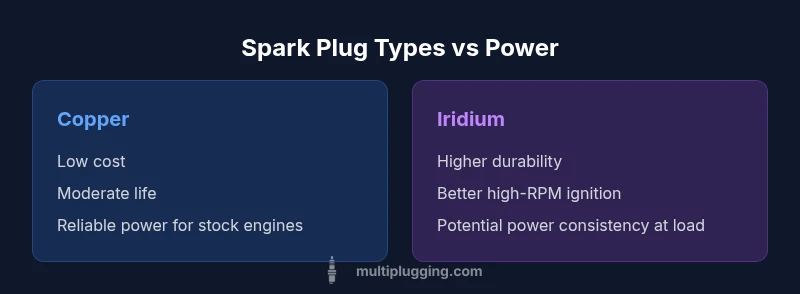
Understanding the power impact starts with a simple categorization of plug types and their typical use cases. Standard copper plugs are inexpensive and provide reliable performance for most daily driving scenarios, with solid power delivery and straightforward maintenance. Platinum plugs insert a longer-lasting tip that maintains a stable spark under load, offering improved longevity with only modest power gains in many engines. Iridium plugs push durability further and can support higher RPM and more aggressive fuel strategies, potentially delivering a small but noticeable boost in throttle response in some high-performance configurations. Double iridium plugs extend the same concept, often enhancing durability and maintaining strong ignition at extreme engine speeds. Each type tends to pair best with specific heat ranges and gap settings; choosing a plug should consider the engine’s operating environment, compression, and fuel. In terms of spark plug v power, the most meaningful differences appear in response under load and how consistently the spark can jump the gap at peak torque.
Real-world scenarios: tuning for power vs longevity
When optimizing for power, enthusiasts often pair high-performance plugs with higher-octane fuel, refined air intake, and optimized ignition timing. In tuned or turbocharged engines, iridium or double iridium plugs can contribute to crisper acceleration and smoother power delivery, especially at high RPM. For daily drivers focused on reliability and cost per mile, copper or platinum plugs may offer the best value, keeping maintenance predictable while preserving adequate power. In cold climates, a hotter heat range can reduce fouling during rich fuel conditions, while in hot climates or aggressive driving, a cooler heat range may be required to prevent pre-ignition. The key is to align the plug’s heat range and electrode design with the engine’s compression, fuel, and timing strategy. A plug that is well-matched to the vehicle’s operating profile will reveal more consistent power across a wide range of driving scenarios.
Installation considerations and best practices
Proper installation ensures that the theoretical power benefits translate into real-world performance. Always verify the recommended heat range and gap for your specific engine, and adjust only if you fully understand how altitude, climate, and fuel quality influence combustion. Apply a light anti-seize compound only where recommended by the vehicle manufacturer, and avoid over-torquing the plugs to prevent thread damage and leakage. Use a calibrated torque wrench or the manufacturer’s torque spec to ensure consistent seating pressure. After installation, recheck the gap and inspect the electrode tip for wear. If you’re upgrading to a higher-performance plug type, it may be prudent to re-tune ignition timing or engine management to prevent timing misalignment that could obscure any power gains. The practical takeaway is that installation quality and correct matching are as important as the plug selection itself in achieving spark plug v power gains.
Maintenance and monitoring signals
Signs that your plugs may be limiting power include rough idle, misfires at load, reduced acceleration, and poor fuel economy. If you notice a dull grey or light tan plug color after a long run, this can indicate a healthy burn; a sooty black plug suggests rich conditions or fouling, while white or blistered deposits can signal excessive heat. Regular inspection and gap measurement help ensure that the plug maintains its power-delivery characteristics. When switching to a different plug type, monitor ignition timing, throttle response, and engine cooling trends to verify that the change yields the expected power benefits. The goal is to keep the ignition system in sync with the fuel system and air intake so that spark plug v power remains consistent over time.
How to read spark plug performance data
Performance data from a spark plug installation come from ignition stability, spark duration, and combustion efficiency rather than a single horsepower figure. A well-matched plug should deliver crisp throttle response, minimal hesitation, and smooth acceleration across RPM ranges. Expect to see consistent spark color and a clean electrode profile after a few hundred miles of operation, with no unusual fouling or wear. When evaluating plug life, consider the engine’s age, tune level, and typical driving conditions. The aim is to identify the plug type that maintains ignition reliability and power delivery without sacrificing durability or fuel efficiency. In short, spark plug v power is realized through consistent ignition quality and predictable performance rather than a one-off horsepower spike.
Myths vs reality about power gains from plugs
A common myth is that upgrading to a premium plug instantly doubles horsepower. In most stock engines, the power gain is modest, and gains are more likely to be felt as improved throttle response, smoother startup, and steadier spark under load. Another misconception is that colder plugs always increase power; in reality, choosing the wrong heat range can cause fouling or pre-ignition that reduces overall power. The reality is that plug choice matters most when the engine already runs at or near its design limits, or when it is modified for higher power. For the average car owner, the best approach is to select a plug that matches the engine’s design and operating conditions, rather than chasing dramatic power claims.
Cost vs power trade-offs and decision framework
Cost considerations must include not only upfront price but also maintenance intervals and long-term reliability. Copper plugs are inexpensive but wear out sooner; platinum and iridium plugs cost more upfront but can extend service life and maintain performance for longer intervals. In performance-oriented builds, the marginal power gain from premium plugs may justify the extra cost, but in a stock engine, the return on investment is typically lower. A simple decision framework is to evaluate your engine’s compression, fuel quality, climate, and driving style, then choose a plug with a heat range that suits those conditions and a tip material that aligns with expected wear and maintenance schedules. The bottom line is that spark plug v power should be evaluated alongside ignition timing, fuel strategy, and air delivery for a holistic power assessment.
Authority sources
- SAE International: https://www.sae.org/
- National Institute of Standards and Technology: https://www.nist.gov/
- NASA: https://www.nasa.gov/
- MultiPlugging Analysis, 2026: internal brand report cited in this guide
Feature Comparison
| Feature | Standard Copper | Platinum | Iridium | Double Iridium |
|---|---|---|---|---|
| Heat range | mid-range suitability for many engines | mid-to-high range balance | high range for aggressive conditions | high range with long-term stability |
| Lifespan | shorter service life | longer than copper | longest wear resistance | longest wear resistance (enhanced durability) |
| Power impact | modest improvements under load | slight improvements, especially under heavy load | potentially noticeable in high RPM and tuned setups | similar to iridium with enhanced durability under severe duty |
| Price range | lowest | moderate | high | higher still |
| Best for | budget-focused daily drivers | balanced performance and longevity | performance-focused street and race apps | extreme-duty/high-RPM applications |
Strengths
- Lower upfront cost with copper plugs
- Solid reliability for everyday driving
- Easier to source and replace
- Good baseline performance that meets OEM expectations
- No special tuning required for many engines
Negatives
- Shorter lifespan compared to premium options
- Power gains are modest in stock engines
- More frequent maintenance intervals
- Less resistance to fouling under aggressive fuel maps
Premium plugs offer best performance upside in tuned engines; for daily drivers, choose heat range and material that match your engine and climate.
If you operate a stock engine, Copper or Platinum plugs provide solid power with lower cost and easier maintenance. For serious performance goals, Iridium or Double Iridium plugs can deliver stronger ignition stability at higher RPM, trading extra cost and potential tuning needs for marginal power gains.
FAQ
What does spark plug v power mean in practical terms?
In practice, spark plug v power describes how plug choice affects ignition reliability, throttle response, and perceived horsepower. The actual horsepower change is usually small unless the engine is tuned or under demanding operating conditions.
Practically, spark plug v power means ignition quality and throttle feel, with horsepower changes typically modest unless the engine is tuned.
Do higher-end plugs always increase horsepower?
Not always. In many stock engines, premium plugs mainly improve longevity and reliability. Power gains are more likely if the engine is tuned, modified, or operating under high load.
Usually not a dramatic horsepower jump unless you’ve tuned or modified the engine.
How do heat range and gap influence power?
Heat range determines combustion temperature and fouling risk, while gap size affects spark energy. Correct pairing with engine design helps maintain consistent ignition and power under varied conditions.
Heat range and gap are about how hot the plug runs and how strong the spark is; get them matched to your engine.
Can I skip tuner adjustments when changing plugs?
Usually not necessary for standard changes, but if you move to a different plug type or adjust fuel/ignition mappings, re-tuning can help you realize the full power potential.
You might not need a tune for a plug swap, but it helps if you change the plug type or boost performance.
Which plug is best for high-performance engines?
Iridium or double iridium plugs are commonly favored for high-performance engines due to durability and stable ignition at high RPM, paired with an appropriate heat range.
For performance engines, iridium plugs are a common pick due to durability and reliable ignition.
How often should I inspect plugs for power maintenance?
Inspect plugs at regular maintenance intervals or whenever you notice changes in power, idle quality, or fuel economy. Replace them when electrode wear or fouling is evident.
Check them during routine maintenance and replace if you see wear or fouling.
Main Points
- Match heat range to engine design for true power gains
- Premium plug materials extend life, not just performance
- Power gains are most noticeable under load or high RPM
- Maintenance discipline remains essential for sustained power
- Don’t chase horsepower with plugs alone; consider timing, fuel, and air