What Spark Plug Delivers the Most Horsepower: Practical Guide
Discover what spark plug gives the most horsepower and how heat range, electrode design, and tuning affect power. A practical, DIY-focused comparison from MultiPlugging.


There isn't a universal 'horsepower plug'—the best spark plug for horsepower depends on your engine design, fuel system, and ignition setup. In practice, most engines see no dramatic gains unless the plug maintains a stable, full spark under high RPM and load. A plug with the right heat range and a design that resists fouling (often iridium or platinum) will preserve ignition efficiency and support better horsepower when paired with proper gap and tuning.
what spark plug gives the most horsepower
Finding a spark plug that adds horsepower isn't about chasing a single magic part. According to MultiPlugging, horsepower gains are highly engine-specific and depend on how well the plug maintains a robust spark across operating ranges. The best spark plug for horsepower hinges on engine design, fuel delivery, ignition timing, and the way the engine breathes. In this section we explore how heat range, electrode design, and installation quality influence power delivery and reliability, and why chasing a flashy new design without supporting tuning can backfire.
How heat range affects ignition and power
Heat range is the primary selector that determines how quickly a plug releases heat from the tip. A plug that runs too cold can foul under normal driving, reducing ignition stability and power, while a plug that runs too hot can cause pre-ignition and detonation, also robbing power. For horsepower-oriented goals, many engines perform best when the heat range is calibrated to operating temperature and fuel quality. The right range helps maintain a consistent flame kernel, reduces misfires, and preserves throttle response at higher RPM. In practice, choosing a heat range near OEM specifications with a bias toward reliability often yields the cleanest power delivery without sacrificing longevity.
Electrode design and its impact on performance
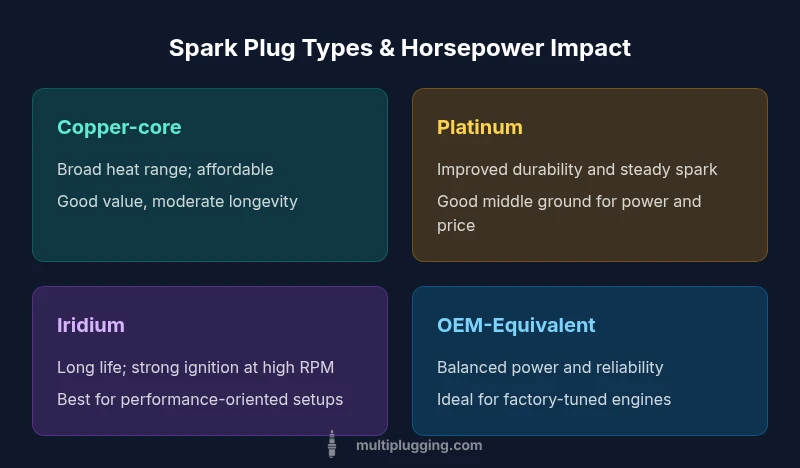
Electrode design drives how reliably a plug can ignite the air-fuel mixture. Iridium and platinum electrodes offer lower resistance wear and can provide stable, fast ignitions over more miles, which matters when the engine is pushed into higher RPM or when tuning increases ignition requirements. Copper-core designs historically offered superior heat transfer but wear faster; modern copper cores paired with stronger electrodes can still compete when the engine is stock. The practical takeaway: higher-end materials improve ignition stability and durability, which helps power delivery indirectly by reducing misfires and maintaining consistent flame propagation.
Gap setting and installation basics
Correct spark plug gap is essential for maximizing combustion efficiency and power transfer. A gap that is too large can cause misfires at high RPM; a gap that is too small can weaken the spark and reduce the energy reaching the air-fuel mix. The exact gap specification should come from the vehicle’s service manual or the plug manufacturer’s recommendations, and then verified with a gauge after installation. A common DIY win is achieving a precise gap and ensuring the spark plug boot seats fully, with a clean connector surface to avoid misfires during hard acceleration.
When upgrading plugs actually yields horsepower
Upgrades to plugs tend to produce meaningful horsepower gains only when the rest of the system is compatible. In tuned or high-flow engines, a plug with appropriate heat range and a robust electrode can prevent misfires and sustain optimal combustion at higher torque and RPM, translating to better throttle response and a more consistent power curve rather than a dramatic horsepower spike. In naturally aspirated setups, gains are often modest, while forced-induction engines may benefit more from reliable ignition during peak power.
Practical recommendations by engine type
For stock or mildly tuned engines, sticking with OEM or near-OEM heat range and a proven electrode material (iridium or platinum) offers the best balance of power, reliability, and service life. In higher-performance builds with tuned fueling and ignition timing, choosing plugs that match the new operating temperature window and ensuring gap integrity is crucial. In some cases, upgrading to a one-step colder plug for turbocharged engines can help prevent fouling under boost, while maintaining stable ignition under load. Always validate power changes with consistent testing and avoid mixing incompatible plug designs with aggressive engine settings.
Common myths and what you can realistically expect
A frequent myth is that a more expensive or exotic spark plug will instantly add horsepower. In reality, the most reliable improvements come from maintaining consistent ignition and avoiding misfires across the operating envelope. The horsepower gains you notice are often the result of improved combustion stability, better throttle response, and more efficient fuel use, not from a single spark plug feature. For DIYers, the greatest gains come from proper heat-range selection, accurate gap, clean installation, and complementary engine maintenance.
Maintenance, diagnostics, and tuning synergy
Regular maintenance, including gap checks, inspection for fouling, and verifying electrode condition, is essential. Diagnostics should confirm that misfires aren’t masking power loss, and that ignition timing remains aligned with the fuel system and exhaust setup. When combined with intake, exhaust, or ECU tuning, spark plug choice can complement the overall performance strategy. The message is clear: plugs matter, but they work best as part of a coherent, balanced approach to engine performance.
Feature Comparison
| Feature | Copper-core | Platinum | Iridium | OEM-Equivalent High-Performance |
|---|---|---|---|---|
| Heat range stability | Moderate | High | Very high | High |
| Fouling resistance | Medium | High | Very high | High |
| Durability / longevity | Medium | Long | Very long | Long |
| Cost efficiency | Low upfront, more frequent changes | Moderate | Higher upfront, long life | Balanced |
| Best for horsepower emphasis | General reliability | Top-end power | High RPM performance | OEM-grade reliability |
Strengths
- Potentially smoother idle and throttle response
- Longer service intervals with iridium/platinum
- Better reliability at high RPM
- Improved ignition consistency in tuned engines
Negatives
- Higher upfront cost
- Not a guaranteed horsepower increase on all engines
- Risk of misfire if gap/heat range mismatched
- Compatibility issues with some older engines
There isn't a single plug that universally adds horsepower; match heat range and electrode design to engine needs.
A correct heat range, reliable ignition, and proper gap deliver power more consistently than chasing exotic designs. For most engines, OEM or near-OEM plugs with proper gap provide the best balance of power, reliability, and longevity.
FAQ
Will upgrading to a higher-end spark plug automatically increase horsepower?
Upgrading to a premium plug can improve ignition stability and durability, but it does not guarantee a horsepower increase. Real gains depend on engine design, fuel, and tuning. Expect smoother operation and better reliability rather than a dramatic power jump.
Premium plugs can improve ignition stability, but horsepower gains are not guaranteed and depend on your engine and tune.
What spark plug type is best for horsepower on modern engines?
Iridium or platinum plugs commonly offer reliable spark performance with good durability in modern engines. However, the best choice still depends on heat range, engine design, and tuning. Use the recommended type from the OEM or a trusted performance guide.
Iridium or platinum are common choices, but stick to what your engine manufacturer recommends.
Can adjusting the plug gap affect horsepower?
Yes, gap affects spark energy and flame kernel formation. Too large or too small a gap can reduce ignition efficiency and power. Always set the gap to the manufacturer’s specification and verify with a gauge after installation.
Gap matters. Set it to spec and verify after installation.
Do all engines benefit from iridium or platinum plugs for horsepower?
Not all engines will see a horsepower gain from iridium or platinum plugs. Benefits depend on engine design, fuel system, and tuning. In many cases, the improvement is in reliability and consistency rather than a single horsepower jump.
Not every engine gains horsepower from iridium or platinum plugs; benefits vary by design and tuning.
How does heat range influence horsepower?
Heat range determines how quickly a plug dissipates heat. An improper range can cause fouling or pre-ignition, both of which reduce power. Choose a range that balances burn efficiency with engine operating temperature for best power delivery.
Heat range affects combustion stability; pick the correct range to preserve power.
How often should spark plugs be replaced for optimal horsepower?
Follow the vehicle manufacturer’s recommended interval, then adjust based on engine tuning and driving conditions. In high-load or performance setups, more frequent checks of gap and condition are wise. Regular replacement helps maintain ignition quality and power.
Replace per OEM interval and check gap periodically for best performance.
Main Points
- Match heat range to engine operating temperature
- Prioritize ignition reliability over flashy features
- Iridium or platinum reduces fouling risk for high RPM
- Correct gap is crucial for power delivery
- Expect modest gains; improvements depend on tuning and supporting systems